USA
USA HEBREW


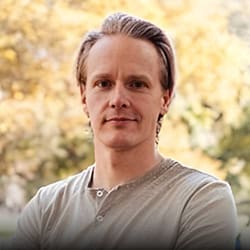


In this Episode
- [04:51]Tero Isokauppila discusses how having children has softened him up and put things in perspective, making him less ambitious but more focused on leaving a good legacy for his children.
- [15:28]Tero highlights the top three medicinal mushrooms: Reishi, Chaga, and Lion’s Mane, and their unique health benefits.
- [20:04]Tero shares that the company has developed over 450 product recipes to find the right balance of taste and health benefits.
- [22:31]Tero explains the process of sourcing high-quality medicinal mushrooms, which often involves traveling to remote areas and building relationships with local suppliers.
- [25:49]Tero emphasizes the importance of living seasonally and adjusting health practices based on the environment and personal needs.
- [36:22]Tero describes the history of adaptogens, which were originally developed for the Russian military to replace stimulants like amphetamine.
- [46:06]Tero emphasizes the value of accomplishing low-vibrational goals and living experiences to understand their true value.
About Today’s Show
Hi, Tero. Welcome to the show. Thank you so much for being here.
Thanks for having me on. I’m excited to chat.
What’s the best thing that happened to you this year?
I have three young children, so it’s hard to do anything more epic than just watching them blossom. Whatever I do, you usually fall short of that. My youngest, Taika, is a year and a half old, and it’s just like a fun phase when they are slowly becoming toddlers and learning to walk and the magic of that. This is my third time witnessing that miracle, but it’s cool because I feel like the older I get I slow down, and you appreciate it more versus the first time, it’s a little chaotic, and it’s like, “What’s going on?” I think the most Magical thing is actually that his name means magic quite literally. Taika means ‘magic’ in my native language. It’s been a miracle.
How old is your oldest, the youngest, and the middle one?
They’re all about a year and a half apart, Banyan, Bodhi and Taika. Banyan is almost turning five.
I have a six-year-old. He was just here prior to the interview, giving me a little kiss. He’s very cute.
It’s very cute.
It’s the best feeling. How do you think, like now that you are a father for the third time, how do you think your journey with your like growing your business and in taking healing mushrooms and maybe psychedelic mushrooms, how did that affect you? Where are you now?
I think you soften up when you become a parent, or at least I did. I’ll just speak from my own experience. I don’t want to speak for anyone else, but you soften up because you realize, like the beauty of life, the miracle of life, but at the same time, the imperfection of life in a way and similar to business. It’s not all that serious. Also, having children puts a lot of things in perspective.
The miracle is the journey. The person you find at the end of the journey is the biggest gift. Share on XAt least for me, it softened me up in many ways. It may also take an edge away, which is like, no matter how thin you slice anything, there are two sides. Not saying it makes you less ambitious because you want to, like, my children partially own my companies. I want to make sure I leave it in a good place for them, like, “Long are the days of where I worked 80 hours a week type of things.” Which is good and bad, but that’s changed. Similarly to taking mushrooms, it softens you up and opens your heart to love and the universe. I think there’s a similarity. It’s like an acupressure point, like a gateway to a deeper world, both of them, be it mushrooms or children.
I love how you said that. I love the parallel and the comparison because it’s so true. Because kids, until they’re, I think, six or seven, they’re in theta brainwaves. They do live in a more open way than we are, in different dimensions even. They see, I believe, psychically, things that we cannot see unless we have some kind of a spiritual experience or an awakening. That’s just a really beautiful parallel.
I believe our body does or can naturally produce DMT, especially around birth. Some of the miracles, especially with your firstborn, also make that experience to a certain extent. But that’s just my theory.
Tell me about that business of yours that is quite famous, that you worked so hard to build. How did you even start that? What were the mistakes on the way, and why did you do that?
Our bodies naturally produce DMT, especially around the time of birth.
It’ll be a long podcast to go through the mistakes along the way. I am the founder and CEO of Sigmatic. Sigmatic is a very nerdy way of saying the top 100 most nutrient-dense foods in the world. It’s science, it’s math, but we’re known for mushrooms. We created the original mushroom coffee. I started the business in 2012, and there was no mushroom category really. There were some capsules for immunity, but fast forward today, mushroom coffee alone is a $2 billion global business. Growing that business with very limited outside funding over time, creating a category, it’s been a magical journey. To my initial answer, I did most things wrong, and it’s a long series, but it’s funny how in life, there’s an Archimedes lever.
There are these things that if you get them right, they’re so right that they pay for all the mistakes. It’s the power law in a way. In the same way, we did a few things right. Those right decisions paid for all the mistakes, which were nine out of 10 times we were wrong. But the one thing that we got right was so right. I think that’s true for life too. It’s like people aim for some level of perfection or an image of perfection, versus even if you crush it, you bat 300 as the Americans say, “I’m from Finland, but I live in the US now, so there’s all these sports anecdotes, but in baseball, even the best hitters hit three times out of 10.” I think that’s kind of true for life, too. It’s like, “If you swing two times out of 10, that’s already a miracle by itself.”
Did you know you’re going to be a success?
But my image of success was very different than what the end outcome was. That’s the fun part, it’s like the miracle is the journey, it’s the man or the woman or person you find at the end of the journey, it’s like, “That’s the biggest gift.” But I didn’t really pursue material success; I was convinced that I would make Americans drink mushrooms, and that did happen. I had a high conviction of that.
I also decided that when I launched the brand, I knew I was not getting paid for two years, and I’d save some money to make sure that I could live. I just said, “No matter what happens on the business side, I’ll have the two best years of my life.” I will never regret doing it. I did that. I think, almost like a side impact, the business was also successful. But I didn’t think the goals were less traditional, and my definition of success was less traditional than many other people.

Are you drinking coffee now?
I am drinking mushroom cold brew from my wife’s mug. My mugs were in the process of being washed, but it says Mr. Strong. That’s pretty cool.
I love Mr. Strong. I used to love this book series.
It was around Dharma and impact, mostly and then secondarily, like a lifestyle that I had imagined for myself that involved a lot around sovereignty.
Why mushrooms? How did you get there? How does one start getting fascinated with mushrooms or even learning about mushrooms, when this is something people didn’t even know about back in 2012?
I joke that they chose me; I didn’t choose them. As a backstory, I grew up in. Why I say that is that I grew up with mushrooms. I grew up on a 13-generation family farm in Finland. I grew up foraging for mushrooms and other natural products. Our neighbor was the most famous Nordic herbalist in the Nordic countries, and I went to an environmental school that my great-granddad started, and I was surrounded by natural living. We showered in spring water, all the jazz. But you rebel against that. You don’t want that to be a life. I was interested in optimal human performance.
You can't biohack your way out of a lack of joy, connection and purpose. Share on XI studied chemistry and nutrition, but it was more from a performance angle for athletes. It was just this theme of mushrooms kept coming back. About 20 years ago, I won an innovation award for discovering a mushroom with my friend. It was just this thing that kept coming back, and nobody else was doing it. In a way, I knew their healing powers, and it was hard to buy them and get them.
A lot of very famous herbalists that I looked up to on the herbal side were completely clueless, especially in America. Most Americans, still today, but definitely 10 to 15 years ago, are mushroom illiterate. America is quite clearly behind Asia, particularly, but also Slavic countries, Latin countries and fungal knowledge and fungal sciences. The US was a lot behind, and there was a lot of misleading of consumers. I think there’s also a natural gravitational pull from there.
I know that in Chinese medicine, they use a lot of medicinal mushrooms. You can share some knowledge about what they are, like what the main ones are and what they do for people? Why should people even consume mushrooms?
Let’s zoom out for a little bit. Think it will be helpful. First of all, mushrooms are part of the fungal kingdom. It’s its own kingdom. These are not a subcategory of plants. They’re their own world. Very different. Actually, much closer to humans and animals. We share up to 50 % of our DNA with fungi. Fungi live on our skin and in our gut. Every breath you take, you breathe mushroom spores. These are the seeds of fungi.

I just felt one. Just kidding. Every breath we take, six spores enter our lungs. What? It’s crazy.
There are usually six. That will vary, but averages so there were. They are part of our lives. They’re on your skin and gut, no matter what they’re used to create food, bread, beer, wine, like they’re everywhere, and they create life. They also destroy life. Anything like plants or animals, there are good and bad things for us humans. It’s actually a lot more diverse kingdom than plants. It’s estimated that for every tomato, there are six different kinds of fungi. But, I digress. But because of the DNA similarity with humans, we share a common ancestry. Believe it or not, we are very prone to fungal diseases. Think of candida and mold. These are bad fungi.
These are terrible. I was exposed to black mold, and I was sick for a whole month. It was awful.
To that point, they’re very hard to heal because they’re so, on layman’s terms, sticky, because of the DNA similarity and ancestry. Like, “We’re very prone to them.”
Do they get into your brain?
They can, which is funny that you ask, but we can get into that detail, too. Sorry, I don’t wear these headphones that often. I’ve made it for the recording, but it keeps falling off. But they’re perceptive to fungal medicine. Roughly half of the world’s bestselling drugs use fungi. Penicillin is the one most famous for, just because it’s kind of a landmark medicine, but there are a lot of immunosuppressants. There are a lot of health benefits in these mushrooms. If you’re listening to this, you might say, “Well, are these psychedelic mushrooms? No, very simplistically, for these fungi that we consume, these fruiting bodies, these kinds of reproductive organisms of fungi, there are three kinds.” There’s culinary, functional, and psychedelic. Culinary mushrooms are delicious, and they have some nutrients. They have maybe minerals, B vitamins, fiber, and protein.
Be unapologetically yourself, and that often means breaking rules or the status quo. Have a sparkle in your eyes and joy. Share on XPsychedelics are very powerful, but mostly illegal, and you can take them daily. Think of the functional mushrooms that I’m going to talk about next, which are what I specialize in, and are kind of in the middle. They’re non-psychedelic, and they’re legal. But at the same time, you can take them daily, and they have health benefits, sometimes even flavor. They are used around the world, literally in every culture. Just happens to be that the Japanese and Chinese were better at documenting things than people in the Amazon. A lot of the original research comes from Europe, such as Finland, as well as Japan and China, because they were good at keeping track.
It can get overwhelming to learn something new. Overly simplistically start with the top three. Don’t worry about the mushroom number 26 in the world. The most researched one in the world is reishi lot of these names are Japanese, actually. Even to their common name, not their Latin name, but like Shi-Taki, Mai-Taki, the Taki means mushroom in Japanese. It’s literally in the name. Reishi is the queen of mushrooms, and Chaga is the king of mushrooms.
By far the most popular one in the Western world is lion’s mane, which can enter the brain and actually help protect and repair nerve growth factors, so in a good way. We can talk about the brain more if you want, but at a high level is don’t worry about perfecting all these top mushrooms, just like find one or two that you like, “One for the morning, one for the evening, or a couple you take in the morning and your smoothie, and you start benefiting from them.” Because if you take them or not, you will have fungi in your body, and they will either be your allies or your enemies. I would choose to analyze.
The good ones, Reishi, Chaga and Lion’s mane, are they fighting the bad fungi? What do they do in the body?
The benefit of starting when no one else is around is that you get to set the rules.
I could talk about these for hours, but it’s one of the weird things that they’re anti-fungal, which sounds kind of crazy to the Western mind, but like fight fire with fire.
They’re good for mold exposure, too? Wow, awesome.
Because they have to fight it themselves. They’re fighting these bad fungi in nature. They have to build compounds that protect themselves. It sounds kind of crazy, but they’re anti-fungal. But most of what original research for them was on various immune support. There are actual diseases that they were designed to use in a pharmaceutical world, but also for everyday wellness, supporting your daily wellness and immune system. A lot of that happens to the gut.
Gut health and the immune system are a core part of how these fungi work. But then they have special skills. There’s a mushroom called cordyceps that can help with the oxygen intake and your cellular energy ATP production, versus the lion’s mane that I mentioned can help protect your neurons. They have their own special weapons, but then they also have the same weapons. It’s like, I joke that they’re like ninja turtles. They’re all ninjas and turtles, but then they all have their own nunchaku or whatever sticks on top of it.
What I know about Cordyceps is that it’s really good for adrenal fatigue and that it has a very weird way that it grows. Maybe you can share that. Something about a caterpillar? I’m not sure.
In nature, it’s a zombie in a way. Takes over insects. There’s a famous BBC documentary about these zombie ants. Takes over these ants and grows out of their brain. There’s also a famous video game turned into an HBO series called The Last of Us about zombies taking over humans. That will not happen. None of these cordyceps products are wildcrafted because it’s so expensive and difficult to harvest, but they’re grown in laboratories, commonly on grains, but they don’t have to be. But anyway, it’s a weird one. It’s a very unique, very alien. But it helps with adrenal fatigue. Using the traditional Chinese medicine language and symbolism, it really helps build Jing and helps the panel to strengthen the body in many ways, including the adrenals and lungs.
Can you take a mixture of the mushrooms? Because I see a lot of mushroom products where they mix a bunch of them. Is it better to mix all of them, or does it dilute the effect of just taking one at a time?
Yes and so both so if you take it for immune reasons it’s good to take a blend if you take it for general wellness it’s really good for take a blend think of it like almost like a really powerful greens you don’t just want to eat spinach all day long you want to have some arugula and dandelion and nettle in it so every one of them have chlorophyll but they have their unique blend so similarly for that reason it helps. But if you’re taking them for specific reasons, such as adrenals, then it’s better to take a lot of the same.
What about your products? How did you come up with the recipes? How did you even think about combining mushrooms and coffee, and what’s the benefit of combining mushrooms and coffee? I don’t know what’s happening to me today. I’m asking you like four questions at a time because I want to know so much. Take your time.
The benefit of starting when there was nobody else is that you come up with the rules, and it was a lot of trial and error, a lot of events and in-person sampling. I think we’re on recipe 450 in some of the products of iterating it. I think the first five years were heavily spent on product quality. Even today, research shows that 74% of reishi mushroom supplements in the US contain no reishi mushrooms. It’s a big scam, actually.
A lot of people don’t eat seasonally, but also don’t live seasonally, like they’re hard-charging year-round.
Like sourcing them. It was a whole process of getting them dual extracted, not to bore you with the details, but these mushrooms have two kinds of compounds, water-soluble and non-water-soluble, and you would have to buy these capsules and tinctures separately to get the full benefit. We combine those into one powder. Getting them the wildcraft products like Chaga and Turkey Tail Certified Organic was a process.
Where do you source them from? From what countries?
China and Russia are the most common countries for these large-scale mushroom cultivation. Used to be Japan, but after the nuclear reactor, it’s a lot less common. Finland, surprisingly, and Canada are trying to catch up, but the demand is not there. The US production is basically grains, so a lot of US products have no mushrooms, which is kind of sad. There’s no US supply chain for real mushrooms. They have to be extracted, like they’re not buy available raw.
But then, after you like five years, when we had a product that really worked and was powerful and organic and all the things, it was like people didn’t like the taste because it was very bitter. Innovation was basically like, “Hey, people hate bitter flavors, but they like coffee and cocoa that are also bitter.” Making mushroom hot cocoa and mushroom coffee was like a pathway to the benefits of mushrooms, but with a more familiar, more enjoyable flavor.
As a young entrepreneur, you start creating this delicious mushroom coffee with lots of benefits, and then you grow your company, and you need to source. How do you even start? Finding where to source quality Control, especially in places like China or places that are far away, that you don’t even know how to even go about it. Seems like such a huge project.
My story is the opposite of most entrepreneurs. Most entrepreneurs go to Alibaba or some website that does wide-label production of supplements, products, powders, or they go to agents. I was living in China and Asia and sourcing it for other brands. For a short while to pay for the bills, we’re sourcing other brands, both US and European, because they didn’t know where to buy them either. Boots on the ground. But that’s not normal. A lot of people buy standard off-the-shelf ingredients and formulations, particularly in the supplement side. Supplements are very high margin, so there’s a lot of shady stuff.
There's a lot of value in accomplishing your low-vibrational goals, because living them yourself creates conviction. Share on XDo you speak Chinese?
Well, poorly. My business partner did. I’m just enough to be polite, but it was enough to be there early on and have translators and build relationships to give you, cause not many people were there. Or there were people in like buying t-shirts and stuff, but like not a lot of people were there sourcing herbs and mushrooms. It’s kind of crazy, like creatine or vitamin D or whatever, pretty much almost exclusively all comes from China. There are one or two rare suppliers in other countries, like Germany; most of our pharmaceuticals and most of our dietary supplements come from China. People just don’t know about it.
I look at labels, and it’s all China. Even if it’s organic or whatever. What did you do in China? Did you go live there or did you go there following the fungi, the mushrooms?
I lived on the Hong Kong side just because it was more convenient, and I was into trail running. Same as my business partner at that time, he was into trail running. It was a better hub to be at. But we source most of our ingredients from South America, and it tends to be with a lot of these superfoods, or Southeast Asia, where they do come from third-world countries, and just because harvesting and collecting are very labor-intensive, there are both ethical and quality concerns. I like to say, “Trust, but verify.” We buy all organic ingredients, and we require the certifications and this stuff, but I know people fabricate those certificates. We send it before it gets made into a product, we send it to a third-party lab and look at the pesticides, and sometimes its label says it’s organic and it’s not. Very few people do that.
The human body is meant to have a seasonal rhythm. A lot of my health and wellness choices depend on where I am and what season I’m in.
Very few people. That’s incredible. That’s incredible. You’re very much into living healthy, assuming, growing up taking showers in spring water and running around in the fields. How do you live today, being the best you can be in terms of your health? Let me say it again. How do you optimize your health today?
The French have a funny saying, “It’s everything in moderation, including moderation.” I think that’s a funny one. I grew up in health and wellness, and I have a little bit of a different story than most people in the space, at least in the U.S. Almost every health influencer or whatever they say, “They all have like a healing story.” Like they were morbidly obese, or they had cancer, or they had something super dramatic.
Or they died, and they came back.
Now they want to live 150 years. It’s so hard for me to relate to that. I understand it’s a powerful story. But that’s not my story. Those people often do something very extreme because they’re so deep in their problems. That extreme thing works. Extreme forms of veganism, extreme forms of carnivore diets, whatever, and they heal their gut usually, it starts with detoxification and gut. After two or three years, it doesn’t work anymore. They are no longer carnivores. Now they eat fruit and honey, or they’re longer vegan, they take bone broth and whatever. Because what works for you when you’re in that deep state doesn’t work anymore.
The same: there’s a psychological aspect of growing up in health and wellness, or being in a long time, is finding a balance. Again, 80-20 or 90-10 or whatever is like what feels sustainable instead of oscillating between these extreme things. I’ve had to find that over the years of what kind of what non-negotiables are and what are negotiables. I’d say I live right now in Austin, Texas, with my family and kids, and we spend the summers at our farm, and it’s a very different lifestyle in Texas versus Finland and like the types of diets and like foods you can buy and like how much I can trust produce and like how important organic food is or things like that.
There’s a lot more to the food than just the actual chemicals.
I trust the water quality. I think you have to adjust to that as well. Same as with work, I think a lot of people don’t eat seasonally, but also don’t live seasonally, like they’re hard charging year round, versus I think the human body is meant to have seasonality. A lot of my health and wellness choices depend on where I am and what season I’m in. For example, how fasting plays a role in my diet, how active I am physically, or what temperature I am. Trying to find the balance between those.
I’m in the season of Hanukkah now. I just started and there are amazing donuts every day and donuts in Israel are phenomenal because you have like the Dubai type donut with like pistachio cream and chocolate and kadaif like on the top and then you have like raspberry chocolate with raspberry filling and then you have like the one with I don’t know if I said how to say in English but it’s cremeschnitte. Is it the same thing? It’s like it’s very heavy, delicious cream. I’ve been eating donuts every day. I’m usually like I tend to be healthy.
Do like to I like beef and bone broth, and I try to eat organic most of the time. But I don’t know, as I know that I’m more of a grown-up. I just, I’m way more flexible, and I listen to my body, and I know that this is the donut season. That’s okay, one week go crazy. Why not? Maybe it will take two weeks for you to stop. Maybe three weeks, Orion, maybe four weeks. But anyway, eventually I feel like I naturally go back to health, go back to taking care of my body and eating for not just to taste good, but to feel good, but I have to tell you I’m a great cook. I taste good, whatever I make. It’s important now.
That’s so important that it tastes good and it’s enjoyable.
Life is about living. It can’t just be strict all the time. I like to enjoy my life, and I like to eat, and I like to cherish my time with my son as well as my husband. This is important. It’s more important than I feel work or fame or anything, even though that is seasonal too. As you said, you had your season of working 80 hours a week, really putting everything into it. The point is, my question is, I have a question. If I drank, if I added to my donut diet mushroom coffee every day, what would it do to my body?

Well, donuts and coffee are known to go well together. First and foremost. Donuts and hot chocolate, too. I do love a donut, actually. One of the weird things I used to do coaching athletes on nutrition was that I would make the unhealthiest foods beyond healthy, like crazy healthy, unlike donuts and chocolate and things like that, you’re not allowed to eat, and I would make them so nutrient dense that it was stupid. You could make donuts gluten-free and super nutrient-dense. You can use things like collagen, and you can make them even softer, like mochi style. You can put all these, like you can hide a lot of herbs and super foods into these items, and they’re almost like a delivery system. That’s why I always thought it was funny.
Especially when I moved to the US, it was like I would go to these biohacking health extreme health conferences, and people did not look healthy. They pale on an energetic, like frail. They looked stressed the most. I had a few friends that I knew from like snowboarding and other scenes. I met a lot of surfers, and they’re like eating like tater tot burritos on the side of the highway, and the skin is glowing, and they’re full of energy, and they look strong, healthy, and happy. I think there’s a lot more than just the actual chemicals within the food that matter. Just highlighting that as well.
How do you explain that? How do you explain those people who are surfers? Are they out in nature every day? Of course, they’ll feel amazing. But how do you explain that, the biohackers that you saw? I went to biohacking conferences, many of them. Not everybody looked pale; a lot of people looked pretty good. But the people who looked stressed were eating really well. Actually, you’re right. Some of them do look kind of awful. Even though they’re doing everything. Why do you think this is?
I think there can be two main reasons. One is that they were very sick, and they’re still part of the healing journey, and they actually look a lot better now than they did a year ago or two years ago. I want to just highlight that it’s totally possible. But I have also gone to the events enough to know that it doesn’t change. If you go five or 10 years, you meet the same people, and no progress has been made. That’s not a hundred percent of the stories either. I think it comes down to stress, and if you worry about your eating and you’re really in your head about it, I think it further creates a fight or flight response in your body.
You can’t outrun a bad diet. You can’t eat your way to healing from bad sleep, a lack of love and social relationships, and a lack of joy.
If you’re in the flow, joy and happiness, you have a lot less stress. You can’t change the way, as you can’t outrun a bad diet. You can’t eat healthy enough to heal from bad sleep, lack of love and social relationships, and joy. No matter what you eat, it’s not going to be joyful. Now you can combine those. Can break bread figuratively or literally with people you love and share a meal that you cooked or they cooked, or you cook together, as you can combine those.
That’s the best of all worlds. But you can outrun a bad diet, and you can’t biohack your way out of lack of joy, connection and purpose. Some people call these primary nutrients not actual nutrition, but things that matter more. But I see that, but back to your question about mushrooms, I feel like two things I’ve seen over the years. First, like very clinical and statistical and very cold, Western isolated.
Most people feel benefits in seven days or less, and nine people out of 10 report benefits so great they want to keep doing it. If you start eating your Dubai-style donuts with coffee, it’s probably going to slowly heal your gut, help with stress response, immunity, skin, energy, and cognitive function. It’s also an easy ritual to maintain because once you’re in the flow, you’re probably not going to forget to have your mushroom coffee and Dubai donut. They say in herbalism that the first rule is.
Thank God, Hanukkah
Hey, no judgment. I am not an expert on the Torah, but I would assume there are no donuts mentioned in it. Donuts are allowed outside of Hanukkah, too.
No, there you have the course. But like the ones they sell here that are like the fancy ones with like so much variety, and you can just get lost in a sea of like the most amazing, like, and I’m not talking to you about like simple, like it’s not Dunkin Donuts. This is like super like European style high quality chef type donuts. It’s like a season.
I believe it. When I was in Tel Aviv, I thought I knew what hummus was when I got there. There’s this place nearby, Yaffa or whatever, and they’re making hummus in the morning, like a family business, and they make a tub, and when it’s sold out, it’s sold out, and you get a little tub of hummus. I’ve never had hummus like that before. I was like, “Whoa, this is not hummus, what I thought hummus was. Or the other way around, I think that what I thought was hummus is not hummus at all.” That’s a great example, anecdotally too, about quality, is when people say they eat meat, it can mean a lot of things or when they say, “Hey, I eat a lot of vegetables, it can mean a lot of things.”
Same way as when they say I drink mushrooms or I take mushroom supplements, and again, according to research, 74% of those people are consuming zero, zero of the mushrooms they think they’re consuming in the US. Like that can mean a lot of things. Then they say it doesn’t work or they say it works, or whatever they say is like, “The quality matters so much, but I digress.” I feel like you would feel the benefits within a week or so, but most importantly, it would make the donut taste better.
But it’s very, it’s very fun to hear you speak about it and your experience here. It makes me feel like that’s cool. He understands he was here. How amazing. That’s cool. I will feel amazing. Mushrooms are adaptogens. What is an adaptogen, and what does it do to our bodies?
An adaptogen is basically a natural substance that helps your body adapt to stress.
Adaptogen is a weird word in the world of nutrition because it’s an actual scientific term, which a lot of these terms are not. They’re like just marketing terms. But an adaptogen is basically a natural substance that helps your body adapt to stress. These are ancient foods around the world, but they were coined. The term was coined a little over 50 to 60 years ago. The goal was actually for the military, originally the Russian Soviet military, to replace stimulants like amphetamine and give a performance boost to military personnel and soldiers to fight better without a letdown and addiction later.
A lot of stimulants cause addiction. They improve performance, but they’re not sustainable. They studied, and there were originally kind of five adaptogens they discovered, but now there are somewhere between 15 and 25 of these true adaptogens. There’s pretty strict criteria because of how it was originally coined, and they have to be non-toxic. They need to be things you take every day. You might think, “Hey, that’s almost everything.” But in herbalism, a lot of things you’re not supposed to take every day, like even garlic or things like that, that they’re things you can overdose on, a lot of things we consider standard foods, but we just don’t eat them that much or often, or they’re so diluted versions of them.
Like what? Like garlic? What else?
Including if you go to an herbalist, a lot of the herbs that we consider healthy are not, quote-unquote, Tonic safe to take every day. There are so many examples of those. A lot of the liver herbs, for example, are meant to be taken seasonally. After a cold winter, you detoxify in the spring, you take a lot of dandelion milk, thistle, or things like that, but then the other one is that they need to be non-specific. They need to help restore balance. A lot of things are either a gas or a brake. For example, in the immune system we talked about, they stimulate the immune response, or they suppress the immune response, but an adaptogen would be immunomodulatory. They would modulate the immune system.
If your immune system is slow, it would speed it up. If mine is the opposite, it would be the same ingredient that would do two things to two different bodies, restoring balance. Sometimes hard to grasp. But they are safe to take every day and are scientifically proven. Now there could be 100 adaptogens in the world; we just haven’t had the research yet. But they’re kind of the best of the best in both the herbal and fungal kingdoms. What’s cool about them is that because they’re so safe and so versatile, you can kind of play with them more freely, and you can test them and use them more freely than maybe some other things in health and wellness that can be abused or misused, too.
What happens when you mix the mushrooms with coffee?
If you do it right, have a great tasting cup of coffee, and you’re not going to taste them, and you can ingest them. Depending on what mushrooms are there, they’re going to support the two negatives of coffee. Coffee is actually amazing. There are a lot of meta-studies on the health benefits of coffee. It’s the number one source of antioxidants here in the U.S., although that probably speaks more for lack of vegetable consumption than trust in coffee, but a lot of black collar pigments are great for longevity. Think of it like cacao and coffee, and black sesame seeds, and stuff like that.
Coffee can cause heartburn or other gut issues. Mushrooms do help with those, too.
The black collar pigments are often associated with longevity. But then coffee has two major negatives. It’s a central nervous system stimulant. Some people get jittery feelings or crashes after, and then the other one is digestive upset. Coffee can give you heartburn or other issues in your gut. Mushrooms do help with those, too. They support the gut instead of hurting the gut, and they, like the cordyceps we mentioned, support the adrenals, which does the opposite of the coffee. You have a delicious cup of coffee with two main downsides.
Where do you see yourself in the future with your products? Are you planning on expanding that to different products or staying with the coffee, or do you not know and you just go with the flow?
You ask about the mistakes I’ve made. When I started the brand, I didn’t know what would work because there was no blueprint to follow. If you’re a trailblazer, you’re like, blazing through whatever path nobody has forged before. We launched a lot of products early on. We have coffee, tea, and protein supplements. We even made skincare, edible skincare that you could both eat, and it would double as skincare. It was all of those that had a lot of good in them, but it’s so hard to build a company, especially with limited money, that is great at everything. Even if the intention is good, it’s so hard to be world-class at everything.
I’m very happy to be a world-class expert at coffee and friends of coffee, like tea, creamers and things like that, that pair well with it and just donuts, maybe we’ll launch a mushroom donut. I prefer that and do less but better. But that came from like living it and learning it. Some other brands work the other way. But like for me and us, it just makes more sense to stay very focused and grow steadily and not make sacrifices in product quality and other things that you would have to do if you choose some other path.
You were talking about your journey and the man that you became throughout that journey. What did you learn? Who are you today that you didn’t have? What qualities didn’t you have in the past that you have today because of this beautiful business journey that you had?
That’s a long conversation. I don’t know if listeners want to hear the whole thing. But I think the cliff notes are that there’s a lot of illusions, a lot of things I thought were real, that I just made up in my head or through pop culture, friends or family that I had to unlearn and peel to figure out and surprise you figure out how you’ve had them figured it out, but at least that illusion has gone away.
For example, what kind of an illusion?
I think the obvious ones from like 20-ish when I left the country are around material success and also your self-view of who you are and what matters. We talked about parenthood, and it’s kind of like psychedelics in a way that I can’t really explain. Words are such a low form of communication, at least for me, where English is not my first language; it’s hard to explain.
I was just listening to you, and I was stumbling a few times throughout this podcast. I was like, “How is this English so much better? It’s not fair.” No, your English is phenomenal.
My wife would not always agree.
Except I would say parenting and not parenthood.
I make a lot of simple mistakes that a native speaker wouldn’t.
I make so many mistakes. Thank you, guys and girls, who are listening to me being kind and patient with my English sometimes.
The message comes across, so that’s all that matters to me. It’s hard to explain what parenthood is or what parenting is. The same way as psychedelics, can’t really, like, “I can try to explain what it feels like this love and thing, can’t, but it doesn’t really do it justice.”
If you did have some words in this low form of communication that we’re using right now, what would you say? What are some three things that were the top things that you think you’ve changed or realized?
There are a lot of things in life that don’t make sense, and they’re not going to change anything, but you should still do them.
It’s like a few things. One is like life is like a dog chasing a car. It’s like, “Why is the dog trying to bark at the car? What if it catches the car? What is it going to do with the car? You’re going to bite the car.” The car is made out of metal and plastic. It doesn’t taste good. Plus, your teeth are probably not going to be strong enough to fight it. But there’s an enjoyment for the dog to chase the car and bark at it. That makes a lot of sense to me. There are a lot of things that don’t make sense in life, and they’re not going to change anything, but you should still do them. There’s a value in doing that that makes sense.
There’s also an element of teamwork. There’s this book by a Russian author, Aleksandr Solzhenitsyn, about a convict back in the day from the true Soviet Union. He had basically the worst life. Whatever you think is bad, like 10X it, and his life is just the worst. This guy, Yvonne, just has it the worst. But there’s enjoyment that he has after this, like the worst day ever of just laying bricks with his friends, and they’re like working well together. There’s a lot of joy in just doing some basic things over and over again. That’s like a feeling that gives me at least a lot of joy to me.
What I heard is that the fulfillment of the journey without putting too much attachment to the journey, just enjoying it, because there is never a destination at the end of all this. We just live life. You came to realize that the simplest things, like being with your friends and your family and like there are moments of magic in life that you hold on to, and this is what really matters.
To build off of that, I think there’s a lot of value in accomplishing your low vibrational goals because I read a lot of this stuff when I was young in various books and spiritual teachings, but there’s something to be said about living it for yourself. Money, again, is a topic a lot of people obsess over, and it’s a lot easier to say money doesn’t matter when you’re rich versus when you’re poor.
At least you have experience that it’s like you say with conviction, and how it feels. In the same way as if you truly have been poor, and you understand the struggles of that, then you’re more grateful for what you have. I think there’s a lot of value in living it yourself and experiencing it. If you have goals, like I still write goals every year. It’s pretty crazy how often they happen when you like manifest them. You just have to be really careful what you wish for because you might get it.
It sounds kind of like someone who just enjoys the simple moments and cherishes everything. But yes, of course got to work on it. You have to achieve your goals because you don’t realize those things; they can be an idea, but you have to live them in order to realize them. What are your three top tips for living a stellar life?
I guess I’m supposed to say to eat mushrooms, give mushrooms a chance.
Eat mushrooms. Drink mushroom coffee. For stigmatic.
God means different things: spirit, universe, and vibration.
I don’t know what the answers are, but I feel like I found some of the elements that tend to be there pretty consistently. One of them is nature and connection with nature, which can manifest in so many different ways to so many different people, but I feel like it’s pretty consistently up there. Some sort of a nature connection or being in nature or whatever that means to you, but tends to be there. Same as love for probably something greater than yourself. For a lot of people, it’s children, but it could be God, it could be other things, love, and that feeling similar to psychedelics, hard to explain. Just as God means different things, spirit, universe, vibration, but that sense of a greater thing than yourself is pretty powerful.
Humor, almost like a troll, contrarian, rebellious, part of ourselves that doesn’t want to fit in, is like the spice of life that sticks for spice. I think that’s there for a lot of people I’ve met who live a stellar life, is that they’re rebellious and artistic, funny. They get that they can manifest similar to nature; it can manifest itself in so many different ways, but they have a sparkle in their eyes. This joy often comes from being unapologetically yourself. That often means breaking rules or strengthening the status quo. I think those are some elements I’ve seen in myself and people around me to be true, but then you can achieve them in so many different ways.
Beautiful. Where can people find you?
I’m bad at social media, but I am on Instagram. Then, I’m an amateur YouTuber. I have a channel called Funguy Fam that I built for a year. Got over a hundred thousand subs, and then I haven’t done anything for a year. I’m thinking of relaunching. I’m very in.
You just left it after you got to 100k, and you were like, “Eh, done.”
I’m very consistently inconsistent with all my social media and public persona. I’m in it when I’m in it, I’m not in it when I’m not in it, it comes and goes. If you follow me on any of those channels, you’re probably going to find an inconsistent posting pattern with inconsistent topics, but that’s part of the joy, I guess.
One of the things that I noticed about you, and I really like about you, is that you do things because you care, and you do things because it brings you joy. And those are really good reasons to do things. You’re not in the box; you don’t put yourself in a box or in a social media prison. You’re like, “When I’m there, I’m there, but I’m not. I’m not.” It’s refreshing and inspiring. Thank you for that. Thank you so much. This was a wonderful conversation. Thank you for your wisdom and your heart and for being here. Thank you.
Thanks for having me.
Thank you. And thank you, listeners. Remember to connect with nature. Love something greater than yourself. Enjoy humor, laugh, drink lots of mushroom coffee and have a stellar life. This is Orion. Till next time.