USA
USA HEBREW





In this Episode
- [03:04]Calvin Bagley recounts a beautiful memory from his childhood: his baptism at the age of eight, which gave him a deep sense of connection to God.
- [08:06]Calvin shares his journey to success, including starting his own company in the financial services industry and helping over 70,000 people with Medicare insurance.
- [24:17]Calvin talks about the importance of setting boundaries and respecting oneself to avoid being taken advantage of.
- [26:10]Calvin reflects on the realization that his traumatic childhood has shaped who he is today and that he wouldn’t change anything because it led him to his current success and happiness.
- [29:42]Calvin credits his success to the support and guidance of mentors, including his brother’s wife, who helped him with education and the college process.
- [32:28]Calvin discusses the mixed reactions he received from his family when he wrote his book, with some family members having negative or passive reactions.
- [40:17]Calvin emphasizes the importance of seeing one’s life as a hero’s journey and celebrating the progress made.
- [42:17]Calvin advises others to love themselves, take care of their bodies, and feed their minds.
About Today’s Show
Hi Calvin, and welcome to the show. Thank you so much for being here.
Thank you for having me. It’s good to be here.
Before we begin, your book has a lot of terrifying childhood memories, but maybe you can share one childhood memory that was really beautiful.
I think, for me, a beautiful memory from my childhood was being baptized in my church. I was eight years old. As we talk about my life a little bit, and so in my book and things, there was a lot of darkness, but for me, there was always some connection with God or whatever you call or believe it, whoever you are listening to that something greater, that great spirit or whatever it was, for me, it was God.
When I was baptized, I really felt this deep connection, and I felt like I had done something that pleased God. I felt a sense of peace in a world of chaos.
When I was baptized, I really felt this deep connection, and I felt like I had done something that pleased God. I felt kind of a sense of peace in a world of chaos. That was a peaceful moment and a great memory for me, and probably something that grounded me in a belief in a higher being or in something greater than me because of the feelings I felt at that time. That’s what I would share.
What did you feel? What was the experience like?
The experience was like love. Love was often absent from my childhood, and I felt this feeling of love, a warmth in my heart, a feeling like there was something out there bigger than me that cared about what was happening in my life, and that was, in a way, looking out for me.
Let’s talk about your book and how hot it is. Let’s start from the beginning. Let’s go back to your childhood a little bit. Just give me an overview of your life. What do you do today, and what made you decide to write your book?
Well, I was born in 1975. I was talking to someone this past week about Stranger Things, which everyone is watching. You see what life was like in the 1980s for a lot of kids. It was like the height of kid freedom. Sometimes I caught glimpses of that.
But my upbringing was completely different than that. It’s hard to paint the picture of how controlled my upbringing was, but I was homeschooled in a time when there was no homeschooling, there were no programs, and I wasn’t actually schooled. We were just kept home from school. I had no school books, nothing to read, no encouragement, no teaching.
I didn’t learn math. My sister taught me to read when I was seven years old. My sister, 10 years older than me, taught me to read. I had inadvertently memorized the alphabet backwards because the alphabet was across the top of our living room. It looked like we were having school at home, but it wasn’t happening. I learned it Z-Y-X-W-V-U-T-S-R-Q-P-O-N-M-L-K-J-I-H-G-F-E-D-C-B-A, instead of the correct way. There’s this total isolation, far, far away from the world, lived 20 miles down a country road, followed by 20 miles down a dirt road in the middle of nowhere, out in this small town area of Utah.
Set boundaries, hold them without returning fire, and love and respect yourself to the point that you would not allow someone to treat you badly. Share on XMy parents were extremists in their religious beliefs as well. They were very physical in their discipline. I was whipped with practically everything you can imagine, from a willow to a belt to a paddle to a two-by-four to a bare hand. There were a lot of physical things that were happening in my home, such as anger and fighting. It’s not a beautiful environment for a child to be raised in. I was the seventh of nine children.
When my mother brought me home from the hospital, she handed me to my sister, who was 14 years older than me and said, “This one is yours.” My sister raised me as if I were her child. Even trying to breastfeed me as a confused 14-year-old girl herself. This very dystopian environment is a complete contrast to what was happening around me.
My parents felt like everything was evil. Chocolate was evil. You shouldn’t eat chocolate because it has caffeine. Television, music, we just didn’t participate in any culture of any kind. We didn’t have a television. The only place that I got a glimpse of what the real world was, of what was happening around me, was at church because we attended church every week. That was the one time that I would associate with kids my age, and that’s where I heard about things that were happening in the world, like Star Wars, and learned what a lightsaber was, and Nintendo.
I heard about these things from kids at church, although I did not see them or participate in them as a child. That just gives a glimpse of this total isolation, lack of education, abusive discipline, and extreme poverty, where I started fearing not being able to have enough food to eat and other things.
It’s almost like another world at another time for me today because I have come so far from there. I think we’ll talk about some of those things today, but to give you the end cap of the story, I eventually fought my way, I would say, I use the term “fought my way” into college, having never attended any classroom instruction in my life, having never graduated from high school. I graduated from college with a business degree. But by the time I graduated, I was 34 years old. It took me a long time to do that. Eventually, I worked in the corporate world, and then I started my own company in the financial services industry.
Today I experienced a lot of success in my life. We’ve helped a lot of people with their Medicare insurance in the United States. In fact, my companies have helped over 70,000 people now to make decisions about their Medicare. People know me today as this advocate for seniors and advocate for insurance agents who help people with Medicare, and going to Washington, DC and meeting with policymakers about Medicare policy and all of these things.
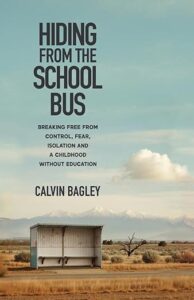
But it’s hard to visualize where I actually came from. That led me to write my book. It was partly to tell my story to the world. It was mostly to tell my story for my own children, kind of a legacy piece. My book is Hiding From the School Bus. That’s the broader story and how it came about.
Why ‘Hiding From the School Bus?’ Were you really hiding?
We did. We actually hid from the school bus. We lived in an area where the school bus would come by these rural farms, pick up the farm kids, and drive them 30-40 miles into town for school. They said, “Don’t let the school bus driver see you because then they will know that you’re here and we don’t want them to know that you’re here.”
That’s crazy. You had the sense of feeling like an outsider growing up. Do you still have that sense of feeling like an outsider? Because sometimes things like that don’t leave us. We can have the money, the success, the proof, but every once in a while, those feelings still surface.
Yes, absolutely. You’ve hit the nail on the head there. Also, being an imposter, always trying to achieve enough to prove to myself. Sometimes even my parents. My father has passed away, my mother is in her late 80s and doesn’t have the mental acuity that she once had. At times, trying to prove to them that I’m good enough. I identified some of this.
I think that there is great wisdom in having experienced pain and trauma, but it can also trap you. Some people get trapped in it, while others gain wisdom from it.
A few years ago, I was sitting in a Genius Network meeting with one of my business idols, who was speaking. This room is full of incredible people, and that’s how I met your husband, Stephan, and how I met you is through groups like this.
I’m sitting in this room with incredible people and kind of feeling like an imposter. I’m listening to this business leader talk about his personal journey of realizing that he didn’t love himself. That just opened this whole world for me, leading me to open up and stop hiding. I talk about hiding from the school bus, but I’m still hiding my true self and my true feelings and not truly connecting with people because of these fears of being found out that I’m not enough or not measuring up. I’ve done a lot of work over the last few years, but there’s always more to be done.
When I first met you, I knew nothing about you; you just came across as such a beautiful, loving person. There is so much love that you emanate and so much kindness. It’s just nice to be around you.
Thank you.
I think this level of humanity, I think you can credit it to your childhood, because people who suffered so much as you did. A lot of them are so genuine, they don’t have the masks, they appreciate the real things, even though they’re successful. What do you think about that?
I think it’s not easy to let the mask go; I’ve had to, and I’m still doing it, trying to put it down, genuinely be myself, and connect with people. But what you’re saying about having experienced pain and trauma, I think that there is great wisdom in having come through something like that, but it can also trap you. Some people get trapped in it, and they’re trapped in the trauma. Others can take that and gain wisdom from it.
I am a very sensing and feeling person. At the same time, there is anger in me.
Sometimes I’m both of those; you’re never one or the other. But when I see others suffering, have great compassion. I feel very deeply; I’m very sensitive. I feel what other people feel. At the same time, I’ve had to deal with a great deal of anger. A lot of times, I think people who are very kind and compassionate towards others often have an alter ego of that anger or other things inside them.
I know one of those people personally, me.
Do you? Who could that be? For me, I am a very sensing and feeling person. At the same time, there is anger in me. I’ve had to find ways to express both into and through a great therapist, whom I love; he has helped me to identify that all those parts of me are there and serve a purpose. The part of me that is anger, one day was in a session with him and we were trying to engage with these different parts of me and so we were talking to them as if they were a person and so I was speaking to this part of me that is that is anger, because I realized that how fractured I was and that I would hide different parts of myself from people and only show them what I wanted to show.
When you do that, then you don’t actually have a real connection. Instead, you’re giving people what you think they want, and it feels like you’re on stage rather than having a human connection. We’re trying to connect with these different parts of me, and I realized that the part of me that was anger was there to protect the part of me that was innocence.
That’s okay. I’m envisioning and seeing this part of me that’s anger, and the funny thing is that when I see that part of me when my eyes are closed, it looks like the Joker in The Batman—with the white face, everything like that.
It steps aside, and behind it is Casper the Ghost, and it’s like, “Oh, that anger is there.” Now, it doesn’t mean that I should express my anger to hurt people. Absolutely not. But to understand the reason for having those different emotions, and that the emotion was trying to protect something within me. Anyway, it was a beautiful realization for me.
Your anger is a protector. Probably what is still driving you to do more, to be more, to be a better father, to be a better businessman, and to do better in the world. It’s like you repurpose that anger and you use it as a fuel. We need to look at it. It’s a balance—dealing with those emotions and looking at them. Because even if you embrace your anger, people judge you for it. People judge you for different emotions, but they all serve a purpose, and they’re all who we are. I understand the fracturing, especially children who go through so much trauma; sometimes they have like fracture identity for sure. Some people have multiple identities. How did you find who you really are?
I’m still in the process of that.
Like all of us.
The part of me that was anger was there to protect the part of me that was innocence.
Like all of us. I don’t want to sit here and say, “Hey, I figured it all out.” But I have come a long way. I’m identifying different pieces. We’re talking about anger. If someone attacked me, I have two children, a 13-year-old son and an eight-year-old daughter. If someone attacked my daughter or was going to take her from me, you need to have the ability to defend.
There’s a proper expression of anger. But when someone cuts you off on the freeway, and you lose it, you don’t have proper control of your anger. As far as identifying who I am, it’s been a longer process for me because I realized that a few years ago, as I’m sharing this story, that I was giving other people a front. Because I could identify what they wanted from me, I would try to give them what they wanted from me.
Because you became hypervigilant. When you become so hypervigilant, and you don’t know if your dad is gonna come and hate you or if your mom is gonna do whatever, you learn to read expressions. You learn to read people’s faces. You learn because it’s a part of your survival mechanism—developing that way of reading people.
The great psychologist Alfred Adler talks about how people have their own tasks, and you shouldn’t make someone else’s task your task. You should treat people with respect, but it’s not your task to make them like you. That’s their task. I would often make it my task to make someone like me or to take on their feelings or other things like that. That concept was really, really helpful to me to understand that I have my responsibility.
It’s been a longer process identifying who I am because a few years ago, I was giving other people a front. Because I could determine what they wanted from me, I would try to give it to them.
My task, for one, is to be a good person, to be productive, to treat other people with kindness and respect, but whether or not they like me or are attached to me is not my responsibility. But for a long time, I felt like it was, and it really does connect back like you said to my parents and that upbringing, you have to be hyper vigilant. You are studying expressions. You’re trying to make sure that everything is ‘okay’ because sometimes it can turn from ‘okay’ to an explosion in seconds, and you’re trying to prevent that.
There is a terrible scene from the book where your father is getting scratched by a kitten and then kills the kitten because he’s angry. This is a super high level of violence, narcissism, and scary. Ever scared for your life?
Yes, I thought that there may be a time when my father would kill me or kill us. He did kill many animals, and I was hesitant to put that in the book, especially right at the beginning, as I did.
It’s very jarring. Sorry, listeners, if it’s jarring, but this is a part of the story. You can understand who you’re dealing with.
There was much that I left out. I often, sometimes feared for my life or believed that dad would, that one of us would die. At other times, I felt like my parents really loved me. I think that’s part of what really messes you up.
When did you figure out that your life was not a normal childhood?
I realized it very young, and maybe because I was the seventh of nine children, my older siblings had realized it before me, and so I was informed by them, perhaps. But going to church, that’s the one thing my parents did all the time; we went to church every Sunday. My parents had extreme beliefs, and they associated with extremist Mormons. I still practice my religion today, but I practice it in a more mainstream way, based on love.
But my parents were not polygamous, but they associated with polygamous people and with others who were extreme in that religion. I realized very young that we were different from everyone at church. All of my little friends were talking about Star Wars and Nintendo, like I mentioned earlier, and about other things happening in culture, and they were eating candy bars and stuff like that. It was just very obvious we were different.
What was the turning point for you when you decided ‘I’m gonna build my life my way’?
People have their own tasks, and you shouldn’t make someone else’s task your task. You should treat people with respect, but it’s not your task to make them like you.
It happened in my teenage years, and one of the main events was when my older brother ran away from home with his girlfriend. By the time he was 17, she was pregnant with their first child. They ended up going to Las Vegas, which is where I live today. It’s a complicated story, but when my brother was 18, he made an attempt to essentially return to religion, and my parents supported that. They came down to Las Vegas. We all came down. That was my first time coming to Las Vegas. He was trying to turn his girlfriend had left him with his son and he was really shaken up and he was trying to put his life back together. It was a really traumatic time.
I’ve tried not to tell all my siblings stories, but there are many pieces of that that, of course, intersect with my life. My parents were very supportive of him at that time, when they had not been before. We came down to Las Vegas, and they allowed me to stay with him for a week. I think I was 16 and a half, almost 17, and had this massive realization and experience I’d never had, being away from my parents. I was with my brother in Las Vegas. He was 18 years old, living on his own.
He said, “You could do this. You could get a job, and you could come live with me.” I came back home and said to my parents, “I’m going to get a job. I’m going to do things my way. If you don’t like it, I will run away as Jeff did.” I think that my older siblings had broken my parents down enough, and they knew that my threat was real, that I really would run away as he had done.
They started to give me a little more space, and I got a job, and I got a car, and I started to make friends, including some friends who invited me to high school dances. I went to prom with a girl, even though I’d never attended school my entire life. I started to have a few experiences and build friendships.
Oftentimes, we are always looking forward to the next horizon. Take a minute and write down your story. Think about your hero's journey and see where you started. Share on XThe pivotal moment was when I was 19 years old, and I served a mission for my church because I always felt a connection to the church. I think one of the things about my trauma that’s very different from others who have experienced this kind of trauma, which is connected to religion, is that I still felt connected to God, and I stayed connected to the religion where most people who experience this kind of trauma throw it all out—throw the religion out, throw God out, throw the parents out.
For me, that didn’t make sense. I’m not judging what they did, but for me, I felt a connection to God and to the religion. I went on a mission. I received a mission call, which is like from Salt Lake City, Utah. They send me a letter that says, “This is where you’re going to go on your mission.” I was sent to Brazil.
Wow, nice place for a mission.
Amazing.
A lot of what it fixed was very gradual; it helped me understand that I wasn’t less, that I was capable, that I could learn, that I could achieve, and that I was intelligent.
What was Brazil like?
At first really difficult because I didn’t know the language. I thought I knew poverty, living in poverty in the United States. But poverty in Brazil is like you’re living in a tent, if you’re lucky in some cases. I saw real poverty. But it was an incredible experience. I learned that people living in any condition can find happiness and joy, and that they can find family, and it just bonded me to religion and to God in an even deeper way.
I just had some incredible experiences there, and I also learned to speak Portuguese, and I became very good at Portuguese, and by learning Portuguese, that taught me English. I had never learned things in school like what a noun was or what a verb was. I had to learn that in order to learn another language, and so it was like my first educational experience as well. That was just the most incredible experience of my life to that point.
Amazing. What do you think your success fixed inside, and what it didn’t fix inside?
That’s a really interesting question because you can cover a lot with paint and with veneer, but inside, you can still be broken. I think a lot of what it fixed is, and it was very gradual, it helped me to understand that I wasn’t less, that I was capable, that I could learn, that I could achieve, and that I was intelligent. When I was young, I connected intelligence to knowing things. That intelligence and knowledge are different. With intelligence, you can gain knowledge. I began to realize that I was not less; those things were fixed with success.
But what wasn’t fixed with success was my inside, those broken parts of me and being able to control those different aspects of everything, from allowing people to take advantage of you, to anger, as we talked about, to those other pieces and having a human connection.
What wasn’t fixed with success was my inside. Those broken parts of me, and being able to control different things, from allowing people to take advantage of you, to anger, and having a human connection.
For most of my 20s and early 30s, I was running away from connection. I didn’t meet my wife until we met when I was in my early 20s, but we didn’t marry until I was in my early 30s. I was just afraid. I was afraid to let anyone close to me because I believed that if someone knew the real me, they would leave me and wouldn’t love me. That part is the much harder part to put together and to heal.
Then you discovered that you’re so loved.
I discover that you’re loved and that someone will love you. There’s this beautiful John Mayer song. John Mayer writes lyrics. Many of his songs have lyrics that speak to me. One of them talks about this idea that you love me for all my parts. Actually, as I’m talking about John Mayer’s song, another song popped into my head from Andy Grammer. Andy Grammer is amazing. He has such an incredible outlook on life and is so positive. He writes about how you love me, despite all of my weaknesses and everything. To connect with someone like Carissa, my wife, and to be loved by her, even when she knows that I’m imperfect, that’s amazing.
Beautiful. Did you forgive your parents?
Yes, I have forgiven my parents. Years ago, I put some very tight boundaries in place with my parents. I never told them about the boundaries. I had heard this idea that if you’re in an abusive relationship or something like that, you should write a letter to the person and tell them all the things, all the boundaries, but never send a letter because actually the boundaries are for you. I did that. I wrote a letter to my mom. I wrote out all the things that she was not allowed to do and all the things that I was going to do. For example, ‘I would no longer go home and stay in my parents’ house. I would visit them, but I would stay for a maximum of four hours. I would stay in a hotel when I was in their area.’
I wrote all these things down, and then I just never told them. I just did them. That helped a lot with the boundaries. I think what helped me to forgive my parents the most is this realization that I wouldn’t be who I am without what I went through. If I didn’t have that experience in my childhood, I probably wouldn’t have the drive that I’ve had to build a business and to strive for success and to go to college and all these things. I wouldn’t be who I am without it.

I wouldn’t go back in time and change anything, because if I changed anything, how would I be who I am or arrive where I am? If I’m happy where I am today, surrounded by love, surrounded by my wife and my two kids, having achieved some success in business and other things, then who am I to change anything that brought me here? That was one of the realizations of maybe 10 years ago or something that helped me to realize that it was okay to just accept it all and say, “It’s not what I want to do with my children, but I accept it,” and in that way, I embraced that it helped make me who I am.
If you want to blame them for the bad and then blame them for the good as well, then you get a balance. Most of the time. If someone is going through a hard time—not all parents are ideal; some have mental problems. Sometimes it’s the co-workers, the siblings or the boss. If they’re experiencing some kind of verbal abuse, or they’re in a tough situation where they don’t feel like they’re strong enough or good enough. What would you tell them?
I would tell them a couple of things. One thing is that in our kind of culture and society today, people feel justified in treating someone who treats you poorly; you can return or double down on that back to them. That’s almost justified. If someone does something wrong, then you can punish them in a way, socially, especially. On social media, you see this, and in other places, people just make a mistake and are just villainized. That’s not right.
We wouldn't be who we are without what we went through. If we didn't have those experiences, we probably wouldn't have the drive to strive for success. Share on XWhen you’ve harmed someone, or you do something, you hold a grudge against someone, it’s like drinking poison and hoping they die. You’re poisoning yourself. Start with that, understand that framework to say, returning or doubling down when someone is treating you poorly. That’s wrong. That’s not morally right. It hurts you more than it hurts them.
With that foundation, understand that you need to respect and love yourself enough to set boundaries and say, “I do not accept this behavior.” That you can, like in the example of my mother and writing that letter, you can set boundaries and you can hold them without returning fire and love yourself and respect yourself to the point that you would not, you don’t allow someone to treat you that way. Those are almost conflicting things. You treat people with respect and don’t return fire for fire, but set boundaries for yourself and love yourself.
Some people don’t understand when you’re kind to them. They respect you when you return fire.
That’s a good point. It doesn’t mean that you aren’t stern. I’m Christian, and so I read and study the life of Jesus, and he tossed the money tables over, cracked a whip and chased people out of the temple. There is a time to defend yourself.
Sometimes, the sunrise follows the darkest night.
What about the concept of an eye for an eye?
Well, that was a concept Jesus was saying; that was the old law, and he was giving a new law of love your neighbor, or someone says, take your shoes, give them all your shoes. Even though he said that someone says give me your shoes, give them the shoes and walk a mile with them, even though he said all those things, there was a time when he cast the money changers out. I think there’s definitely a time to defend yourself. You’re right, there are people who only understand fire.
Who do you think were the people who helped you the most in life? Mentors, people who guided you, or books?
I’ve had some incredible mentors in my life. I talked about my brother, who had moved to Las Vegas. He ended up remarrying; his second wife was a registered nurse. When I moved to Las Vegas after my mission to Brazil, she was a godsend to me. She said, “Calvin, you’re really intelligent. You just don’t have knowledge. Let’s help you get the knowledge you need.” She helped me to learn math.
We went to a store called Learning is Fun. It was a store for teachers. We bought math books for grades 4 to 12. We would look at the books, and she would say, “Hey, do you know what this is?” I would say, “No, I have no idea what that is.”

“Okay, let’s go down another grade.”
We went all the way down to third grade, and we got to third grade, and we opened up that book. I said, “I know how to do that.” She said, “Okay, we’ll start with the next book.”
I would study during the day. She worked 12-hour shifts at the hospital. Sometimes she would come home in her scrubs and sit at the kitchen table with me. I lived in their home, and they helped me to figure out the stuff I couldn’t figure out in the math workbook that day. I am extremely and eternally grateful to my sister-in-law Julie, who helped me. She also guided me on how the college process worked.
When I got into college, they wouldn’t accept me because I didn’t have any grades or anything, but she helped me set up an appointment with a counselor and said, “Why don’t you go meet with them and explain to them your story? Because if you explain their story, there’s gotta be a way.”
When I did that, they said, “Okay, we’ll let you come to UNLV, but you have to attend as a non-admitted student. If you can get passing grades for two semesters, you’ll be auditing classes. If you get passing grades, and we admit you after two semesters with passing grades, then we will count those credits.”
That’s how I got into school. But I never would have figured out how to do all that without Julie. I am so grateful to her for taking an interest in me and helping me.
Julie, you rock. Julie lives in Vegas near you?
She lives in Las Vegas, yep. Still to this day.
That’s cool. How beautiful. What a beautiful connection you got. That’s awesome. Life can be really hard, but there are moments of grace and beauty, and people who are angels on our way, helping and guiding us. Sometimes it’s so easy to just remember all the bad. Then you go back, and you think about people like Julian and other people who helped you along the way. You’re like, “Wow, I’m truly guided. This is really beautiful.”
There’s this quote that says that—I’m going to paraphrase it—we pray to God for help and for guidance and help and angels and everything like that. But it’s usually through the people around us that he answers our prayers. That was the case for me.
With writing your books, what was the reaction of the family of your loved ones, and how did you handle that?
For example, my college roommate, Wayne, we have been very close. We still go on family vacations together because our children are the same age. He has a boy and a girl, similar in age to my boy and girl. Every summer, we take a vacation together, and he’s like my brother. He said, “Wow, Calvin, you’ve told me a lot of stories, but I had no idea the depth of this.”
Most people just say, “Hey, guys, let me tell you about it. It’s just so deep, and there’s so much nuance to it, and it’s hard to explain you just start from here.” Most people had no idea of the depth of my story, and had the people around me had had very positive reactions to it. Within my family, not so much. As I said, there are nine siblings. One of my sisters has passed away, but the other, the rest of my siblings are living, most of them had negative reactions to it, or at least, my younger brother had a kind of passive reaction where he said it was accurate.
When you harm someone or hold a grudge against someone, you're poisoning yourself. You need to respect yourself and love yourself enough to set boundaries without returning fire. Share on XOne of my sisters contacted me and said it wasn’t my right to tell these stories because she had it worse than me and some other things like that. There was a mixed reaction within the family. My mother is not really mentally in a position where she would understand it. No one has shared it with her that I know of. She probably wouldn’t understand it anyway because she’s mentally not aware, and my father has passed away. I really wasn’t going to write my story. I wouldn’t have felt comfortable writing it any time before this point.
What are you hoping that someone who’s reading the book will take out of it, especially if they are in a similar situation or have some parallel to their own story in their life?
My story is pretty crazy, and it’s dark, but at the same time, it’s happy. There’s a lot of fun, kind of humor, and things that happen that I share in the book, where something troubling happens, but there’s also a spark of humanity or a spark of humor or other things like that. But everyone experiences something that’s difficult. Everyone has difficulty. But that’s just what that’s what mortal life is like. Sickness, loss, death, challenges, and feeling inferior. These are things that everyone has something and can relate to.
I’m not here to say that my story is grander or greater than anyone else’s story. But I hope that someone can find inspiration from it to say, “Whatever your challenges or whatever your story is, you can improve upon it. You can overcome things and can achieve success in life, and some can find joy along the way.” That’s what I really hope. I hope that someone who reads it finds some inspiration and finds some strength for themselves, for whatever their story is.
Seeing my life through the lens of a hero’s journey was incredibly therapeutic for me.
Maybe you can share a funny story from the book.
I’d love to. This is one of my favorites. Without giving too much context, I’ll just say that at one point, when we lived in California, and I’m talking about my wife and me, so this is a little later on in my story, our home was robbed, and it was completely gutted. We know who did it. Weaving all this together, I told you that my brother had a child with his first girlfriend when he ran away from home. Well, later, that young man, when he was 20-21 years old, ended up in a really bad situation, living in a stay-by-the-week place, selling drugs on the Las Vegas strip. My wife and I tried to give him an opportunity to get out of that world. When we found him at this rock bottom place, we didn’t have children of our own.
We felt comfortable saying this to Terry—he has since passed away, unfortunately, from a drug overdose—“Terry, come to California with us and start your life over. If you’re willing to do that and to leave everything behind and to get rid of your cell phone and to start over and to clean up your life, then we’ll take you with us.”
We were trying to help him to break free from this world. Well, it worked well for about a year. He attended a 12-step program, and he was doing really well. He was such a fun person, and I love him. He just passed away a year and a half ago. But unfortunately, he returned to this world of drug use and had friends and things like that.
We know that he and his friends are the ones who robbed our house. That’s the connection to all of this. When we found out that our house had been robbed, we were in Las Vegas because my wife’s sister was having a baby, and I think that’s why my nephew knew that there was an opportunity to take everything from our house. We came back to California, and the house was gutted. It was this unbelievable experience where you walk in, and everything is gone. I mean, half-used bottles of soap are missing from the shower, to that level, like the Grinch stole Christmas.
Carissa’s crying. We walked into our master bedroom closet, and there was one shirt hanging. It used to be full of all these clothes, and there’s one shirt hanging in the closet, and Carissa picks it up, and she holds it up to herself, and she looks at me, and she’s crying, there’s tears coming out of her eyes, and she says, “What’s wrong with this shirt? Is it not good enough to steal? You never told me I look stupid when I wear this shirt?”

We just started laughing. We’re laughing, we’re hugging each other, we’re crying and laughing about how funny it is that this one shirt wasn’t stolen. Apparently, it’s a stupid-looking shirt, and I never told her that she looks ridiculous wearing that shirt. We just laughed. What’s incredible and beautiful is that, after all of that had happened, we had been trying to have children for five years. My wife had gone through many challenges and things like that, and within two weeks after that terrible experience, my wife found out that she was pregnant with our first son. Sometimes the sunrise follows the darkest night. It’s a beautiful time for us.
That’s so beautiful. It’s almost as if you had to lose something to gain something. I don’t know what the big plan is there, but it feels really karmic. Amazing.
We just felt like it was all worth it. Every bit of everything was worth it. Our son was born later.
Even if they took the ugly shirt.
I wish we still had that shirt because I don’t remember which one it was.
What change do you want to see in the world today with people, the way people react to your own personal mission with writing this book?
It was a hard thing to write the book, to go through the process of writing the book, to bring all of the things out from my childhood. I wrote over a thousand pages and put it all just out in a journal, and tried to figure out what to include, what should I not. This whole process was actually, in a way, therapeutic for me. I think that’s been one of the great things, that it may be good for some other people, and I hope that it helps someone who reads it. It was an Amazon bestseller for the first two months. It was at the top of the Amazon charts. That was wonderful, and it felt like a great success. But I think I benefit more than anybody.
For me, I’m the one who benefits the most. But it’s not the kind of healing that some people think. Some people think that it’s the kind of like, “I got it all out.” It’s not that, because I feel like I have already done that work. Some people think of a more visceral or angry sort of thing, like, “Oh, I’m just pounding away on the keyboard and getting all this anger out.” No, it wasn’t that.
I really don’t get that from you. I get a higher purpose from you.
It was to see this journey, just to see my own story in a hero’s journey and to see where I’d come from. There are many times when I have read my own story now that it’s written the way it is, and shed tears over how beautiful it is. To go from this abused, neglected and hidden from the world child, afraid of everything, to standing on a mountaintop in Antarctica. As I’ve seen every continent in the world, I’ve accomplished all these incredible things in my life.
Regardless of that, and success and money and everything, just to have love. My greatest success is not building a company or standing on a hilltop in Antarctica, although I’m very proud of those things. But my biggest success is that I live in a home with love, my wife, and my two kids and that we live together and that there’s this incredible bond. I’m amazed sometimes at how bonded my kids are to family and how much they value family, and how good they are to each other. It’s incredible. That’s my greatest success. Seeing my life through this hero’s journey was incredibly therapeutic for me.
If you’ve experienced trauma and you’re not physically letting it out through movement, I think that you’re missing a really vital step.
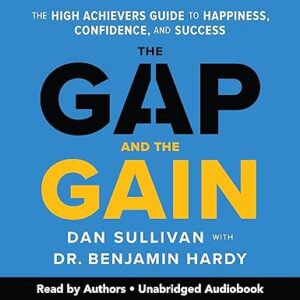
I would encourage anyone to take a minute and write down their story. You don’t have to write a whole book. You don’t have to write a thousand pages. You don’t have to pound it all out as I did. But think about your life and that hero’s journey and see where you started. Oftentimes, we are always looking forward to the next horizon and the next horizon and the next horizon. “What have I not accomplished yet?” Just take a minute, like the great book, The Gap and the Gain by Dan Sullivan and Ben Hardy. It talks about looking at the distance that you have traveled and celebrating that because it’s amazing. Everyone should see themselves in the hero’s journey.
Beautiful. What are your three top tips for living a stellar life?
Since you’re hitting this with me, I’m sure I’ll think of three great ones now, tomorrow, and the next day. But the ones that come to mind immediately are that you should love yourself. Find love for yourself. Some people just know how to love themselves, and they’re just born with it. That’s different than being arrogant. Sometimes the most arrogant person is the one who doesn’t love themselves. It’s not arrogance, but it’s truly loving yourself.
Take care of your body. Probably about 10 years ago now, I realized that I had put so much into my business and so much into, I had served in, I was serving in these church positions and things, which was wonderful. I loved all of that and striving for business, but I had neglected my body, and I was overweight, and I was tired, and I wasn’t happy and healthy. I wasn’t sleeping well at night.
Take care of your body. Your body is connected to your spirit. Your body and your spirit are the soul of man. That means you have to take care of both. Take care of your body. Think about how you fuel it. Think about how you hydrate it and think about how you exercise it. We’ve actually talked a lot about anger. The way I get anger out now is I go to the gym. Let’s do some reps. Your body needs physical movement. Take care of your body and love yourself. Take care of your body.
I’ve been in a terrible relationship. I studied martial arts, and I would kick and punch, and that’s how I took out my anger. I didn’t kick and punch anyone. Just the punching bag. I was pretty strong back then.
That’s a great use of anger.
Yeah, I was so strong. I got myself really strong because I said to myself, and this is again the value of rage, my rage was like, and putting a line in the sand was like, “Nobody will ever touch me like this again in a violent way. I’m going to get so strong, and I’ll learn to protect myself.”
That was my way of releasing rage. But I also released rage in a yoga class where I was on the yoga mat, and it wasn’t only sweat, but lots of tears on the yoga mat and in dancing. Movement is super helpful because we have issues that are stuck in our tissues, and we need to release them somatically. You can do breath work, any movement that will help you get rid of all this trauma that we can store in our bodies. We can definitely think our way out of trauma, but we need to engage the body as well because our mind and our bodies are connected. As you said, the spirit and the body are connected. If you want to elevate your spirit, take care of your body.
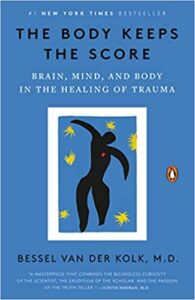
I 100% agree. The Body Keeps the Score is such a great example of how our body stores trauma. We know that our body has muscle memory. I played basketball a lot in my twenties. I love playing basketball, and sometimes you would make a move and then dribble the ball a certain way, and then make a shot. Afterwards, you realize, “I didn’t think about any of that. I didn’t think about it. I just did it.” Just one example of so many ways that your muscles have memory.
If you’ve experienced trauma and you’re not physically letting it out through movement and things, I think that you’re missing a really vital step because I agree with you, it’s not enough to just do it mentally. It’s not just mental gymnastics. You need some real gymnastics in there, too.
Move your body. I’m going to this ecstatic dance thing that I just registered for, I think, an hour before we recorded this podcast. I’m going with a girlfriend, and we’re going to just dance it out and release whatever is annoying us. When you dance, and you release, and then you connect, it’s going to be really fun. I can’t wait. It’s going to be amazing. But it’s important. You said that we need to love ourselves and take care of our bodies. What is the third thing?
Well, keeping with this theme, I think that we also need to feed our minds and do good things to them. Last year, I had a goal that I was going to read. I tend to do things big. When I do something, I go big. I read 52 self-help and business books last year. It was incredible. I’m a little tired of it this year. This year, I’m taking a break and only reading what I really want to read. Although almost all 52 books that I read last year were things that I’ve been wanting to read. But, love yourself, take care of yourself, take care of your body, take care of your mind—always be growing and learning something.
Right now, I’m learning and focusing a lot on AI and vibe coding. I’m learning how to code. Not like actual code code. Now that you can code with AI using Claude, Lovable, and some of these other tools, I have been building things. I love to build and create. I’ve been building apps and websites and things and learning how to use AI because I think that’s so big in the future. But the point is that you always feed your mind, always be learning things.
You’re saying it in passing. “I read 52 books last year.” What? What were the best three booksthat you recommend? One in business, one in personal development, and one that is just fun.
I love the business books by Ben Hardy that teach Dan Sullivan’s work. Those are some of the most incredible books in business. Pick one of those. I think one that is good for our conversation we’ve had today is The Gap and the Gain, it’s good for business. It’s also good for personal. I love that one. His books are very good. I would say one of the Ben Hardy books, probably The Gap and the Gain.
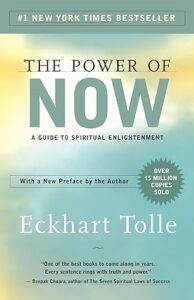
For your personal and for self-development, there is no book that I’ve read that has had more impact on me personally from a self-help perspective than Eckhart Tolle’s The Power of Now. The Power of Now has been so critical for me to get free of my mind and realize that I am not my mind; my mind is a tool that exists within me.
He says many people are identified with their mind, and they think they are their mind. Your mind is a great deceiver, and it will tell you that it is you, but it is not you. There is a greater you inside of you, and that is your spirit or being or something.
In The Power of Now, he teaches you to be the observer of your mind. That has been incredible, incredible for me. I highly recommend Eckhart Tolle, The Power of Now.

For my fun book, there’s a writer called Dennis E. Taylor. He writes these books, one of which is called We Are Legion. It’s kind of sci-fi, which I kind of nerd out on some of that stuff sometimes. But the idea is really, really cool. There’s this guy who is in Las Vegas, and he decides one day, there’s this new thing where they can freeze your mind. He’s like, “I’m gonna sign up for that cryo-freeze mind thing.”
He does, and then he walks out on the road and gets hit by a car and dies. But then wakes up all of a sudden, but he can’t move. The idea basically is that they’ve put his mind into a computer, and then they use his mind to power a spaceship. He goes out in space, and he meets aliens, all this crazy stuff. It sounds really crazy, but it’s really fun. It’s fast-paced, and it’s well-written. If you’re into sci-fi at all, that’s a fun one.
If you want to go far out, it’s a conspiracy theory that there are actual souls that created AI. Like souls that were put into a computer, blah, blah, blah. I don’t know if I buy it, but that’s another theory.
I’ve heard people asking, “If a computer can think, is it a being now?” There’ll be some interesting things and discussions over the next 10 years.
I heard Gary Vee say that, “Your grandchildren will be in the generation where people will actually marry AI.” I don’t want to hear about that. Thank you so much for being here, Calvin. Thank you for sharing your story. Thank you for being an amazing human being and helping so many people on so many levels and in so many ways. I appreciate you being here.
Thank you, Orion.
And thank you, listeners. Remember to love yourself, take care of your body, feed your mind and have a stellar life. This is Orion. Till next time.