USA
USA HEBREW




In this Episode
- [04:53] Candace Burch read John Lee’s book, which inspired her to specialize in hormone balance and menopause.
- [08:29] Candace worked at ZRT Lab for 12 years, focusing on educating patients and providers about hormone levels and natural bioidentical hormones.
- [14:39] Jess Suchan shares her experience of starting bioidentical progesterone in her 30s due to hormonal imbalances and chronic migraines.
- [24:56] Jess adds that testing should be done while using hormones to see how they are working and to make necessary adjustments.
- [36:01] Jess discusses the importance of building stress resilience and training the body to feel safe again.
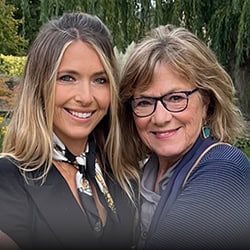
- [43:15] Jess reflects on the strong relationship she has with her mother, attributing it to their creative upbringing and frequent family activities.
- [47:30] Candace mentions her podcast, Women Talking Frankly, which focuses on perimenopause, menopause, and hormone health.
About Today’s Show
Jess and Candace, welcome to the show.
Jess: Thanks for having us.
Candace: Thank you.
How are you doing today?
Jess: Doing well. The day has just started over here in Orange County, and my mom’s in Oregon. Just getting started.
Tell me a little about your origin story and how you both started working together. This is fascinating.
Jess: I’ll let mom start, because she’s the one who began. It all starts with her.
Candace: I came to parenthood late in life, so Jess is my first child, and I had her when I was 37. That’s sort of starting late, and I was spending a lot of time traveling with my husband, living outside of the US, not thinking that I wanted to have children. By the time I got into perimenopause, late 30s, early 40s, I had little kids. I had Jess’ sister, Orion, a few years later, when I was 41, so I was in full-blown perimenopause, fluctuating hormones, fluctuating moods, hot flashes, practically every 20 minutes, just really irritable. Opening all the windows in the house when it was free—everyone was freezing, and I would bark at them all to put on a sweater because I was hot, and I was just as I often say, “A bitch on wheels.”
There came a day when I realized that I was actually scaring my children with my moods. As a health educator, I have worked in health maintenance and disease prevention. I worked as a health journalist in London for many years, and I just thought it was time to get a handle on what’s going on with me. I knew it was my hormones. Like so many women I talked to, I didn’t think about it much until you get there, until you start dealing with these symptoms that you’ve never had before and not recognizing yourself and your family running for the hills because you’ve changed so much.
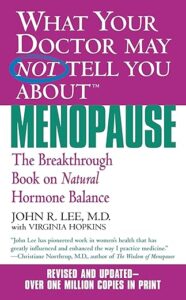
I decided I was going to learn more about hormones, menopause, and I read a book by John Lee, who’s kind of a guru. He’s not with us anymore, but he wrote one of the first books, called What Your Doctor May Not Tell You About Menopause. It was kind of the Bible. It still is, but it talked about the fact that women’s hormones change. It got into what happens to our cycles as we get older, what happens to our ovulation, all the different reasons why we start to get symptoms, because so much changes at the hormonal level.
I didn’t know a lot about it, which is what so many women tell me, and I still am kind of shocked that I was one of them. I didn’t know if I was in perimenopause, and I didn’t know what to do about what I was going through.
I wrote to him after reading the book with tears in my eyes at every page, practically, “Oh, he’s speaking to me.” I said, “How can I learn more? How can I study this? What can I do? I’m a health educator. I have a master’s degree in this, but I want to specialize in this.” He told me to contact Dr. David Zava in Oregon, where I happen to be living, that he is running a hormone testing lab, and he and Zava were writing a book about hormones and breast cancer.
Anyway, he told me to call Dr. Zava. I called ZRT Lab, was invited in for an interview, and was hired the same day as the director of education. He was very passionate about education. If you’re going to have a female cycle and periods and pre- peri- and post-menopause, you need to understand what they mean and how your hormones impact your body as you grow, as you age, so he hired me to set up a communication system, and he trained me in all the testing, how to interpret testing, how to communicate the results to people. We just put together a ton of educational content, not only for patients but also for providers.
If you’re going through pre- peri- and post-menopause, you need to understand what they mean and how your hormones impact your body as you grow and age.
This is still the case; most GPS and many OBGYNs don’t have training in dealing with treating hormones using natural bioidentical hormones, testing hormone levels. Many women are still told, “You feel like you’re on a roller coaster. That’s just normal. That’s part of being a woman. Here’s an antidepressant.” When women are younger, and they have acne and heavy periods that are put on birth control. It’s been this default approach for the last 20-25 years to dealing with hormonal issues, and I am in that world now that is much more individualized, that is fighting back against the old school, one size fits all, and saying that, “Hey, we can test our hormones. We can identify imbalances. We can link them to our system symptoms, and we can do something about that. We can rebalance. We can use natural options, and we can feel ourselves again, or maybe even better than ourselves. Maybe we don’t remember how good we used to feel and how much better we could be feeling.”
That’s the world I’m in. I was at ZRT as their Director of Education for 12 years, something like that, and then left and started Your Hormone Balance. Amazingly, my daughters, whom I was mentioning, were scared of me and were sick of me talking about hormones, weren’t you, Jess? I’d come home from I started talking about hormones at the dinner table. It was like, “Mom, stop.” They run from the room. Now, here they are a very integral part of this counseling practice and educational family business that we are all very dedicated to. Actually, they’ve taken it well beyond what I could do, because they understand how to access all the social media platforms, etc., while I’m just sort of languishing back in the old days of the desktop computer.
Jess: Not to mention, though, that she’s also 77 years young, and definitely the epitome of balance, because I remember when I’ll see women that are 77 your same age, that are not active, that look and feel so much older than you, and you do practice what you preach like you do, live that life of balance. She and my dad travel all the time. I always say, “I feel like she has more energy than I do.” They travel all the time.
At around age 51-52, you’re in menopause, and even in that 10-year transition in perimenopause, your ovaries are “packing their bags,” and they’re not working as reliably as they should.
They’re always walking and moving, or she rows; she definitely has always been an inspiration to me for aging gracefully and not fearing getting older. Because I just turned 40, and I definitely had a mini meltdown about it, but I just always look at my parents, I’m like, “Oh my gosh, you can be in your late 70s and still traveling and gallivanting around the world and meeting your friends and being active and taking art class and feeling fully energized for the most part.”
What’s your secret, Candace?
Candace: I don’t think it should be a secret. I attribute the healthy aging not only to the essential supplements, obviously the B complex, which is so important for energy and adrenal support, but also to all of that. But I think the bioidentical hormones are the secret. They’re the secret elixir, because as you get into your 50s, you stop ovulating.
At around age 51-52, you’re in menopause, and even in the years leading up to menopause, that 10-year transition in perimenopause, your ovaries are, as I always say, packing their bags. They’re not working as reliably as they should, and ovulation becomes erratic. When that happens, hormone production becomes erratic. The adrenal glands, which are those tiny but mighty glands that sit on top of the kidneys. They’re not only having to regulate your blood sugar and your insulin and your sleep-wake cycle and your immunity against illness, but now they have to pick up all the slack in hormone production from the ovaries.
I think the real secret is supporting the adrenals, making sure your blood sugar is balanced, that you’re eating properly, that you’re getting the right supplements again, and that you’re practicing stress management. If that’s travel or massage or meditation or breath work, as Jess has just been certified in that very important discipline, it’s about keeping those adrenals propped up and the bioidentical hormones come in because we have to replenish what our bodies can no longer make for us, just as we replenish ourselves with protein in the certain foods or nutrients because we can’t make all the essential amino acids. Our bodies don’t make them.

We have to top up. As we get into our 50s, 60s, 70s, we women are living into our 80s, 90s. My mother passed away in her early 90s. We can’t be without those hormones. They have functions. They have major foundational functions and roles to play that we can’t be without. We age rapidly. Without hormone replenishment, we run out of energy, we run out of strength. Our metabolism goes down. We become at risk for heart disease, bone loss, and all of these things if we don’t replenish. I am a big fan, I guess that’s my say. I’m a big fan of topping up, of supporting, of replenishment. My body has everything it needs to just breeze me into the latter golden years, so that I can do all those things Jesse described.
There are many, many women. There are studies now that have come out recently, that women are good to go with using hormones after 65 as long as they’re bio-identical, plant-based, not synthetic, used in doses that are matched to our physiologic need and monitored. As long as we’re doing that and all the other support for the adrenals, then I think we’re good to go.
The real secret is supporting the adrenals, making sure your blood sugar is balanced, that you’re eating properly, that you’re getting the right supplements, and that you’re practicing stress management.
At what age do you need to start taking those?
Candace: I started for many women in perimenopause, which is starting sort of earlier. I think there’s such an abundance of stress in our world now that it’s kind of just in that sort of stress overload, which can knock out adrenal function. The adrenals start becoming overwhelmed, underperforming, and then the body needs even more support.
A lot of women are going into this erratic; they’re missing ovulation. They’re missing cycles. Their hormones are becoming more erratic and fluctuating, and at that point, a little bit of progesterone can be helpful. That might even be in your early 40s, that’s when I started to quell my mood swings and my hot flashes. I needed a bit of that.
Jess: But also, Mom, I started taking bioidentical progesterone in my 30s, and we work with a lot of women because we offer at-home hormone testing through saliva, which is a lot more accurate than standard blood tests that are covered by insurance. You can test at home, and then once the results come back in, we give you this rebalancing guide for how to support your body with food, movement, supplementation and potential bioidenticals. Depending on the person’s levels, they might actually need, not usually estrogen, but at that younger age, progesterone, because progesterone is produced only upon ovulation.
A lot of women, as my mom said, due to stressors like not just work stress, traffic or trauma, all of that is stress on the body, absolutely, but also under-eating, over-exercising, lack of boundaries, toxic products on the skin, all of these things are stressors that add up. I have a history of 12 years of yo-yo dieting, hormonal imbalances and chronic migraines.
Without hormone replenishment, we run out of energy and strength. Our metabolism goes down. We become at risk for heart disease, bone loss, and all of these things.
That’s how I got into this work, healing that holistically and wanting to help other women do the same thing, but I had to start on progesterone at 30 because my estrogen was high and my progesterone was low, and I believe a lot of that has to do with the fact that I wasn’t ovulating regularly, because when the body senses a threat. The female body is very sensitive to external threats because the body is always trying to protect a potential fetus, whether or not we’re attempting pregnancy or not. It will say, “We’re not safe. This girl is under-eating, she’s over-exercising, and she’s got too much stress. We’re going to protect this potential future baby, and we’re going to shut down non-essential functions.”
Those non-essential functions include the immune system, so you can get sicker more easily and fight and not bounce back quickly, and then digestion, so you might find that you’re having bloating and digestive issues. The third and most potent one is reproduction. Because if your body’s in a state of survival, it does not need to prioritize digesting a sandwich, it does not need to prioritize your immune health, and it definitely does not need to prioritize getting pregnant.
That’s where the body will protect you by stopping ovulation, and if that’s constantly happening cycle after cycle, then you’re not producing progesterone, and then progesterone gets lower and lower relative to estrogen. That’s where we can start to experience not just things like infertility, which is huge one or fertility struggles, but also bad PMS symptoms bloating, cramping, migraines, really sore boobs, mood swings, anxiety, restlessness, sleeplessness, really bad, anxiety and sometimes depression, and then also period issues like really bad cramps, heavy bleeding, severe exhaustion, all of those things are common, but they’re not normal.
If you’re experiencing symptoms like that, another one is acne before your period. That’s a sign that your hormones are out of balance. Often, when we test women in their 30s and 40s, we see a lot of that. My job as our holistic health coach is really to help women create safety in their body through blood sugar balancing nutrition, eating regular meals, making sure that they’re eating enough protein, and making sure that they’re moving their body, but moving their body in a way that supports ovulation. I help women reconnect with their cycles.
If your body’s in a state of survival, it does not need to prioritize digestion, immune health, and it definitely does not need to prioritize getting pregnant.
We have four different phases of our cycles, and learn what’s happening hormonally in each one of those phases, and then be able to adjust your workouts to the phase that you’re in, and even your nutrition and even the commitments that you say yes or no to, because at different phases of the cycle, your energy, your mood, your metabolism, are going to change. If we can optimize that and work with that, I’ve had so many clients over the years that have gone from irregular periods, missing periods, bad PMS, period issues. See dramatic positive results by doing this. But I think it’s so important for women to understand that the body is so sensitive to prolonged stress, and there are so many women who are chronically dieting and over-exercising because they want to look a certain way, which I totally understand. That’s what I did.
Candace: I think what Jesse’s saying really brings the holistic picture in, because we got right onto progesterone right away, which is a sort of a magical thing, but it has to be in concert with all those lifestyle accommodations that we need to make to optimize our health you can’t out supplement extreme stress, toxic relationships, skipping meals under eating of protein and good fats and vegetables and all those fiber and all those things that our bodies absolutely have to have to function properly. It is a holistic, integrative process.
If you want to get to the place where you’ve been living with symptoms or ages and you start to realize, as Jesse said, “Maybe they’re common, but it’s not normal.” I shouldn’t be feeling this way people who think that the heavy, painful periods they’re experiencing or the constant headaches are that they’ve had for years are something that just comes with the territory. Because their mother had them, or so many people have them, that’s not good enough. There’s so much we can do to turn those kinds of things around. I think it begins with symptom awareness. That’s a huge, huge part of this. We have a nice symptom quiz, don’t we, Jess?
Test. Don't guess. You want to really understand your unique levels. — Jess Suchan Share on XJess: Yes, you can actually go to yourhormonebalance.com and take our symptom quiz. We’ve revamped the entire thing this year, so it’s the most customized hormone quiz you’ll probably find out there, and you get results emailed to you instantly with next steps, and even if you’re interested in. Testing, there’s a discount on testing, but as mom said, it is important to first and foremost understand what symptoms of hormonal imbalance even are, because a lot of them cross over with other symptoms too, as gut health symptoms can also be hormonal symptoms, and the gut impacts our hormones. Our liver impacts our hormones. It’s not that we necessarily isolate them.
Either we don’t just focus on our gut health, or focus on our hormone health, or focus on our liver health. We want to focus on all of these pieces, which all impact the other, and stress impacts the gut and the gut lining, and then that impacts our hormone production. It is important to understand your unique symptoms and then what you can actually do about them. I will say that, just to finish the thought from earlier, bioidentical progesterone cream, or I’ve also used a topical serum that has been so helpful for me, just in regulating my cycles when they were irregular, helping with my migraines, specifically.
But with the cream, how do you know the dosage exactly, and how do you know when you’re putting too much?
Candace: The whole thing with using bioidentical hormones is that you are, we call it physiologic dosing. You start with the lowest dose, go slow, and can build up to a higher dose. But it’s always, it always should be within the range that your body can make naturally. That’s about 25 to 30 milligrams of progesterone we make daily, which our bodies should be making endogenously. That’s about a quarter teaspoon of progesterone cream, or people can start with even less just to see how they feel.
It’s so important for women to understand that the body is so sensitive to prolonged stress, and there are so many women who are chronically dieting and over-exercising because they want to look a certain way.
It’s also when we talk about physiology, we’re matching the amount, again, with what our bodies normally make, but we’re also using it only during the period of time when we would be producing that hormone. It’s different for women in menopause. If they’re on estrogen and progesterone, they will be taking that all the time, but when women who are still cycling are going to use the hormone in sync with their cycles. The luteal half, the second half of the cycle, the luteal phase, after we’ve ovulated, is when progesterone is used in that physiological amount.
If it’s working for one thing, it’s that you’re going to monitor it. If you’re hip to testing, you’re going to be monitoring the levels. That’s important. When you first start using hormone, you should be looking for relief from the mood swings, from the hot flashes, from the anxiety, what to look for. The symptoms you had should subside. If you start to feel other signs of overuse, such as feeling extra bloated or super sleepy or drowsy, that can be a sign of using too much hormone.
Because actually, progesterone is great for helping people fall asleep and stay asleep. It has natural sleep-promoting properties, but women start to feel so much better when they’re using progesterone that they can overuse it, and then they think, if a little bit is good, then a lot more must be better. That’s not the way it works. It’s so important to match up with how our bodies work normally, so we’re just trying to duplicate Mother Nature.
Jess: I definitely had women who are like that come to me, and they’re like, “I’m using progesterone.” I asked them, “How much?” like, “I don’t know, I just use it every day, or just slather it on whenever I feel like it.” You definitely don’t want to do that. That’s why we always say test. Don’t guess, because you want to understand your unique levels. Because I test every year, sometimes every six months, depending on whether I’m working on certain goals. But I’ve seen that if I go too long, sometimes with testing, my progesterone might be higher than it needs to be, and I realize, “Oh, my body’s in a good place with it right now, I don’t need to be taking as much as I have been taking, I can taper down a little bit.”
I like to have those checkpoints too, not just testing, but especially if it’s your first time testing, retesting four months later, because you want to actually see how your levels have improved or changed once you’ve not just implemented the bioidentical hormone, but also made changes to your diet, your lifestyle and your stress. You put in the work. You go four months, you retest, and it’s very validating to see the levels improve, but then it also gives you feedback for other little adjustment, “Oh, maybe you need a little bit more of the progesterone,” or “Your testosterone is still low, so we want to focus on maybe bringing in some DHEA,” which is the precursor to testosterone, and we focus on strength training. It’s just helpful to have that touchpoint and that check-in to be able to make adjustments. When I work with clients, I usually have them retest after the first four months, and then after that, every six months or so.

Candance: Especially as Jesse’s saying, when you first started the hormone, you definitely want to check in and see what’s happening, which is, and you would do that if you were on thyroid medication or diabetic medication, you have to be checking and the point that’s important is that when you retest, you want to be retesting while you are using the hormones, so that you can see how it’s working for you, so that you can see the levels with supplementation. Of course, the test results have ranges that are set based on the supplementation that you’re using. We also have a ratio of progesterone to estrogen, a ratio that we measure so that we can see if estrogen is dominant, if it’s in excess over progesterone, or if progesterone is dominant over estrogen. Because that all-important balance between those master female hormones is very important to get right, that’s where the value of testing comes in, and in concert with all that good stuff that Jesse’s talking about, that we’re doing to get to that place of balance.
Besides progesterone and testosterone, what are the types of bioidentical hormones that women supplement, and at what stages of their life, their bioidentical estrogen?
Candace: I think the best form of that is to be prescribed. It’s usually prescribed in the lowest dose to begin with, and it’s a good way to deliver estrogen to the cells of the body, where hormones do their work, through a transdermal patch. They now have a patch that is a bioidentical estradiol. Estradiol is the most potent of the three estrogens that women’s bodies have. Estrogen is sort of like a sisterhood. There’s estradiol, estriol, and estrone. Estradiol is the most potent circulating growth hormone. Estradiol is a growth hormone. It grew all of our female organs. It grows the egg and the ovary. It grows the lining that we shed during our period. It’s the main circulating hormone.
That’s the one we measure in the testing if we’re low in that, and that’s usually when we’re older, into our mid 40s, early 50s, but then some women are very low in estrogen when they’re younger, because they’ve been on birth control for ages, and the birth control has shut down all hormone production. Many women have been on birth control and contraception, whether they were sexually active or not, for things that have to do with hormone imbalance. I’ve met women who were put on birth control for acne when they were 15, and they’re still on it 15 years later, and their estrogen is at the level that you’d see in a 60-year-old menopausal woman, and they have all those symptoms.
If your testosterone or estrogen is a bit low, you can start with DHEA, because it’s the precursor of both of those hormones.
They might need some estrogen, but generally that’s available. Delivery methods are important too when we’re talking about hormones, so they are best delivered through the skin transdermally, because then we are not taxing the liver. When you use hormones in an oral sense, they have to go through the gut and the liver. It can be a real overload. When you rub in a cream like progesterone, which is well received into the fat cells, it creates a steady state of delivery; you’re not taxing the liver when you use a transdermal patch, the same sort of thing. That’s available to women. Progesterone doesn’t need to be prescribed because it’s so benign. It’s not a growth hormone; it’s a balancing hormone.
Estrogen does need to be prescribed, although the weaker form, estriol, can be found over the counter and can help with symptom relief. It’s just a much weaker estrogen; for instance, it wouldn’t be helpful with a woman who’s had a total hysterectomy and has been catapulted into menopause overnight. As far as testosterone goes, that’s a whole subject that I plan to interview someone about on my podcast. Women talking frankly, but there isn’t actually an FDA-approved form of testosterone. Testosterone is a big, potent hormone that a lot of women are using to improve their libido, to lose weight, and to increase their metabolism, and it’s an extreme approach. It’s not the way to go.
First of all, as Jess mentioned, the most abundant hormone in the body is DHEA, and you can use a low dose of that. If your testosterone is a bit low or your estrogen is a bit low, you can start with DHEA, because it’s the precursor of both of those hormones. All of these hormones are in a cascade. They’re often described as a symphony. All the hormones are musical instruments playing in that symphony, and they all interact if one of them is out of tune. Goes the whole orchestra. Everything’s out of tune if even one is out of sync.
We need these hormones to interact properly. When women rush to get a testosterone pellet or an injection because they’ve got a new boyfriend or they’ve lost their desire for their husband, and they’re feeling bad about that, or whatever it is. Usually, it is about libido or wanting to feel young again; they will rush to the testosterone pellets. In particular, I’m not a fan of they get injected. They’re in your body for six months. You can’t control the dose, and you kind of go from hero to zero, feeling on top of the world and then crashing slowly but surely. That is a real caution.
Train your body to feel safe again, and you can do this through nervous system regulation and vagus nerve toning. — Jess Suchan Share on XI never suggest testosterone. First off, women who’ve had a total hysterectomy may certainly need a complement of estrogen, progesterone and testosterone, and then it has to be carefully individualized based on test results. Physiologic dosing, again, that’s important. These are the three main hormones women may supplement with the DHEA, again, is over-the-counter available and can be used in low doses, and just kind of you work with it, that’s the value of retesting to see if it’s helping strength training, increasing that lean muscle can boost levels overall, and strength is such a big thing for women as we age. I saw on your website, Orion, that you had done so many, so many things.
I can’t even remember all the different things that you’ve done that have made you a real, I guess, a Sabra, huh? But to make women strong, we need to work out. We need to lift weights. We need to challenge our bodies to keep our bones dense and our muscles strong, and our hormones at optimal levels. Then again, there’s that adrenal support of someone’s low if their adrenals are taxed and they’ve been low for ages because of years of stress, the wrong diet and the extreme exercise and all of that, we can supplement with natural forms of cortisol.
But generally, it’s more about supporting the adrenals, strengthening and nurturing them with the B vitamins and the minerals and the adaptogenic herbs and like ashwagandha that we were talking about before, which are called adaptogens, because they’ve been shown to help the adrenals adapt to stressors, so they nurture and strengthen adrenal function. They can be quite powerful. We’re talking about things like ginseng that have been used for years, for 1000s of years. What do they use in Israel? They probably have some natural herbs and folk remedies.

The same Chinese medicine is big here. All medicine is like everywhere else.
Candace: That’s what women are excited to get into, to be. If they hadn’t known about it or been reminded of it, I do find a lot of women I talk to don’t know about adaptogens, or they don’t know what the word means. They haven’t heard of it before. But if you mention something like Ashwagandha, chaga mushrooms, or mushroom therapy, they will know about it. But it’s sort of coming back to nature, coming back to our natural options and being reminded of what those are, and using them in concert with all these things that we’re talking about. I don’t. I never talk about you asked me what my secret was, I did mention the bioidenticals, but in testing and educating, we always say bioidentical hormones as needed. If testing shows that you need them, they’re not to be used willy-nilly. These are potent substances, whether natural or not; we must use them with caution and judiciously.
Jess, this question is for you. How do you help people manage their stress? Life can get hard. I feel like the world today is hectic. It’s even hard to take a moment to focus, because it feels like we are spread thin, juggling so many things and facing so many distractions. How do you help people center and relieve stress?
Jess: I am not immune to stress myself. I get stressed a lot because I have a business that I’m running, and I’m also a support coach, helping wellness entrepreneurs grow their business. I work with our family business. I have a husband, and I have dogs. I have a lot going on, so I definitely. Definitely feel it too, and I understand, and I work with a lot of very ambitious women, high-achieving women who are focused on growing their lives and their careers and have a lot on their plates. A lot of moms I work with, too. It’s what we always say in our family business, too: it’s not just about reducing stress, but about building stress resilience so that when you are hit with stressors, they don’t completely take you out.
Your nervous system is the part of your body that scans for safety or danger and drives everything from your mood and motivation to your energy, even affecting your hormones, digestion, and how you show up.
It’s building that resilience. There are many ways we can do it, but I think this year, in particular, the nervous system is having its moment. Everyone’s talking about the nervous system, but it’s important, because your nervous system is the part of your body that scans for safety or danger, and it drives everything from your mood to your motivation to your energy, even impacts your hormones, digestion, how you show up, and there’s something called the vagus nerve, which is our longest cranial nerve, and it’s the main communication channel between our brain and our body.
When we hear it’s called vagal toning, when we tone our vagus nerve, it basically tells our system, you’re safe, you’re supported, you can rest and restore, but so many women are trying to balance their hormones, lose weight, heal their gut, make big, bold moves in their business, find a partner, but their nervous system is stuck in survival mode. When you’re constantly in fight, flight, freeze or fawn, your body isn’t prioritizing healing. It’s not prioritizing hormone production or baby making; it’s prioritizing protection, and this, again, is where symptoms can pop up. Instead of piling on more to-dos or pushing harder, we actually have to train the body to feel safe again, and we can do this through nervous system regulation and vagus nerve toning.
What’s good about it is that the tools don’t have to be overwhelming or time-consuming. It can be these. I call them high-impact, low-energy tools. Diaphragmatic breathing is one where it’s basically just deep belly breathing. I became certified in breathwork last year, and meditation, because I struggled to sit still for even three minutes to listen to a guided meditation. I was like, “I need to figure this out.” One of the first things that I learned, which I thought maybe I’m just behind the times. I didn’t know this. But now that I’ve started incorporating breath practices in with my client sessions, almost every single one of them didn’t realize it, either. But what many of us do is we breathe from our chest first, so we’re having these short, shallow breaths, and it almost gives us more anxiety, whereas diaphragmatic breathing is training yourself to breathe in to your belly, then your rib cage, and finally, your chest.
I teach people to put one hand on their heart, one hand in their belly, and practice exercise. Practice actually breathing, inhaling, filling your belly, then your rib cage, then your chest with air. It’s almost like tapping your head and rubbing your belly at the same time. At first, it can be; it can take a second to figure it out, but after a few rounds of practicing it, you’ll start to notice it just feels so much better. Diaphragmatic breathing, box breath, where it’s just breathing into the count of four, holding to the count of four, exhaling to the count of four, holding at the bottom for four, and doing five rounds of that can be impactful.
You can do that when you’re in traffic, when you’re standing in line at the grocery store, when you’re at home. There are so many ways, so many places, that you can use it. Another one that I love that actually helps tone the vagus nerve is humming, singing or gargling like gargling water, also chanting OM. One thing I’ll do is I will meditate for 10 minutes every morning, and at the very end, I’ll take my final inhale, and I’ll chant Om, because Om tones the vagus nerve and it makes us feel calmer, and it also connects us with our intuition. Just chanting OM when you’re brushing your teeth, you could be humming while you’re brushing your teeth, when you’re in the shower, singing, all of that is so easy to access.
Your nervous system is stuck in survival mode when you're constantly in fight, flight, freeze or fawn. Your body isn't prioritizing healing. — Jess Suchan Share on XAnother one is, I mean, this one is chronic. I feel for everybody, but having very strict boundaries with your phone. One thing that I like to do is a morning digital detox, where I turn off my phone in the morning and I spend the first at least 30 minutes doing my skincare, doing my meditation, reading a chapter for my book, doing a little bit of journaling before I touch my phone, because the second we touch our phone, everybody in our phone has control over our day, and we lose control. We become reactive to what’s in our phone, so we see an email, and we’re like, “Oh, that person needs to be responded to, or that client’s having issues, and so texted me, and they need me to get back to them with this thing.”
All of a sudden, our brain is racing with all the things we need to do, all the things we need to do, list them. We’re on Instagram, and we’re comparing ourselves, and we’ve lost the connection with our bodies and our ability to be calm, and that 30 minutes of just calm time, having literally zero idea what’s on my phone, just makes me so much more in control of my day. From that place, I’m more regulated, I’m more relaxed, and I can respond to what people need from me from a much more grounded, centered place, and then throughout the day. It’s just a matter of little things, like taking breaths when I’m feeling overwhelmed, going for a walk with my dogs, and putting the phone away, making sure I’m eating three blood sugar-balancing meals when possible, and taking a break from my phone and my computer while I’m eating my lunch.
Those are some of the main ones, but it is like building stress resilience, setting boundaries with your phone, but also with other people in your life, not being the Yes girl to everything, and another one is just learning to live in sync with your cycle, too. It’s not like huge, big things, but they can feel big if you are someone who’s addicted to your phone or struggles saying no, or is like the go-to person for everyone in your life, but it is retraining your body, your brain, your mind.
Well, ladies, I enjoyed my conversation with you, and I love seeing the relationship between you two that is so beautifully loving, respectful and inspiring. What would you say is the thing that made your relationship the strongest?
Jess: We’ve always had a very strong relationship. Our family is just my mom, dad, sister and I, immediate family, and I will say that one of the things that my parents did a good job of growing up was we actually didn’t watch TV. We had a TV we could watch cartoons on the weekends and movies, but we didn’t have regular access to television, and we were very creative as a family. We would always read books out loud. I’d go around the circle. We would do family plays. We would go outside to parks, and we were always outside and doing creative things.

We traveled a lot together, so it just innately made us close. I think also building this business together has made us a lot closer. Finally, understanding, when I went through my own hormonal imbalances, instead of being annoyed or short with my mom, and she would say, “Maybe it’s your hormones,” I actually became fascinated by it, and when I saw changes in my own life, I obviously just wanted to talk about it all the time too. I think the thing that we’ve had to work on in the family business is not talking about it incessantly, because we’re all so passionate about it. We come together, and it’s like my poor dad.
We’re just all three of us talking about hormones. I think we’ve done a good job the past few years of setting boundaries around it, and of course, still having conversations, but talking about other things. We always get together as a family, and they live in wine country, so we’ll go to a winery with the dog, and we’ll catch up, and we always have family dinners at the dinner table before we go watch a movie. We’re a very conversational family. We love being around each other, and we just have a lot of conversations. We don’t just go to our phones, our TVs, or any distraction. We actually enjoy being together.
Candace: Some of that was forged because we, the girls, were born in London. We were living in England, and it was sort of a more old-fashioned world. I’m grateful that you guys were born before cell phones, and I think that’s a real challenge for parents today to deal with the computer time and the cell phone time, but we had the opportunity to talk more and to do all those things that I just mentioned. I think we have always talked everything out, which has made us close. We’ve very rarely had a period where I can’t even remember if we’ve had a period where we weren’t speaking.
You can't out-supplement extreme stress, toxic relationships, skipping meals. — Candace Burch Share on XI think communication has always been, and Paul Goodman said in his book Growing Up Absurd that your child has to rebel against you. Even if you’re the best parent in the world, your child has to individuate. They have to find themselves, and that might mean rejecting your advice or rejecting your beliefs for some period of time. I think that happened with us. I think that you had to go off and become your own person. You don’t want to be a clone of your parents. But somehow, because we always kept the lines of communication open, I think that’s what’s made us probably even closer than might be normal.
Jess: We talked everything out to ad nauseam.
That’s very inspiring and beautiful. Well, thank you so much. Where can people find you to work with you and learn more from you?
Jess: As mentioned, go to yourhormonebalance.com and take our symptom quiz. You’ll get customized results. A discount on testing. If you do test, you can also add a consultation with my mom or me to review results and support you with the next steps. I’m at Body Bliss by Jess, and actually, I can give you a link for the quiz, and if someone’s interested in booking a 30-minute strategy session with me, it’s a complimentary call just to kind of uncover what’s going on, what you need support around, and give you a couple of supportive. Next steps: we can give you that link, but we’re also at your hormone-balanced, body-blessed by Jess on Instagram, too.
Thank you so much.
Jess: Thanks for having us.
Candace: Thank you, just wanted to put in a plug for my podcast called Women Talking Frankly, which I co-host with a nurse practitioner, and we, being women of a certain age, have a big emphasis on the perimenopause, menopause, years, the use of hormones, and safety. We deal with all kinds of issues. We have an upcoming episode on testosterone in women, so it’s very relevant to everything we’ve been talking about today.
Thank you very much.