USA
USA HEBREW




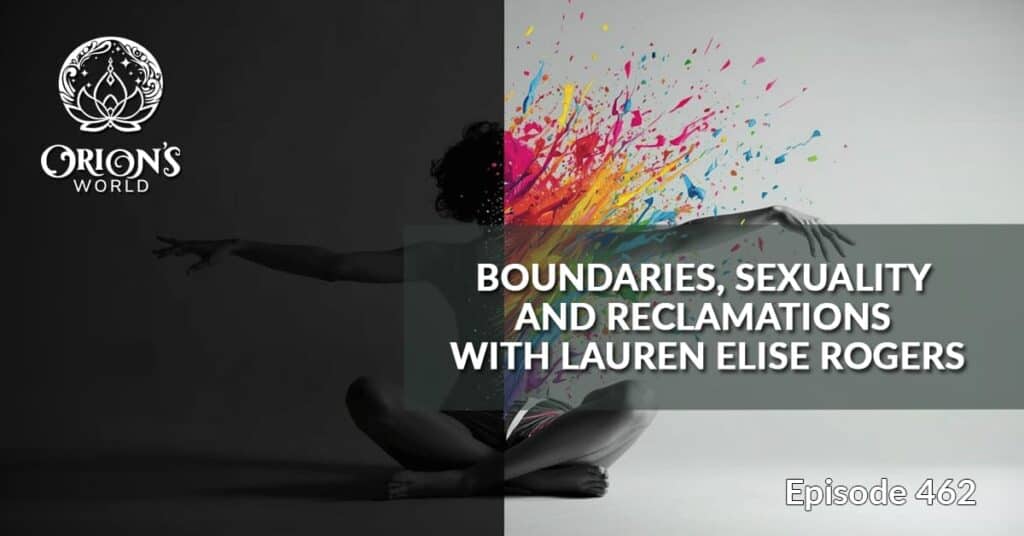
In this Episode
- [04:39] Lauren Elise Rogers describes the headship model in her family, where women were subordinate to men and sexuality was shamed.
- [07:45] Lauren was taught that it was not a wife’s place to speak of her husband’s sins, leading to her suffering in silence.
- [09:57] Lauren’s therapist suggested setting boundaries for her husband, which he violated, leading to their separation.
- [25:31] Lauren advises those in toxic relationships to build support structures before leaving.
- [29:18] Lauren emphasizes the importance of community and support systems in helping her daughter and herself heal.
- [34:18] Lauren shares practices like exercise, self-dates, and non-sexual pleasure to reconnect with her body.
- [45:17] Lauren suggests phrases like “not that, but this” to communicate needs better.
- [49:43] Lauren highlights the importance of self-care in relationships and how it can positively impact others.
About Today’s Show
Hi Lauren. Welcome to the show. Thank you so much for being here.
Thank you so much for having me.
Before we begin, could you share one magical childhood memory with me?
The magical childhood memory that comes immediately to mind is of climbing trees. I loved. Loved to climb and scale heights when I was a child, and to cling to the trunk of the tree as it swayed in the wind. This little girl, who I was longed to scale new heights and was being raised in a very small town in the middle of Virginia, and she didn’t know it then, but that was her way of climbing above the constrictive beliefs that she was being raised in. Climbing trees as a child.

Wow, I love that. I love climbing trees as a child myself. I used to read all the Tarzan books, so my backyard was a magical jungle, and the stray cats were the animals, and the trees were the trees.
My friend and I had entire houses and castles in our trees. We literally had different sections of the branches that were different bedrooms or a kitchen and school rooms, and all of these things throughout the tree, and that amazing ability of a child’s imagination to craft a different branch as a different room and a home is still something I cling to today.
You mentioned a little bit about the restriction of your upbringing. You could share a bit about your journey and how you discovered your passion.
I would love to because I think when I introduce myself now as a certified holistic sexuality educator and an embodied intimacy educator. Relationship coach, I think that sounds very smart and learned, and oh, she knows a lot, but I need everyone to know that my story is quite different. I was raised in a very small and very conservative religious town in central Virginia. My parents were Christians and had found a very niche, little, small pocket of Christianity that existed in this headship model wherein the father was the head of the household, and the wife was next, and then the children were under this headship umbrella, and girls were second to boys.
Sexuality was something to be ashamed of, and my own female body was something that would constantly be a temptress to those in a male body, and that I should constantly be working on being smaller and meeker and being prepared to be a servant for my future husband. I grew up with no education about my body and the bodies of others. I was homeschooled. I was kept from most peer interaction, and I was even taught that things like peer-to-peer interaction are just elongating adolescence, and it is indulgent.
You should want to be an adult earlier. I was the oldest of five children, and I was parentified, as many oldest daughters are. I was helping to raise my youngest siblings from the time that I was nine years old, and so fast forward many years. I was not allowed to date. I was taught the courtship model, which, again, is a very property-type model that I would have been passed from my father to my husband. At 21, I found myself engaged, and my mother was dying of pancreatic cancer, so she asked that I bump my wedding up.
We don't get to tell others how to love us. Our needs are our job. They can put forward your wants and desires, but taking care of your neediness is your job. Share on XOn the night before my wedding, I was given the one piece of sexuality education that I was ever given, and that was this: “Lauren, take care of your husband’s needs, and everything else will be fine.” I entered into a marriage the next day, and I was in this marriage for a decade. My mother passed away shortly after we were married, and that triggered something, and then my husband he became an alcoholic and abusive, and it was all kinds of horrible, but because I had been raised inside of this very narrow framework, I did not think that I could tell anyone of the true horrors of what was going on inside of my home. I had never been taught about consent or about cycles of abuse or about any type of abuse other than physical abuse. I had never been educated on emotional abuse or psychological or financial abuse, any of that type of thing.
Even more than that, I had been taught that it was not a wife’s place to speak of the sins of her husband, and that these were all things that would sanctify me. This would be purifying me. This would lead me to a more holy existence. I continued in this marriage, and we got pregnant. I had a daughter, his episodes became even worse after the birth of our daughter, and I just stayed. He eventually got sober, but his sobriety was replaced by these things called parasomnias. He was one of three different personalities in the evening, most evenings, and again, Orion, I did not think I could tell anyone.
Then in 2017, someone began having dreams about me, another woman that I knew began having nightmares and dreams, and she took me on a walk, and she set me down on a park bench, and she said, “Lauren, what is going on in your life?” I thought she was talking about some professional obstacle. I was at that time directing a nonprofit organization of which she was a board member. I started talking about the nonprofit, and she said, “No, no, at home. What’s going on at home?” For the first time in my life, all of the story started coming out, and she heard the story of what was going on in my home, these parasomnias, the sadness, the fact that I hadn’t been touched in a romantic or sexual way for about a year at this point. She said, “We need to get you into counseling, into therapy.” I said, “We can’t do that.” My husband will say, “I’m talking to him.”

She said, “Oh, my goodness, that’s even more of a reason to get you into therapy. We need to do this immediately.” The next day, I was in a therapy session with a licensed professional counselor, and I was telling her the same story. She kept saying, “Wow,” as her jaw dropped and all these things happened. I am serious when I say that I had not seen that reaction from humans in the world in which I was living. I was only getting told that I would get a rub on the shoulder and keep praying. Keep praying was all I was being told not to. This is something that needs addressing, and you need safety, and your daughter needs safety. This therapist was the first person to suggest to me the idea of some boundaries. She said, “What if we put just a couple of boundaries in place, and then if he can abide by these things for this next week, until I see you, great, we will start working on relationship counseling and things like that. But if not, I think it is best for you and your daughter to be removed for safety purposes.”
I said, “Great.” I went home, and I thought, “Oh, he’s going to do these things.” All that’s mattered is that I have never been able to give him firm enough boundaries. Sure enough, he blew through all the boundaries in a week. We got separated. What I didn’t know at the time is that the system that I was existing in the religious system, and please hear me, I really differentiate between faith and religious systems and indoctrination and dogma. This system that I was existing inside of benefited from my suffering, and what I had never considered was that the moment I stepped away and the moment I started to heal, they would cease to celebrate me. Once I started healing, and once I started pushing back on some of the things that they were telling me, and the ways in which they wanted me to take my husband back as soon as possible, than the ways in which they were more interested in the marriage surviving than the two of us healing and thriving as individual humans, the more these shackles just started to fall from my eyes.
After he shared the divorce, they would not approve my divorce. They said I had no grounds, and it was at this point that I stepped away and said, “No, thank you. I have done everything by your rules. I have followed everything to a T. I have been in counseling. I have been shepherded through this entire experience, but I will not have you believe his word over mine.” He was saying that I was a liar, that none of this was true, and they put me through a psychological evaluation because they believed I was crazy, and that’s why I was bringing all these different stories to them about my lived experience.
Acknowledge what’s going on in your dynamic, take accountability, and be willing to repair.
I stepped away from that system of religion and lost everything once my divorce was final. I had lost my home, and I had lost my friend group, because everyone disagreed with my choice. I had, of course, lost my marriage, and I found myself in a basement apartment. There was a rat dying in the wall. It stunk to high heaven, and I found myself questioning, “If I’m no longer a virgin, as I was on my wedding night, am I now a whore?” Because those had been the only two possibilities presented to me for female sexuality: virgin or whore. I thought, “Well, okay, I could try the whore life.” I guess I could also start seeing if I’ve missed anything. There on that basement floor, I started reading every book I could get my hands on, every book about sexuality, about female pleasure, about relationships, about healing, about nervous systems, about abuse, about everything.
I started to transform because so much information had been willfully withheld from me as a young girl growing up inside of, again, a religious system such as mine. It was there that I started to go, “Wait a second. There is so much that I never knew.” Then I decided to go back to school and see what I could learn about sexuality education. I was running a nonprofit for maternal health, and I thought, “Reproductive health and maternal health, those are pretty close.” I’ll take what I’m learning and put it into the work I’m already doing. But I was in school for about six months before I thought, “Oh no, this is my new calling. I need to let go of this nonprofit. I’ll pass it on, and I need to go into providing this missing piece for humans.” I hung up a shingle for my business in January of 2022, and I thought, “I wonder, I wonder if anybody will need this as much as I did.”
Now it’s 2026, and I work with individuals and partnerships of all kinds all over the world, helping them reclaim and re-access their inherent sexuality, and I’m flourishing, and they’re flourishing. A couple of years later, this is the last piece of the story. A couple of years after I was divorced, this business had begun. I got a call from my ex-husband late one night, and he said, “Hey, I just wanted to tell you before I announce my relationship on social media tomorrow.” I thought, “Oh, that’s so sweet. Thank you so much. I’m so happy for you.” He said, “Yes, his name is fill in the blank.” I told him, “I am so happy that you have come to an understanding of yourself and your orientation, and I cannot wait to be your biggest supporter and ally in this world.”
I asked him if he would come over and stand in my backyard, and if we could do a rage exercise where I could rage for the woman that he had never come to defend for the past three-ish years at that point. He did, and he came and stood in my backyard, and I framed up a container, and I let him have it for all of the versions of me that he had silenced. I said, “I understand that this also was repressed in you.” He had not even understood because he had been raised even more conservatively, if that’s even a concept. He apologized, and now we get to co-parent our daughter together as beautiful, wonderful friends and allies, and I love him more than ever. Now I am happily remarried to a man who is not gay, and we live in that same town in Virginia and are thriving, and I get to work with folks doing this, reclaiming work.
Self-care and pleasure are an ethical obligation for anyone who is a parent, a lover, a healer, a helper, or a community member. Share on XWow, amazing story that you guys should make a movie out of it.
I sometimes think of it, and I think that producers would just giggle. They’d be like, “We can’t make that movie. That’s too outlandish, so wild.”
When I want to take you back to that moment with the therapist, she asked you to tell him to put three boundaries, to respect three boundaries. What were those boundaries?
There were things as simple as, if he has one of his parasomnia episodes, “Can he acknowledge that he’s having it, and can he apologize the next day?” What was happening was his body would come under the effects of these parasomnias, which anyone can Google. I’m not going to define them right now, but he would become one of three people in the evenings. She said, “It seems to me that he is negating your experience of these different personalities in the evening, every morning, and you are being gaslit every single day.” If he can acknowledge that he is having one when he is having one, and then take accountability and apologize and repair and get into therapy with you the next morning. Interesting, okay.

We are all human beings who are at any time overcoming an obstacle. It is not that we need him to be a perfect human being, not at all, but we do need him to come to an understanding of what is going on in his body and not gaslight you again and again. During one of the evenings, during this singular week, he came under the effect of a parasomnia. Our then seven-year-old daughter came downstairs. Her bedroom was upstairs, and ours was on the main floor. I was washing my face before bed, and she said she was having a bad dream.
I said, “Don’t go in the bedroom. Don’t go into the bedroom,” because I know her father was under one of these parasomnias. I finished washing my face, then dried my face and opened my eyes, but she was not standing there in the bathroom anymore. She was in the bedroom, and not only that, she had gotten into the bed, and my ex-husband had his arm around her and was looking at me in the eyes and was laughing maniacally and wouldn’t let her go. I knew in that moment we were done, because in the morning, he would not recognize it at all that that had even happened, and I knew that I was never going to put my daughter in harm’s way.
We are storytelling creatures. We love knowing the end of a story, and when someone is in the middle of it, we are in our own cells, facing uncertainty, and that scares us.
It is interesting how often we will choose our children, even before we choose ourselves. That’s just an example. One was, can he acknowledge what’s going on in your dynamic and take accountability and be willing to repair, and that was one of the things that he could not do. Wonderful question. No one’s ever asked that question, Orion, thank you.
From the perspective of your daughter, like looking at this, those shifts, I mean, she’s been through a lot since a very young age, how was she accepting or dealing with all of this and finding her own identity today?
Such a beautiful question. I am so thankful again, from the nonprofit work that I was a part of at that time, that I knew a lot of play therapists. From the very moment that we changed her life dynamic, she was in play therapy immediately with just an incredible, incredible play therapist. For those who might not be familiar, play therapy is so wonderful for children. Instead of it just being traditional talk therapy, where a little one would come in and sit on a couch and need to talk to a therapist. They, in essence, just come in and play with the therapist, but the therapist is observing their behaviors, the stories that they’re telling, they’re playing with the dollhouse, or the colors of the pictures that they’re drawing.
The therapist was always there in her corner, helping her through. These changing dynamics. At one point during the separation, her father relapsed with alcohol, and he lost custody for six months, and the play therapist was right there. It was beautiful to allow her to have her own experience and her own safe people that were not her parents at all times, and then it has been so beautiful for her. She would tell you this, if she came and plopped in here now, she’s 15 and thriving, still in a wonderful counseling relationship, that one of the most transformational things she got to witness is two parents who got healthy. It didn’t happen right away that my ex-husband got into work of his own with a psychotherapist and started addressing these big, major concerns.
You will need support if you are leaving a relational dynamic that has drained your energy, focus, time, and commitment. You will need support as you fall.
But he did eventually, he really, truly did, and she got to see her mother, who stood up for herself, and say, “No, this is not okay, and have an open, open conversation with her at all times that was developmentally appropriate, of course, but she got to see two parents get healthy, and so she’s the first one to say that this is the best thing that could have ever happened.” She has gotten to see her father thrive, especially now in his sexual orientation, and his identity is in his expression. She has gotten to see her mother enter into a romantic relationship in which she is truly valued and honored and respected and helped, and she has watched us be in our own relationship, therapy and coaching, because I believe in it as a constant modality, and it is really beautiful. Now, does she have, of course, wounds from this, of course.
They get to be there in her story, and she gets to have resentments against me and things that she brings to me that I apologize for, and I am just so thankful for the loving adults and their presence in her life, her current counselor she was with her last night, helps her work through her different relational dynamics with her father and her mother and her stepfather, and it is so beautiful to know that we do not need to exist on our own. We exist in community, and that is where we thrive, and I cannot be everything for my child, but she is flourishing now, and oh my goodness, she’s the most incredible.
I love this radical change you made in your life. It’s so beautiful and powerful and empowering, because so many people stay in toxic relationships, maybe not as toxic, but toxic enough that it really wounds the kids, because they don’t get to see the parents heal. They don’t get to see the potential of what they can be. They don’t get to see shifts that might happen or have hopes for a relationship; they grow up, and then they have to go on this huge journey of finding that for themselves, maybe 20 to 30 years later. What will be your advice for somebody who’s right now and constantly in a toxic relationship, or a relationship that is not satisfying, or where they feel like they’re not thriving within it?
Build out your support. It doesn’t have to be expensive. It can be podcasts, YouTube, your library, and friends who’ve gone through something similar and know you’ll need them.
First, before any advice, I would say: “I see you, and I understand the fear tied to this connection.” I have learned so much about our nervous systems and so much about how we can become addicted to the relationship itself, addicted to the framework of some assemblance of security, even if it’s little to none, such as in my story. I understand all that’s at stake when we change up our relationship structures. I understand the loss involved. I had to come face-to-face with not only the primary loss of my partnership, but also the secondary loss of friendships, of home, of community, the tertiary loss of my entire trajectory. Everything had to change, which is beautiful, and I think anyone who’s gone through a life change knows that it transforms us, but I would say first before advice I understand and that it is something you cannot go back from, and that it is the reason why so many of us stay because I remember writing in my journal when I had first begun.
The separation, and I was staying at a friend’s house, and she was just devastated about the whole nature of this, because my breaking down the facade was causing everyone around me pain. I would hear it like this, Lauren, I can’t believe I didn’t know why. Didn’t you tell me this is destroying me? They would make it about them, and they didn’t know they were making it about them, but they did, and so all of a sudden, it wasn’t just me in pain, it was all of the people around me in pain. Everyone around me became uncomfortable because they didn’t know how it was going to end.
We are storytelling creatures. We love to know the end of a story, and when someone is in the middle of the story, we are in our own cells, faced with uncertainty, and that scares us. Everything I feared came true, and to someone inside of a toxic relationship right now, to start building out the support structures that can be there for you when the different relationship dynamics that you feel might fail. Do you deserve support? I like to think of it as almost this, this web or this hammock that holds us.
We deserve a whole community of support, and that can be built piece by piece, brick by brick. You will need support if you are leaving a relational dynamic that has taken so much of your energy, your focus, your time, and your commitment. You’re going to need support as you fall. I gave myself full permission to fall apart and to rebuild myself, brick by brick, and I love the version of me everyone now sees. The middle was messy. The middle was really messy, and it’s okay. I would say to anyone who’s in the middle of the toxicity, I hope for you a point at which the fear of what’s out there is no longer as great as the fear of staying and I hope that something tips you over that point, and I hope like you, like me, you get to discover how strong you are, how resilient you are, how many helpers there are out there.

That was one of the most beautiful things I discovered: how many healing podcasts there were in the world. How many YouTube channels were made for folks who were in their season of healing and becoming? How many books were free at my library? The resources were endless. I just hadn’t started looking. I really encourage you to build out your support. It doesn’t have to be expensive. It truly can be podcasts and YouTube, and your library and different friends who’ve maybe gone through something similar, and know that you’re going to need them, and that’s okay, and the story is just beginning beautifully, and yes, the best resource is resourceful. I went through an abusive relationship in the past, and when I was experiencing my dark night of the soul, getting out of it.
I was holding on to every bit of information that could light me up. I would like to watch everything that I can about self-development, and read all the books that I can. Go on like crying yoga classes, and I studied martial arts, because I said nobody will ever touch me again in that way. On the physical, mental and emotional level, I did whatever I could to get myself focused on my healing.
At some point, it was just like little things like watching funny cat videos and anything that can make me laugh, because I was not able to be happy or laugh when I was recovering, and the recovery took a long time. There are a lot of stages to recovery and a lot of emotions, and you don’t feel strong every day. I couldn’t even feel self-love for a very long time, and that was something I had to build because of, like you said, sometimes the things you talked about, emotional abuse, emotional abuse and brainwashing that goes deeper than I feel like anything else.
Every aspect of human relationships is a negotiation of the third domain, the space between us. Share on XEven recovering from that took a while. What beautiful advice to just focus on your future, and kind of like, build your support system. There are support system. There are so many, even, like charity organizations, of people that, even women that were just there before you, that are there to help. I used to volunteer for something like that when I was back in New York City.
There are a lot of people who are just looking to hear the call and help you, and it can be somebody close to you, and sometimes it’s a stranger, and it’s okay to get help. Thank you for sharing so beautifully and vulnerably. That’s amazing. But what was it like to awaken that conservative woman who’s kind of locked in her body and in her personality, very modest clothes, and so yearning to be loved and touched or even seen? What was the process of awakening her?
It was long. I loved what you said about, for the longest time, feeling self-love was kind of very distant. I so resonated with that feeling because I had really believed this story that I was unattractive, undesirable, and not worthy.
I’m getting chills. It sounds very familiar.
Everything that causes us to suffer keeps us closer to God.
To me, that’s amazing, because the woman who sits across from me is stunning and beautiful and vivacious and tender and kind, and it is so wild. I’m sure you can share this experience of when those thoughts get into our head in an unhealthy relationship, in a toxic relationship, we’ve come to believe these lies about ourselves, and so before we could even get to self love and pleasure and a solo sex practice and all of these types of things, I had to just understand myself as worthy. I had to just find the value in myself. Those came from, like you said, such little things.
They came from exercise classes and throwing down a heavier slam ball than I did the week before, and going, “Oh, I’m strong.” It’s just that little rewiring of the nervous system, of “Oh, I can do that.” Little bits of coming back online to my body, my nonprofit got acquired, and it was a beautiful acquisition, and I went, “Oh, I have intelligence, right?” This thing that had been denied that I was a woman who could even be intelligent, was validated in this beautiful business I had built to acquisition. “Oh, okay, then, I could pay my own bills.” I had been told for so long that I was a woman who wouldn’t be able to do those things. Once I started to prove to myself that I was capable, that I wasn’t perfect, but no human was, I started to see myself as lovable and fully enough. My favorite quote is: “I am fully enough and only enough.”
Enough for today, enough for the people who love me, enough for the conversations I have, enough for my clients, enough for my daughter, fully enough, but only enough. Sometimes that capacity runs out. That doesn’t mean anything about me. I had been raised inside of this framework that had such strong gender roles. The role of a woman was to serve, and that service was to be ongoing, continually, at all times, to a point of selflessness. I went to so many funerals of different women, where the first thing they would say is so was so selfless. She was just so selfless. I heard it all.
She was a wonderful doormat, just the way we like her, just the way we disrespect that we heard clearly rest in peace.

That was a narrative that so many of us grew up with. I had to begin to understand myself as the opposite of a doormat. To begin to care for myself was where it really started. I really loved the book The Wild Woman’s Way by Michaela Boehm. Loved, loved, loved, just some of the simple practices in there of getting on your hands and knees and rolling your hips around, understanding that sensuality is loving the fabrics that go on your body, is walking, taking a walk and stroking your fingers along the brick wall or the iron gate, or touching the plants or inhaling and smelling all of the sense around you, and I started to slowly, and I mean slowly, understand what it meant to take care of myself, and also what it meant to become aware of myself as a body that was deserving of pleasure.
We started with my body, and I was simply non sexual pleasure. What did it mean to truly savor my cup of coffee? What did it mean to feel the flavor hit my tongue? What did that mean to delight in it? Because I had been taught that so many of these things were sinful, which is so silly, but it was so deeply in my body, so I started to come online to what does it look like to care for me? What does it look like to say no to something when I have no more capacity to take naps, to rest, to watch shows that literally just delight me, that aren’t just for my daughter or for someone else, that just bring me pleasure? What does it look like to value my rest and value the nourishment of the food I put in my body?
What does it look like to learn about pleasure? Once I had understood pleasure as a non sexual entity, a non sexual thing that I have a birthright to, then I began to say, “Huh, I had wanted this husband of mine, who’s happily gay now, to desire my sexual body for a decade, and he never did. Why is it that I stayed? Why is it that I thought that was okay?” Maybe the answer doesn’t lie in the arms of another man, maybe that answer did myself, maybe I need to figure out my own pleasure first. Maybe if I had had a little bit more of an understanding of what my sexual body wanted, I would have been able to put that forward more clearly, and then I would have been able to hear him when he had said, “I can’t provide that for you. I would have listened to that not as a rejection of me, but as a statement of his own abilities or lack of abilities, or lack of want.”
I understand what it means to take care of myself, and also what it means to become aware of myself as a body that was deserving of pleasure.
That’s where I began to really, really understand touch on my own body with my own hands, where I began to have these self dates that I would call them, where I would take this long shower, and I would do my hair all for myself. I wasn’t going anywhere. I would wear a silk robe, and I would put on beautiful music, and I would pour myself a glass of wine, and I would date myself. I would touch myself. I would caress my entire body, top to bottom, not just my genitals, not just my erogenous zones, top to bottom, I would incorporate breath and mindfulness and all of my senses, and then, I did move into genital stimulation and bringing myself to orgasm and these types of things in a way that I knew I would never settle again, because I was now loving myself in a way that I needed to be loved, and I would never be able to be okay with a romantic or sexual partner who was not interested in loving me as well, if not better, that I was loving myself.
It was there that I really started to go, “Wait a second. I think the reason these male-bodied people inside of my religious system wanted to keep me modestly dressed and wanted to keep me small is that they were afraid of my own power. They were afraid of a woman who didn’t need a man. They were afraid of women who didn’t need to make themselves smaller, because they were just okay on their own. They were okay, loving themselves and their communities, and they didn’t need to worship at the feet of men.” It was there that I really started to just blossom and become, and literally, friends would stop me on the street and say, “You seem lighter. You seem happier.”
They had expected this divorced version of me to be all shriveled up, and instead, I was just glowing and blooming. I am okay on my own, and for so many people, again, raised inside of my system, divorce was the ultimate failure. To them, I should have been ashamed and despairing and despondent, but I was quite the opposite, because you started living for yourself and not for their collective beliefs.
When you discovered pleasure when you started loving yourself, what shifted?
We do have examples of putting ourselves first, such as on airplanes. We have the whole put your own oxygen mask on first before helping others.
When I begin to view pleasure as my birthright? Everything changed. I had been raised inside a framework that celebrated and applauded my hard work but did not celebrate my pleasure. When I began to lead with pleasure, to start my day with pleasure, whether it was an orgasm or a lovely cup of coffee with my journal and just having this pleasure filled moment, celebrating this day that I couldn’t wait to lead, everything changed, because that became a benchmark that became this understanding of the world, and that became this such a different model, than worshiping suffering, which is, in essence, what I had done, which was everything that causes us to suffer keeps us closer to God.
I have that in big quotation marks, because I do not think that is actually a faith practice. It changed everything, because from that point, I began to see other humans as deserving of pleasure too. I began to see work as something that would bring us pleasure. I began to see our friendships as something that could bring us pleasure. When I started to look at the world this way, it softened anything when I started to think that we do have some examples of taking care of ourselves first, such as on airplanes. We have the whole put your own oxygen mask on first before helping others.
We have some of these things. But when I started to see it as one of my favorite licensed clinical social workers says as an ethical obligation, when I started to see self care and pleasure as an ethical obligation for anyone who is a parent, who is a lover, who is a healer, a helper or a community member, I started to go, “Well, wait a second, this is beautiful, and perhaps it is selfish, but maybe selfishness is not a bad thing. Perhaps knowing ourselves is a great gift to those around us, because then we can offer up our own understanding as ourselves.” I also started to learn that we don’t get to tell others how to love us; that is my job.
My needs are my job. I can put forward my wants and my desires, but taking care of myself, that’s my job. But what I can do. I can’t tell another how to love me, but I can decide whether or not I participate in the way that they love, so again, learning to center pleasure allowed me to say, “It’s okay if someone else doesn’t ascribe to my pleasure ethic. It’s okay if someone else is not interested in being in that space with me; that’s fine.” That’s fine, because I don’t get to tell them how to love me. I just want to understand if I want to participate in the way that they love.
If someone is in a long relationship, how can they communicate their needs better? On the one hand, you say, “communicate your needs better,” but what if the other person does not want to live that way? Do you just accept it? How do you create your own pleasure when one person wants something, and the other one doesn’t?
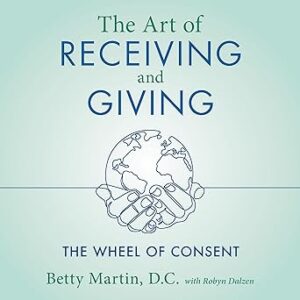
Such a big and beautiful question that I will try to answer succinctly, and yet it’s very nuanced, because sometimes you have one partner who simply does not know how to communicate their wants and desires. Sometimes, you have a framework within which one of the parties is not willing to be in service to the other. Those are two very different frameworks. Because we would need to be looking at the whole relationship. But something I do instruct all people to get curious about is this: I like to think of a box. This is from the framework of Dr. Betty Martin in her book The Art of Receiving and Giving, which I read. I ask everyone to read. There’s a box around me. There’s a box around you, Orion, and that works well because we’re recording on Zoom, so there are actual boxes around us.
Our domain is the thing that we have a right to and a responsibility for: my dreams, my values, my pleasures, my aspirations, so many things in my box and so many things in your box.
I’d love to think of everything within my box as my domain, and everything within your box is your domain, and everything in our domain is the thing that we have a right to and a responsibility for, my dreams, my values, my pleasures, my aspirations, so many things in my box and so many things in your box. Now, many of us were taught that the way to relate as human beings was either to pour out from our box or to take from another’s box. Often, we had parents who were demanding of us or who took from us, who did not respect our right to privacy, and we thought that this was how we had to be in a relationship with another.
Often, from our time when we were little, we resented our caregivers for fill in the blank. There’s a plethora of different things, and most often, this is how we learn to be in a relationship. What do we do? But we become big people. Do we just pattern our loving romantic relationships after our primary relationship with our caregivers? Because we were never taught how to have a relationship. Most of us were taught to pour out in service or to be taken from or to take. What I love to offer instead is that we shore up our boundaries. We understand that our boundaries are immovable. Now, our limits can increase and decrease on any given day. I have more capacity or less capacity, that’s okay, but the boundary, nope, that stays the same. That defines Lauren’s domain. But this is my favorite quote of all time. Every aspect of human relationships is a negotiation of the third domain, the space between us.
Say it again, every aspect of human relationship is a negotiation of the third domain, the space between us. When I hear someone say, “How do I put my wants and desires forward for my husband, who doesn’t want to give?” I always want to ask, “Why doesn’t it want to give? Does he feel that he is? Acquired or obligated to give. What can we do to shore up his boundaries? What can we do to learn to negotiate in the third domain? What can we learn to do so that we have more language other than yes or no?” What are some of the phrases that we can work on, such as “Oh, not that, but this,” or “Oh, not right now, but at 7 pm,” or “I’m not sure, to tell me more.” Or, “Huh, I’m curious,” or “I feel the pull to that.”
Discover all the delights of your domain, all of the things that you have a right to and a responsibility for, and savor them and celebrate them.
But can you give me some time to think so? Often, we have not developed our own sense of self-definition within our domain, so we just resort to our original relational patterns. I had to, I had no choice. As the oldest of five children, I was 11 when my parents moved to the basement, and I took care of my infant sister through the night. I was required to get up with her for her bottle feedings, all of these things at 11 years old. Wow. That was a service, a form of connecting within a relationship that was required of me. There was no choice involved.
Many times, when I am working with a couple in their relational dynamics, and we’re not talking about abusive dynamics. We are just talking about the vulnerability of asking for what we want. Many of us have a learned story about what it feels like when somebody does ask us for something, or what it feels like when we request something. Those feelings, those sensations, are often connected to our childhood. I would get curious with anyone about their original stories of giving and receiving, their original stories of wanting. Is it even safe to want in your body? What does it look like to negotiate in the third domain? That’s where I would start.
It’s better to give it to me now, do it my way.
I was raised on an obedience model, and I was raised on this first-time obedience, and believe me, that is a form of indoctrination. It worked. I obeyed out of fear of being punished. You fast forward, and you put a little Lauren, who had 21, into a marriage; you better believe she was petrified of not obeying her husband.
That’s not my ex-husband’s fault. That was my story of origins. Incredible. Lauren, what are your three top tips for living a stellar life?
Discover all the delights of your domain, all of the things that you have a right to and a responsibility for, and savor them and celebrate them. Two center pleasure in your life, make sure it is a part of your everyday whether it is a deep inhale of fresh air, whether it is taking the light in the way the curtain folds and the light comes through it, and number three, treasure yourself, understand that you and you alone get to define how others treat you and celebrate you, and that starts with your own treasury yourself.
Treasure yourself: you and you alone define how others treat and celebrate you.
Lauren, there is like a whole list of questions that I prepared for this interview, and I didn’t even ask one of them, but it was wonderful. Thank you so much for being here, sharing your wisdom, going through this incredible journey, and just bringing all your beautiful lessons to help more people in the world.
You’re so welcome. Thank you for having me. I had no fear that we would have a beautiful conversation today. Thank you so much for your beautiful, tender and really beautiful questions.
Thank you. Where can people find you and learn from you and all that good stuff?
I can go to sexedforyou.com. Forward slash connect. On that page, you’ll see a link to my Instagram, the social media platform I’m most active on. You’ll find a link to request a free consultation if you’d love to learn more about working with me. You’ll also see a link to the partnership podcast, which is a podcast I do with my partner, Trey, my now very not gay husband, as we talk about all things sex and intimacy and romance and working through relational obstacles. Again, that is sex ed for you.com. Forward slash connect, and please let me know that you found me on this podcast.
Before we could even get to self-love, pleasure, and a solo sex practice, understand ourselves as worthy. Find the value in yourself. Share on XWonderful, thank you and thank you, listeners. Remember to discover all your delights, in all your domains, center pleasure in your life, treasure yourself and have a stellar life. This is Orion till next time you.