USA
 HEBREW




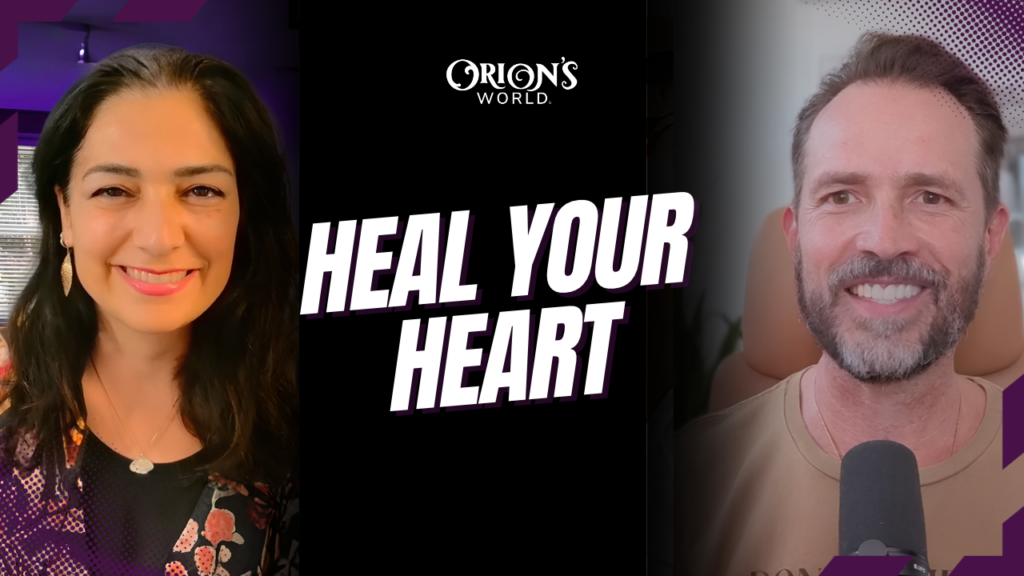
In this Episode
- [0:04:09] Luke recounts his path from rock and roll and celebrity styling to getting sober in 1997 and launching his podcast, The Life Stylist.
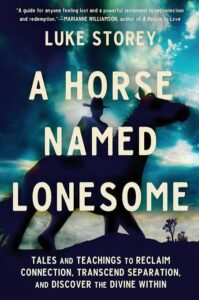
- [0:09:37] Luke explains how A Horse Named Lonesome traces his lifelong relationship with loneliness and separation across 12 chapters..
- [0:15:21] Luke shares how a vision of his birth led him to believe that preverbal trauma sets the template for our capacity for connection.
- [0:20:47] Orion asks how Luke forgave the people who harmed him, prompting him to explain how taking responsibility freed him from victimhood.
- [0:27:35] Orion reads a passage about Lonesome, and Luke unpacks the horse as a metaphor for the invisible fences he inherited.
- [0:39:48] Orion asks for first steps out of addiction, and Luke describes addiction as a spectrum rooted in unmet spiritual longing.
- [0:53:52] Luke recalls waking up in a treatment center after a blackout and the prayer he believes removed his obsession with drugs and alcohol.
- [1:00:35] Luke describes how his marriage to Allison taught him to let his partner witness God within him.
- [1:11:18] Luke explains how he went from living in constant performance to building the courage to be authentic.
- [1:19:44] Orion asks about plant medicine, and Luke shares how psychedelics opened doors that 20 years of other healing work could not.
About Today’s Show
Hi, Luke, and welcome to the show. So good to see you again.
It’s great to see you again. It’s been a long time.
It’s been a long time. I mean, we’ve known each other for 12 years. I think I met you. Yeah. Probably through Neil Strauss. And it was just beautiful to kind of see how you grew and your impact in the world. And now that I read your book, I’m like, ho ho. It was kind of hard to read. There were some things there that were like, ooh, somebody sensitive. It’s hard,
Yeah.
And it was also so beautiful and inspiring and wonderful, super amazing. So, for people who don’t know who you are, can you just share a little bit about yourself? And then we’re going to start talking about this incredible book that has so many pages and so much wisdom.
Oh, thank you. I appreciate that. Yeah, it was a bit challenging to write it with authenticity and depth without traumatizing the reader at the same time. It’s like you want to be honest, but how honest, you know? So hopefully, it’s more beneficial to people than shocking. So yeah, my name is Luke Storey. Now, I’m an author as of November 17, 2026, when a horse named Lonesome comes out and meets the world. Before that, I spent a long time living in Los Angeles, where we first met. I worked in the fashion industry as a celebrity stylist, so I dressed musicians and celebrities and things like that for a long time. But all the while, I was on my spiritual journey, which goes back about 30 years, and so all this retroactively goes back a little before my career in fashion. I, you know, I was a wild kid who was responding to a lot of trauma, and as a result, got pretty deeply invested in substance abuse and playing rock and roll and living the Hollywood dream until it became a nightmare.
And I was fortunate enough to be gifted with the grace of sobriety in 1997 when I was 26, and that kind of marked the beginning of my journey. But while I was working in fashion, I was essentially living a double life. It was like I was doing one thing for work and another for my spiritual pursuit and healing, and in 2016, that contrast started to feel unbearable. That might be overstating it, but I sensed I could do something more meaningful to me in my work.
So I launched my podcast, The Life Stylist, in 2016, and I’ve been doing that now for 10 years, and that has opened up a lot of other doors and opportunities to teach and speak on stage and hold workshops and things like that. And then eventually, I kind of reached another similar impasse where I thought This is great, having a podcast and highlighting other people and their wisdom and experience. But you know, it’s been almost 30 years. Maybe I have something I can share too that might be of value to people. And so, a few years ago, I set out with the intention of writing a book and stumbled and stalled for a couple years, and then eventually found the real purpose of the book that was meaningful enough to me to really commit myself to learning how to do it while at the same time doing it. And so wherever I am now is really looking forward to 2027 and beyond, and seeing how I might be able to evolve how I can serve, and you know find the fulfillment that I find in that because that’s really the only thing that avails me happiness is helping other people.
I know that very well because I lived the first half of my life in a very kind of base survival state, clinging and clutching and chasing and evading and trying to find a sense of peace within myself, and it was always elusive, and so yeah, so that’s kind of where I am today. I’m happily married. I live in Austin, Texas, with my wife Alyson, and we’ve been together for seven years. And that’s been, you know, apart from being born and being reborn in sobriety, that relationship has been really one of the most precious things in my life. It has been a great vehicle for growth, and something that I never lose sight of in terms of just how blessed I am to be able to hold the relationship, but also to have someone who’s able to meet me there, and someone interested in continuing to grow and expand from a place of curiosity and joy rather than karma and pain, which was the basis of so many, so many of my prior relationships. So it’s sort of like the universe rewarded me for all my hard work and gave me a nurturing, easy marriage.
Yeah, your podcast is amazing, and I can totally feel the work you put into it. Like, you go, and you do it 100%, and you come prepared 100%. You’re there 100%, and it really shows. And I also felt it when I read your book. I think you’re like, I don’t know why you waited until now to write a book. Well, I guess it’s divine timing, right? I feel like you’re such a good writer.
Wow! Thank you.
There’s so much; like, the way you put words together is so nice. Like there were a few moments where I’m just like, “Oh, I love that. Really good.”
When we learn how to tap into the realm of our spiritual nature and the spiritual nature of our existence, we tend to feel less alone.
Thank you. That’s really nice to hear.
Yeah. So when you talk about the book, like, I mean, I mean it, it is so much. Like, it’s your life story, but it’s also wisdom, and it’s also exercises for people to kind of read along and practice with the book. How would you describe this book?
It’s interesting. There are 12 chapters, and I didn’t know that when I set out to write it, or even create the initial outline. But each chapter is, in and of itself, its own mini book, and it follows the relationship I’ve had throughout my life with loneliness and separation. And you could say that separation is kind of the antagonist in the book, and I’m the protagonist, you know, trying to understand and defeat this monster, so to speak. And so, I think it’s partly a journey of someone who’s overcome a lot of adversity and learned a lot as a result of that. But more than anything, it just speaks to the human experience.
And while some of the stories I tell are unique to me, as all of our stories are, there’s a universality in how humans cope with being alive and the challenges we face. And what I found as I started to begin the process of writing the book was that this sense of separation is very common and almost unavoidable to an extent because it’s kind of the nature of this reality. We’re sort of lulled into this hallucination when we’re born that we live in a material world and that’s kind of all there is. And I’ve had so many experiences in my life that have helped inform the understanding that there’s so much more than the physical world, and that when we learn how to tap into that, meaning the realm of our spiritual nature and the spiritual nature of our existence, we tend to feel less alone. So the book is really an exploration of some of the things that we experience throughout our lives that cause us to feel more of that separation, to feel more alone and isolated.
Many of the maladaptations that we apply to our lives to try to ease that discomfort or pain, and how those ultimately pull us further into the separation we’re trying to avoid, and then of course many of the solutions, practices, modalities, self-inquiry, you know, intermissions, as I call them in the book, where we can really start to look within ourselves and see what it is that we’re thinking, feeling, or doing that is perpetuating this sense of aloneness and how we can live a more connected life. And you know, this is an ongoing process for me. It’s really funny being on the other side of this book and doing so many interviews and upcoming speaking engagements where I’m talking about, you know, the topics in the book, specifically the core themes of loneliness in an interpersonal, relational way, and then existential loneliness, kind of feeling disconnected from the universe or from God.
And it’s funny, you know, having written about this for three years straight, and I mean, like nonstop, almost every single day of the week. I mean, it’s just.
Wow.
You know, the amount of time, energy, and life force that went into it. And still, I realize writing a book about it didn’t completely solve it for me. You know, there’s always more work to do. Yeah, there are still times when I wake up, and I go, “Wow, this is great! I wrote a book.” You know, I should feel more connected to all that is. Sometimes I don’t, and that’s just a sign that, you know, I’m giving too much credence to my thoughts or feelings, or I’m overly identified with the body, or my ego is feeling threatened and trying to move back in and exert some sort of agency over my life. You know it’s just a constant state of surrender.
The more truthful and genuine and authentic I can be, the more approval I get. Share on XJust because, just because you’re getting so big and like getting more and more attention as you, not the host of. Even though you’ve done speaking before, I believe this is gonna accelerate everything on a larger scale, and I feel like this is the time where you’re gonna actually face it even more in a way, yeah, because it’s so big, and as you said, it’s a part of the ego. And I, um, one thing that I read in the book that really resonated with me is that you were born and were taken to the NICU, and you weren’t able to get the love from your mom, the touch, and I feel like something like that really creates this innate feeling of loneliness.
As I was, I was born premature too, and in one of the breathwork things that I did, I got a vision of myself in the NICU, and I’m connected to tubes, and there was this nurse there, and she was really mad. Like, I felt like she was mad at all the babies that were crying, and everything was uncomfortable and painful, and that innate feeling of loneliness. And then all of a sudden, my spirit went above, and I looked at the room, and near every baby, there was a light being that was caring for the baby and loving on the baby.
Oh wow!
And soothing the baby. And for me, it was my grandma that I’ve never met, but I kind of knew it was that. Yeah. So there is, like, our soul. But then we were born into this 3d reality, and we remember the first part of the loneliness. Then eventually, throughout life, we have moments of awakening where we are like, we feel unity, and then we go back into, ah, wait a minute, I have to deal with everything again.
Yeah, yeah, it’s the dance between, you know, levity and density. You know, it’s like, yeah, that’s a beautiful story. Thank you for sharing that. I haven’t met many people who have had those sorts of visions or kind of ancient rememberings. You know, that was how I opened the book in chapter one: through a vision that I had around my birth, and it was a huge clue in getting into my kind of psyche and my somatic experience of being in a body and the nervous system and all of that. It really invited me to look further back than I would have ever thought to look, and I think it’s difficult for many people because we assume rationally that the only things that really impact us later in life are the experiences we have when we’re kids that we have some memory of, you know. But the nature of trauma doesn’t work that way. The body remembers; the nervous system remembers.

So a lot of the trauma we experience pre-verbal has a really profound impact on the rest of our lives, especially in those first few moments of birth and the following days after. You know, the care and nurturing we receive or don’t receive really sort of sets the template for our capacity for connection and bonding with people throughout our lives. When I started bringing these ideas forth in the book, I didn’t know if it was just something I intuited or felt in myself, or if there was any scientific way to back it up.
And as I started, you know, getting into the editing process, of course, I had to provide a lot of valid citations for my claims, so to speak, which you wouldn’t have to do if you were self-published, but the publisher kind of wants you to be able to stand behind the statements that you’re making and support your thesis, right? And so, as I started doing some research just on neuroscience. And of course interviewing doulas and midwives and birth workers for many years, kind of have a for a male, I think I have a pretty decent understanding of the typical Western medical birth and some of the things that can go wrong.
Yeah, you have a whole chapter on birth and natural ways to do it.
Specifically, some of the things that happen can interrupt the bonding process and can impact our ability to relate. And so it’s fascinating for me to learn. It’s not just something I intuited in an ayahuasca, you know, ceremony. It’s like, oh no, there’s actually data to support that, you know, that those formative hours and days when we’re born really have a profound impact on how we relate for the rest of our lives. And so that’s really good news to be able to know there’s kind of an origin point to that, because then that gives us a point of entry into our healing and self-understanding so that we can go back and start to reconcile some of those things that we missed early on and learn how to provide them for ourselves.
One thing that you said in the book is that naming what hurts us is a part of how we heal. How is that?
If you have a check engine light on your car, you know that’s a sign that it might be time to open up the hood and see what you can find. There’s a disconnection. There’s an interruption. There’s a short circuit, or there’s a part that’s worn out, or a part that’s broken, or degraded in some way, and I think of the human psyche and emotional body similarly. Often, we’re blindly driven by patterns that don’t serve us or the people we relate to and love. And if we don’t take the time, courage and energy to go within, those patterns are unlikely to undo themselves. It’s like they’re called patterns for a reason. They’re repetitive. You know, it’s like if you create a blueprint on a piece of paper and you trace it with a pencil, you’re going to get the same shape every time, until you start to rearrange that blueprint, and you, to do that, you have to look at it closely and get an understanding. It’s the principle of know thyself, and so the positive side of that is that when we learn how to, you know, face some of those uncomfortable memories, or even going back before memory, it can be difficult, and it’s uncomfortable, which is why most people avoid it their entire lives.
To keep your heart open in a dangerous world is the mark of a true spiritual warrior. Share on XBut there’s so much value in doing so. There’s so much treasure there waiting for us. And if we’re able to understand ourselves and what’s motivating our behavior and the choices we make, we can effect change. That change will ultimately create a new life experience for us; those patterns will be dismantled, and we can create whatever patterns we believe will help us achieve the kind of life we want to live. And so I’m constantly not so much undoing patterns anymore, but I’m acutely aware of when they start to manifest in my life, and then I’ve spent, you know, the better part of 30 years developing new patterns, you know, new ways of thinking, new ways of responding, new ways of processing my emotions, making decisions, refining my discernment, my integrity, you know, applying spiritual. Yeah, really, really, you know, taking forgiveness very seriously and really, really meaning it, you know.
Yeah, you had two people in your life when you were young that were really abusive, one toward you, one toward your grandma. I don’t want to go into the stories, but one thing you wrote is that forgiving others has meant forgiving myself, and I can totally relate. Because when I got out of an abusive relationship, the day I forgave, and the day I didn’t, I also didn’t only forgive. I also asked for forgiveness because I had a part of it, right? I got myself into that relationship. It takes two to tango. Doesn’t mean it doesn’t take away from how terrible the behavior and the emotional and physical abuse were, but I took a part of it, took ownership of it. I forgave, and I asked for forgiveness, and that was the freedom that allowed me to find my true love. That allowed me to because when you own it, when you own it, when you forgive, when you let go, I definitely understand how it can actually fill you with happiness and help you release all that pain. Because when you don’t forgive, it’s something I’ve heard a lot. It’s like drinking poison, hoping for somebody else to die, but actually you’re killing yourself when you’re holding all this pain inside. And I’ve been interviewing some people who forgave a lot of terrible stuff. How did you manage to do it?
Well, I think you really nailed a big part of it, and that is taking responsibility for whatever role I played in that situation, you know, that created the dynamic in which I was hurt. And as I’ve gone through my life and evolved out of a state of victimhood, it’s really what has empowered me to make change. Right? It’s like the state of victimhood and being resentful or remorseful or shameful about things that you’ve done is a very low vibrational state, and it lacks power. Ultimately, that’s the issue. It’s difficult to rise out of that state because you need power to affect change. You know,
Yeah, you can be a victim. If you’re a victim, then you’re gonna be a victim, and you’re gonna attract people who see you and treat you as a victim. You’re gonna treat yourself as a victim, and you’re gonna be into that, like you said, pattern of victim. And you need to change that. That’s one way of changing it.
Yeah. So you know, in my life, of course, you know I’ve been exploited and abused and victimized, like many people have to varying degrees. But the fact is, apart from the abuse that I endured when I was a very young boy, I would say, apart from that, in any situation, I at least had something to do with, you know, manifesting that experience into my life. So I love what you said about asking for forgiveness and forgiving myself, and really being honest with myself and humbling myself about how I’ve behaved selfishly or harmed other people throughout my life, usually unintentionally. Still, nonetheless, you know, especially when I was living as an addict, there was a lot of wreckage.
There’s a reason the universe is ordered this way: to give us choices. It’s an opportunity for us to evolve.
I mean, I harmed a lot of people. I was very dishonest and selfish, and just, you know, not a morally intact person. So there was collateral damage just from me existing and interacting with other people. So I needed to take responsibility for my own behavior, but also seeing how I’d been limited throughout my life and how I had just been so out of alignment helped me to extend grace to other people who were out of alignment in ways that harmed me. So it’s like a lot of it. Has to do, I think, with humility of just going like, okay, you know, I might need to create a boundary with someone or extricate them from my life because they’ve proven themselves unsafe or untrustworthy.
However, once I end that relationship or create some distance, I don’t want to be suffering the rest of my life for something that doesn’t even exist anymore. In other words, I don’t want to be living in the past. And one of the ways I found to become free of the past is to acknowledge, whether it’s to that other person or to myself, that yeah, I made some mistakes too. I was also in error. I was also ignorant. You know, I didn’t know what I didn’t know. And having the humility to look at the limitations that I faced and acted out in my life makes it much, much easier to allow for some grace for other people’s mistakes, and ultimately just to arrive at forgiveness for the nature of reality and forgiveness for our Creator, for God, who built this world for us and built a world in which there’s a lot of suffering and hate and violence and famine and, you know, all of the things that we experience individually and collectively.
I eventually had to arrive at a point where I invited myself to open my mind, where that could be, where I was able to see that there’s a purpose to everything that God built, and to be able to forgive God for creating a world where there’s a lot of potential to be hurt, and a lot of potential to make mistakes yourself. That there’s a reason the universe is ordered this way: to give us choices. You know, it’s an opportunity for us to evolve. And if we hadn’t, if I, you know, personally, if I hadn’t experienced the pain that I have in my life, I don’t know what would have motivated me to evolve.
In other words, if I was able to live in that kind of pain for longer, I probably would have. But that pain eventually became the motivation for me to start asking deeper questions, be willing to be teachable, humble myself and ultimately invite God into my life in a practical, applicable, meaningful way. You know, not just in kind of a distant God up in the sky, but to really begin to cultivate a relationship with God, and through that, I’ve been able to forgive God for creating this reality the way it created it, and also forgive myself and forgive the other people who have knowingly or unknowingly perpetuated harm against me.
Yeah, I want to talk about horses. I love horses. I think they’re majestic. They’re like the most. My son rides horses.
Oh, cool!
And yeah, I love it. And you said I used to wonder why Lonesome never tried to break free. If he’d known his strength, he could have pushed through the barbed wires and vanished into the hill. That became the story of my life, yearning for freedom, unsure how to claim it. Like him, I inherited invisible fences I didn’t yet know I could cross. So that’s so poetic. Like, wow, that’s so beautiful.
The issue isn't that the connection is broken; the issue is that the connection is forgotten. Share on XAh, thank you.
I have fences. I have fences too. I am lost myself, and I want to break free. I feel like everybody who can read this or listen to this can identify with those invisible walls and beliefs that we still kind of have to keep breaking free, keep breaking through.
Yeah. Well, the horse is a really powerful metaphor, and it’s interesting because I had the title for the book before I even started conceptualizing the themes and stories and teachings in the book. After all, I had a horse named Lonesome when I was a kid, and that’s part of the story that you just read. Then I started realizing there are so many metaphorical references. One being, you know, the drug that really brought me to my knees ultimately was heroin, which, you know, back in the beatnik days, they used to call horse. And also we measure.
Wow.
Yeah, to this day, we measure power by horsepower, right? Our, you know, society was essentially built using horses. You know, horses are an integral tool of civilization. You know, civilization wouldn’t be what it is without horses, right? So they’re these incredible, as you said, majestic and powerful beings, yet they’re also benevolent. So much so that they allow themselves to be captured, broken, castrated, trained, and used for utilitarian purposes and entertainment. In my dad’s case, he was a rodeo star. So when I was a kid, you know, I would look at these horses and I just, I just wept for them. I felt so bad that they were being treated that way, and it was so confusing to me that they allowed that to happen.
And as I started, you know, looking at the metaphorical aspect of the horse and my life, I saw that I had done that to myself in so many ways, you know, limited myself, and also allowed myself to be limited or used or abused by other people, and so it became this really powerful and universal icon throughout the process of writing the book, and even now, you know, having focused. It’s the year of the horse this year, in 2026.
Oh, is it?
Yeah, which is the year of the fire horse specifically, but I didn’t even plan that. So it’s one of those things. It’s like if you want to, you know, if you want a red, you know, Volkswagen Beetle, you start seeing them everywhere, that kind of thing. Or it’s like when you want to have kids, you all of a sudden everyone in the world seems to have a baby with them. You know, I experienced that when we were on our fertility journey, and it’s kind of the same way. I’m starting to see just how pervasive the iconography of the horse is across all cultures.
Well, maybe you know, maybe not in places on Earth where horses have never existed, but by and large, at least in, you know, our current civilization, horses are just such a key player, almost like cats and dogs, you know. But horses, if they only knew how powerful they were, you know, or maybe, you know, maybe there’s a higher aspect of the, you know, the spirit of the horse, kind of the archetype of the horse that is drawn toward service too, because there are horses that are treated well and are loved, and are probably quite happy to collaborate with human beings to build and to, you know, for transportation and whatnot. I don’t think every horse that, you know, is being managed by human beings is necessarily being abused or suffering.
Although that happens a lot, horses seem to have this innate compatibility with humans, and so I just find them to be fascinating creatures, and was surprised and delighted that there were so many different touch points with the archetype of the horse that I discovered in the process of writing the book.

Yeah, I went to this horse workshop a few months ago, local here, and we did lots of things, I guess, connecting with the horses on a spiritual level, and one of the exercises was we each sat in front of a horse, and we got communication from the horse, and there was this, like, one big female horse and she was, uh, she was really wild. She scared me, so I was like, “Oh, she scares me. I’m gonna sit in front of her,” and I had the, and I sat near her, and we’re like, we have communications, and wow, that was so powerful. She’s like, Come on, Orion, you’re really playing small. You gotta, like, look at me, be like me.” I was just like, “Oh, okay, maybe that’s why I said here.”
Wow, that’s so cool. Thank you for sharing that. That’s on my bucket list to do that. You know, equine therapy, as it’s sometimes called. I think that’s fascinating. When I started posting a lot about horses and, you know, promoting my book and whatnot on Instagram, the algorithm has been constantly feeding me horse content. It’s like my whole feed is horse stuff, and a lot of it is equine therapy or equine therapy adjacent. You know, kind of working with horses in a therapeutic or spiritual context. It’s really fascinating. I mean, it’s wild. Or there are also people that will, you know, play music, play guitar, play a drum or something to their horse, and you see the horse come over, and they have this very unique communion with the horse that’s based on singing or playing an instrument or like engaging with the horse in a way that has nothing to do with farming or rodeos. You know, it’s like a spiritual relationship.
Yeah, we went to the Flamingo Gardens in Miami, and there was a big parrot there. And I started singing to him, and I started playing music to him, and we had like this cool bond of connection. And my family’s like, “Okay, let’s go.” I’m like, “No, we’re connecting right now. I’m not going anywhere. Yeah, it’s nice. Yeah, animals are really in tune with music and your vibration.
I mean, animals don’t have the same governor we have between the spiritual realm and the material realm. It’s like they’re almost shamanic in that sense. I believe that they are living in both worlds simultaneously all the time, and we humans are a bit far behind in that regard. Takes a lot of effort for us to sort of reconnect with our innate wisdom and to connect with nature because we’ve, you know, worked so hard over the past many 1000s of years to insulate ourselves from nature. Divorce ourselves from nature, but animals never did that. I mean, you have domesticated animals and animals that are kind of habituated to humans.
The issue isn't that the connection is broken; the issue is that the connection is forgotten. Share on XWe have deer around here, for example, that will come up in the yard, and you know you can feed them and things like that that you wouldn’t be able to do in the middle of Colorado or Montana or something, right? It’s like, you know, the animals are kind of used to people, but still, if you just think about it, animals are constantly grounded. They’re always in touch with the earth. They’re using the cosmic navigation maps, you know, to migrate. I mean, you think about birds, bees. Bees use magnetism, you know, to navigate. It’s like animals are so much more tapped in than we give them credit for. I think because largely we view animals as a commodity or something that can be, you know, used for our benefit or our survival.
But my wife Allison wrote a whole book about power animals, you know, and it’s really been instructive to me. The first thing I ever wrote was the horse excerpt for her book a few years ago. But living with her has been very interesting because she has that kind of relationship you just described. You know, we’ll be on a hike or walking around the neighborhood. She’s like, “Wait, hang on!” I’m like Having a moment with whatever this animal is. You know, or just taking a hawk that lands and sits with you for a moment as a sign, and being able to, you know, derive meaning from those experiences. I mean, the fact is, animals, like all humans, are just manifestations of consciousness. You know, their spirit exists in the body and animates the body just like ours does.
They have maybe a little less of a sophisticated mental apparatus, but I would argue that animals are much more tapped into their innate wisdom and intuition than most people are, so we have a lot. We have a lot to learn from them, and specifically horses. Horses are amazing, amazing, amazing creatures. The funny thing is, I’ll give you this, and then we can move on. You know, it’s funny. I’m becoming so invested and just learning about horses and celebrating them and writing a book with that kind of archetype, you know, so embedded in the theme, I’ve never enjoyed riding horses. I like hanging around with horses and touching them and just playing around with them, but I don’t like riding them. I find it to be very physically arduous and sometimes painful. I always have, even when I was a little kid, and I was kind of forced to ride horses and mules a lot, but I also just feel bad for them to have that metal bit in their mouth and to be tugged around and yanked around and, you know, whipped on the flank. And I don’t know. I just I’m too sensitive, or I’m too connected to them, that I just want to see them in their wild nature, out on the prairie, running around doing horse things, you know; I find it a little difficult. Like, I watch a lot of survival shows and homestead shows and things like that. It’s kind of my favorite two genres, and I’d say that Homestead Rescue is my favorite homestead show, and then I like Alone and Naked and Afraid. Those are the two survival shows. I think I’ve watched every episode of every season of all of those shows.
Why do you like it so much?
I think I like to learn. I don’t enjoy spending my time doing something unless I’m learning something. Generally speaking, I don’t like to read or watch a lot of fictional content. I just like documentaries. I like things that you can walk away with some knowledge. And also, I think with the shows that are based on nature, I’m also living vicariously because I really have a deep yearning to have a life that is more embedded within nature, and moving to Texas was a step in the right direction. After living in LA for 32 years, and still, after being here for five years now, it’s like I need to be further away from people. I want to be further out. But anyway, in watching those shows, oftentimes people have horses on their little homestead, and it breaks my heart sometimes because they just keep this horse in a little pen, 24/7, you know. And it’s like, God, to me, that looks like solitary confinement. If you look at the way human beings are punished, you put them in a prison and put them in a cell, and it makes me really sad.
They need to be together with other birds.
Yeah, and they need to run and be free, you know. So yeah, so it’s funny. It’s just interesting. I have kind of a bittersweet relationship with horses and the ways humans interact with them. And I would love someday to have a lot of land and just have horses that are never ridden, just set them loose, and you know, on a bunch of acreage, and just get to enjoy looking at them, you know, and maybe communing with them in some way.
I love horses, and on a more serious matter. Most of your book is about addiction. A lot of it, a big chunk of it, is about addiction. And recovering from addiction, and that can resonate with people who went through drug abuse, alcohol abuse, but also were addicted to so many things, including now social media. A lot of people- the statistics are really high- and people are really wasting their lives being on social media, and it can really hurt their brain. It can even cause some kind of early dementia and a lot of not-so-good things. So, what are you looking back on now? And I know the key for you is probably asking God to help you. And that said, what do you do if somebody is struggling with addiction right now? What are some of the first steps that they should take?
Yeah, well, I like that you highlighted that I won’t say every human being, but I would say the vast majority of people are in some way, to some degree, addicted to something. And the way I outline what I call the anatomy of addiction in the book is by presenting it as a spectrum, right? So you can kind of have an emotional or mental attachment to something. You can have habits. Habits are kind of easy to overcome, but there’s this escalation from habit to attachment to addiction to obsession to possession, just like when it runs your life. And so I was, I set the intention, at least in writing the book, that I didn’t want to be exclusive and not be able to serve readers who haven’t been addicted to substances in the ways in which I have, and been addicted to many other things.
Each of us has the opportunity to really take some time in stillness and in solitude, and just to observe the ways we think. Share on XSo, what I invite the readers to do, and I’ll invite listeners here today to do, is: if you don’t identify with addiction in any capacity, you can do a little test on yourself. Sit and just be quiet and take a breath. Close your eyes and ask yourself, “I wonder what my next thought is going to be.” And I can guarantee pretty quickly one will arrive. And then see if you can just exert every ounce of willpower you have and try to stop thinking for five minutes. No thought, just complete void, emptiness, space, and I would venture to say the vast majority of people can’t do that. So, you know, we need to lower the baseline in terms of how we frame addiction, how we contextualize it, and so many of us, myself included, at various times in my life, can actually become addicted to the neurochemistry of our emotions and the ways in which we think.
There’s a very addictive quality to negativity in general because it fuels the ego, and the ego is kind of its own force of nature. It has some inertia. It’s difficult to temper the ego when it gains too much influence in our lives. So for someone who believes themselves to be someone who doesn’t have issues with addiction, I’m not trying to paint everyone as an addict or try to, you know, get you to join the addict party over here. But I think each of us has the opportunity to really take some time in stillness and in solitude, and just to observe the ways we think, the kind of emotions that are most prevalent for us daily.
And if, for some of us, we find that we’re adopting behaviors that are repetitive and habitual, and get to the point where they’re destructive or counterproductive in some way, that it begs some self-honesty; that’s really the beginning of overcoming any addiction. It’s, of course, admitting to ourselves, yeah, this thing has, you know, got a hold of me a little more than I would prefer, and social media is a big one, you know. Of course, too, as you mentioned, our devices. I mean, there are so many things that we can use to distract ourselves from the moment or from any feelings that we don’t want to feel. So addiction.
You see a little short about a horse, and an hour later, you’re like, “What am I doing here?”
Yeah, yeah, and that’s the thing. I mean, the technology now is developed with such a high level of sophistication because we have an economy that is based on attention, and so if one thinks they’re just going to use their willpower to overcome a multi-billion-dollar industry that is scientifically designed to hook you, you know, good luck. It takes self-awareness, self-knowledge and discipline. But if one can kind of be honest with themselves and see the areas in their life in which they’re kind of stuck and become attached, if not addicted or habituated, the self-honesty is the first part.
The root of all addiction is ultimately a spiritual longing. It’s a longing for comfort, safety, ease and belonging.
And I would say that Next is: what is it that I’m trying to avoid, or what is it that I’m trying to attract and bring into my life? Because humans are generally motivated by two things: I like this, I don’t like this. I’m trying to get to something, or I’m trying to get away from something. And what I found in all of the addicts that I’ve worked with, varying kinds of addiction. Is that what we’re really seeking is a sense of wholeness and belonging and connection, and what we’re running from is really the antithesis of that. We’re running from the feeling of isolation, feeling alone, feeling untethered, disconnected, and so I believe that the root of all addiction is ultimately a spiritual longing.
It’s a longing for comfort, safety, ease and belonging. We want to connect, and for me, drugs and alcohol were a pretty effective way to do that for quite a long time. Even while they started to bring about a lot of side effects and consequences, there was still enough relief in it that I was willing to sacrifice so much of my life and my self-respect and my relationships and my overall well-being just to get a taste of what it felt like to be connected. Then for me, at a certain point, I stopped being able to feel connected through substances. At the same time, the consequences were becoming much more dramatic and impactful.
And so, you know, that’s the point when I kind of threw up my hands and was like, “Okay, there has to be another way because I’m not deriving the benefits that I once did from this behavior, but it’s hurting me more than ever and hurting the people around me. And that was kind of the come-to-Jesus moment for me, figuratively speaking. So if I can kind of acknowledge to myself that there is somewhat of a problem, start digging a little deeper to see what it is that’s, you know, at the root of that problem, and then begin to cultivate a relationship with a higher power that is ultimately the thing that I was looking for through the addiction in the first place.
You know, all addictions are really a substitute for a spiritual longing that is unmet. It’s like a need we have. It’s a very human and ubiquitous need: we want to know why we’re here. We want to know what created us, who created us, who built this world, what the purpose is and where we go when we leave our body. I mean, these existential questions we have are begging to be answered. In my experience, they can only be answered through spiritual pursuit, spiritual understanding, study, reading books, having teachers, leaning on the masters and avatars and saints and mystics and sages that have come before us that have answered some of those questions to our satisfaction, right?
And then developing our own methods and means and principles by which we can arrive at our own understanding of some of those deeper questions, and so as I start to answer those deeper questions, life starts to get much more inspiring. I become more interested in the nuance and the context of life, and as a result, I find that the minor temptations that are all around every day become a little less sticky. You know, I’m looking for something deeper and more meaningful than an Instagram feed. Maybe it’s, you know, a hike in nature. Wow, or maybe it’s oxytocin. Maybe it’s some human connection, some love, a hug, a kiss, you know, getting a massage, etc. Right? It’s like all human beings are prone to addiction in some way, to some degree, because we all produce dopamine.
So if you have a body that makes dopamine, you can and likely will become at least attached, if not addicted, to something, but we also have all of these positive, you know, hormones and neurotransmitters, oxytocin, serotonin, and when we’re living in a holistic, integrated way. We’re spiritually aligned; we come into a more of a state of homeostasis, right, where kind of the neurochemistry of our bodies and brains becomes more balanced. Within that balance, we’re less prone to seeking something outside of ourselves.
The spiritual path is not about learning or attaining more information. It’s remembering and acknowledging what’s already present.
In other words, an exogenous solution. We start to learn that we have practices like you mentioned: breath work and meditation, and prayer, and spiritual contemplation, and reading spiritual texts, and going to yoga classes, whatever it is; there are ways that we can, endogenously, in other words, self-resource, find that sense of connection. Because the issue isn’t that the connection is broken; the issue is that the connection is forgotten. So the spiritual path is not about learning. Learning or attaining more information. It’s remembering and acknowledging what’s already present. You know, so a lot of my book is about identifying what it is that’s causing us to forget, what it is that’s blocking us from this pervasive connection that is always present and always has been. So why don’t we feel connected? There’s something I’m thinking, doing, or feeling that’s creating this block, you know, the separation that I’m experiencing. So addiction is a temporary and oftentimes destructive way to try to artificially create a sense of wholeness.
Yeah! Wow! Beautiful. One thing that you wrote in the book that I had the same moment differently, and I want to share it with you, is: he said, “God, whatever and whoever you are, please make me sober. Remove my obsession with drugs and alcohol. I want to live. You had this declaration. You had a direct conversation with God, and you, like Wendy, said, “Let go and let God,” and you surrendered, which sounds like a terrible word to some people, but it’s not about surrendering from a place of weakness.
It’s surrendering to a higher power, for that higher power is what makes you breathe right now without you even noticing, and that power that created you is like one cell into this magnificent adult that you are, and that was my moment as well, in a different way. As I mentioned, I went through this horrible relationship, but then I swore to myself that nobody would ever hurt me again. And I studied martial arts, and I became strong physically, and every time I dated, the question that ran through my life was, “How can I not get hurt?” It was very hard to get into any relationship with all those shields on.
And when I went, I went to this event where there was a moment there at 1 am. I sat by a little waterfall at the resort, and I had the same, almost the same sentence. I was like, “God, I can’t take it anymore. Please, I tried. This is you. Like, I’m gonna give it to you. Please help me. I want to have a beautiful relationship. I want to have love. I want to have true love. And 48 hours later, I wrote my relationship vision. It was very cathartic, crying and laughing. 48 hours later, I met Stephan.
Anyway, we got introduced, and nine days later, he proposed to me on a hot air balloon in Vegas, and I said no. And I said no. Then, nine months later, he took me to the same waterfall and asked again, and I said yes. But it was that moment of truly surrendering, where you’re just like the ego, the stuff. How much, all the, you know, it’s me, me me, I’ll do, I can, and you’re struggling in this like, 3D reality and it feels like you’re walking through mud, but then, like, eventually, like, you’re out of breath, and you’re like, God, please, and you let go, and you let God, and then things shift, um, yeah,
That’s a beautiful story. Thank you for sharing that. I thought the next part of the story was going to be, and nine months later, our baby was born.

No, no, no, no, no. That took a long time, a little longer.
My introduction to Allison and our relationship happened in a very similar way. You know, I had really hit the end of the line and had almost given up on any hope of a healthy, fulfilling, mutually beneficial, reciprocal, balanced relationship. I just thought, I’m too broken; it’s never going to happen. And you know, I had a very similar prayer. But going back to the moment you mentioned in the book, you know that moment, which was the first day I woke up in a treatment center and realized what I had done, which was kind of shocking because I walked in in a blackout, and so when I woke up, I didn’t know where I was. Then I started piecing things together, and I realized, holy shit! I checked myself into rehab. What have I done? You know, it’s like a big mistake, Luke. You got to get out of here. And you know, the story kind of has a bit more detail to it than that.
But ultimately, you know, that moment in my life was the most powerful turning point in 56 years of living, you know, and it’s so interesting to me because I didn’t even believe in God. It’s just that I was beaten into a state of humility to the point where I was willing to do something as ridiculous and pointless as praying because that’s how I viewed it at the time. The irony is that it didn’t require faith for the prayer to land and affect the most monumental change I’ve ever experienced. And I think there’s really some wisdom in there that could serve us if we sort of allow ourselves to contemplate that.
That is, God’s love is not conditional. God’s love does not require that we believe in God. God is omniscient, omnipresent, and can only love. And so, that prayer was like a petitionary prayer. It’s like God, I want this thing. Give me this thing, which is kind of an immature way to pray, you know, because I’ve evolved the way that I pray and communicate with God a lot, you know, in the 30 years after that moment. But even though the prayer was sloppy, I didn’t think it would work.
It was straight to the point. God, hey, I need help. Yeah, we do, like, we think we need to pray in some fancy way on the top of a mountain with some sound bath and the choir of, like, whatever singing. No, like
I use the word sloppy in that I didn’t know how to do it right. It’s like I had, I think I had, only prayed one time before that in my life, and it didn’t seem to have worked, which I can explain why later in the book, why it didn’t work, or at least I perceived it.
It’s the intention that counts. It’s the intention. It’s the heart. It’s where you are. That’s the most important thing. You can say gibberish. You can whistle, and God will hear you.
That same power had been available to me my entire life. It just happened to come in at that moment because that was the first moment I had ever been humble enough to allow it in.
Yeah. Well, it’s the sincerity, and yeah, the sincerity and the honesty in the prayer. And you know, I guess the funny thing about it, looking back, is that that same power had been available to me my entire life. It just happened to come in at that moment because that was the first moment I had ever been humble enough to allow it in, right? God’s not going to override my personal will.
I want to resonate with that: humble enough.
Yeah, if I want to destroy myself, God’s like, ah, it’s kind of a shame. I gave you this life, and you’re gonna, you know, you’re gonna kill yourself before your time is up. And if you want to do that, go ahead, kind of thing, right? It’s sort of like a parent that really gives you a long leash, at the point at which I’m like, you know what, cut the leash off. I want to come back home. God has open arms. Says, here you are. You know, come home, and I will receive you. It’s that kind of thing. And so, you know, that was such a beautiful moment in my life because I knew almost immediately that I had been set free. You know, I was liberated from the bondage of addiction.
I’ve never, since that day until now, ever had a craving or, you know, an idea that maybe I could get away with it a little bit on the side or have a drink on the weekends. It’s like I was truly restored to sanity in that moment, and it became abundantly and unequivocally clear to me that the change that had taken place was not something I produced. It was something that happened to me and for me, and that really got my attention. I was like, okay, something’s happening here. Like I’m now at day two or day three or day 25 in this treatment center, and there’s no one keeping me here. Why am I still here? I could just walk out and go to the liquor store. It’s like, no, I was given the grace and the gift of wanting to live and being, you know, provided the resources with which I could do so, which was being restored to sanity to know, like, wow, I can never touch drugs and alcohol the rest of my life. I believed then that I could avoid that.
There was an inner certainty when I uttered that prayer, and that certainty is still with me today. Now there was, you know, a lot of work that obviously had to go in after that to evolve and change and heal and grow and all of the things. So I think if I hadn’t followed through with the instructions I was given in treatment, I probably wouldn’t have stayed sober. But that initial prayer was so potent and obvious to me that I just couldn’t ignore it. There’s no way I could have rationalized it away, or just felt like it was a fluke, or that I just got lucky, or it was just happenstance that, you know, I was a lifelong addict, and all of a sudden now I don’t want to do drugs at all. It’s like, how do you do that? I knew I couldn’t produce that profound change. And that something other than me had done it, you know.
And that’s really the path I’ve been on for all these years. It’s just going, hmm. I wonder what would happen if I could offer and surrender more of my life and more of my challenges and struggles by praying to, you know, have them removed or to receive guidance on how to make decisions, where to move, you know, how to live my life, the people I should be in partnership with, relate with, what I should do for business, all of those things, the big existential questions that I can’t solve on my own, ultimately get turned over to God in a very similar way that happened on that morning.
Spiritual intimacy goes beyond seeing God in your partner; it’s being willing to let them witness God within you, beautiful. You want to tell me a little bit about it?
Yeah, I think that for much of my life in a relationship, that’s from chapter 9, where I’m talking about conscious relating. You know, romantic love that goes beyond romance into the spiritual realm. You know, a spiritually centered relationship. And for me, in my life, to truly be seen, I had to learn how to have the discernment and the self-honoring and self-respect that was necessary for me to meet a woman that was capable of holding that in a way that I could trust, and so it’s always been pretty easy for me to see the divinity in other people, even in people that are quite flawed and distorted.
But it’s been much harder for me to see myself in that same light, and so allowing myself the vulnerability to be completely authentic and transparent with the woman I love has been a massive spiritual teaching in and of itself. In other words, to let go of any pretense and try to look good or sound good or be strong or be whatever it is that I think is expected of me, but to be completely messy and authentic, and to experience over and over again that I’m loved no less as a result. And so, as I’m able to delve deeper into the unconditional love that I hold for my wife, in equal measure, am I allowed? Am I taking the opportunity to feel and receive that same kind of love myself? And so, rather than externalizing love from a place of need or being afraid of love, from a place of avoiding, it’s truly a celebration of love that we share.
The love we share emanates from within each of us, not from the other.
Knowing that the love we share emanates from within each of us, not from the other. So it’s like the love that I feel toward my wife is a love that’s moving through me, and she’s the symbol and recipient of that love. Still, I’m not dependent on her to access love because the love is within me, and she’s not dependent on me to access the energy field of love because it exists within her. So it becomes rather than a codependency where I can only feel okay if my partner feels okay. It becomes an interdependency where we both learn to self-regulate and manage our internal state and our individual relationship with God, to the point where we bring an overabundance to the relationship, and the relationship itself becomes a vehicle for shared growth because we share the same values.
In other words, we might be on slightly different trajectories in how we get where we’re going, but we’re both going to the same place, and the place we’re going is a place of unconditional love. It’s God, and so that’s been such an unexpected miracle in my life, and something that I didn’t even ever imagine was possible for anyone, let alone me. You know, and so yeah, I really enjoyed being able to kind of take a moment, at least one chapter in the book, and celebrate, kind of, the rewards of all of the hard work that I put in. The reward is just finding myself and coming to the understanding that, you know, I don’t need to seek love outside of myself.
I need to allow the love that is just begging to be expressed all the time, and that it’s an infinite resource. You know, it’s not something that there’s no shortage of love. What there are, are things that are preventing me from experiencing that love. And so, if I can put a little work and due diligence into identifying and discarding what it is that’s preventing me from having that experience, I find what’s been there the entire time. It’s sort of like that. We had a really cloudy morning in Texas, and I found it a little depressing. And I know the sun is up there behind the clouds, and you couldn’t convince me otherwise. And it’s a similar way with God or with love.
Sometimes it’s more difficult to feel it, to believe in it, to access it. But at a certain point, with repetition, you just know it’s always there, and so if it’s there, and I know that innately, intuitively. Still, I can’t feel it or experience it, so it begs the question: What’s in the way, and how can I remove whatever it is so I can experience the ever-present love God is showering on us 24/7?
Yes, so beautifully said. You know, when I was reading your book, I was like, it’s such a hero’s journey, and like every time I saw I read a win, I was just like, yay, go! I’m so happy for you. Yes, you did it. That’s so great. It’s such a. It was so inspiring, and it’s so beautiful because the theme of the book is loneliness, and we feel like we’re in isolation. We’re the only people who feel what we feel. We’re the only people who go through those things, and I think most people have some kind of trauma they encountered or PTSD they’re dealing with. It’s enough just to open the news and, like, get something like that, and it’s so beautifully relatable, and I just, like, again, I just love how you share yourself in such a beautifully vulnerable way. It takes so much courage to share it with the world. Weren’t you afraid when you wrote all those things, when you shared so openly, so vulnerably? Like, what will people say? What if they judge me? You’re so honest in a refreshing way that many people aren’t.
I appreciate that. Thank you for your kind words. And yes, there were constant moments throughout writing, and especially during the editing process, because then you know that you’re getting closer to not being able to edit it anymore. Right there, there comes a certain point when your publisher wants the manuscript, and you can’t go back and change anything. And I’m definitely past that point now because the book is out. The audiobook is recorded, right? So it’s like, okay, it is what it is. But you know what I realized when I would feel that sort of tension, and I’d want to soften things or take something out because it was a little too revelatory, a little too personal, etc.
I just realized that the fear I was experiencing wasn’t my fear, and that really all that was happening was that the aspect of myself that we call ego wanted me to reel it in because it wanted to protect me from judgment, scrutiny, rejection, etc., criticism, whatever it might be. But because I’ve spent a very long time having an intimate understanding and relationship with ego, it’s pretty clear to me when it’s my authentic soul self that’s guiding me through intuition, and when it’s this phantom construct of the ego that’s over there in the corner, screaming, tapping me on the shoulder, saying, “Don’t write that, cut that, edit that.” What are people going to think, right?
The people that count are going to see the real you. Share on XAnd also just humbling myself and realizing there are only so many people in the world who are going to read my book. But does it really matter? Like, am I so important that it matters what people think about me and my story, right? And is it going to actually impact me in any way if someone judges me because of some of the choices I’ve made in life or things that I’ve been through? The reality is that it really doesn’t matter, and that I’m not that important. And I don’t mean that in a self-deprecating way. It’s just the truth, right? It’s like it’s my story. I’m just one of billions of people, and everyone has skeletons in their closet.
Some of them are much more hardcore than mine. Some of them are much less so. But we all have things that we’re not proud of, choices we’ve made, things that have happened to us, things that we’ve done to other people, consciously or not. And none of us come out of this unscathed. You know, it’s like there are very few perfect human beings on the planet, and there are so few of them. When one shows up, we tend to write about them and follow them for 1000s of years. You know that’s how rare they are, right? You know the prophets, the avatars. It’s like they go down in the history books because they’re so exceptional. Because the rest of us cretins are just. Down here, grinding, you know, trying to survive, and we’re, you know, we’re living oftentimes through our instincts rather than our higher selves, our higher wisdom, and so just having some humility about it and going, man, you know, nobody’s perfect, no one really cares, you know, what my book says or doesn’t say.
Ultimately, they’re going to go live their life, and it really doesn’t matter what they think or don’t think, and what they think or don’t think is none of my business whatsoever. I have no control over other people’s perception of me, the stories I tell or the teachings I convey. It’s literally none of my business. It’s like if the mailman comes and delivers mail to my neighbor, I have no business going in his mailbox and reading it. It’s the same with other people’s perceptions or judgments. It’s none of my business. That’s their experience, and I am happy they have it, even if it’s critical of me or something I’ve shared.
So, were you born like that, or did you get into it in the last few years?
Oh man, I mean, most of the reason why I find it so liberating to live that way is that I’m not perfect at it.
Because I want to learn how to do this more.
Well, I think I’m so familiar with the opposite way of living in that I used to be so consumed with myself, so at the mercy of other people’s opinions and judgments, in such high levels of shame and low levels of self-esteem that the only way that I could feel a sense of value or legitimacy was through the approval of other people, and so I lived my entire life, for most of my life, in a constant performance, as if I was on stage everywhere I went. Everything that I wore, my clothing, my image, my career, you know, whatever it was, I was projecting all of these sorts of characters and masks and costumes in an attempt to be accepted and to belong. Ultimately, I never felt that sense of belonging because the person that was being accepted or approved of was a false construct. It wasn’t my authentic, true identity, and so I could never really let that approval in to the point where it helped me to love, appreciate, and value myself. So, having lived for a very long time like that, and knowing intimately how painful and kind of unfulfilling that is, you know, I really lean into opportunities for vulnerability and authenticity because it grows my capacity to not care.
So it’s a skill. It’s a learned skill.
I used to have this practice. Okay, so I used, you know, I worked in fashion. I played in bands. I was a really, what I thought was really cool, rock and roll guy, right? If I went out to, say, the grocery store, I would get decked out like I was going to a nightclub or performing on stage. Like, it was so mortifying to me to leave the house and be witnessed by anyone, you know, all of whom were strangers, of course. By the way, out in public, it was so embarrassing and mortifying, and I would be so self-conscious because I didn’t look like the coolest guy in the room, you know, and so I started to identify that and see how limiting that was. How superficial that was, I started intentionally going out and wearing shit that was really embarrassing and uncool, just to build the muscle.
And what I realized in the course of doing that over a few years is I just cared less, you know. I was like, “Oh, it actually makes no difference what people think. It’s just meaningless. It’s like noise. It’s like static on the signal. It’s fleeting. It’s meaningless.” What I really am interested in is being authentic. And the irony is, what I found is that the more truthful and genuine and authentic I can be, the more approval I get, and that approval is also genuine and authentic. So it’s able to land because I know what’s being appreciated about me is real.
So if you appreciate things I’ve written in the book or the way that I’ve written them, I can actually allow that in because I know it’s the truth of your experience. If I had written a book full of pretense and lies and tried to present myself as something I’m not, and you complimented me on it, I would know that’s fallacious. Therefore, it would have no impact on me, you know, positively or otherwise, right? So it’s like, as we live our life in an authentic,
If we live our life in an authentic, free-spirited way, of course, many people are going to be jealous or resentful. They’re not going to like that because they’re unable. To access that way of being within themselves yet, but the people that count, the ones with whom you really want to seek resonance and connection, are going to see you. And when they see you, you know that they’re seeing the real you. And that is such a richer experience in terms of connecting and relating. And you also tend to attract people who also have that same ability, and so you know when you know someone, you really know them.
A world that’s more real is so much more fulfilling and feels so much safer because you can trust it, and you can trust yourself.
You don’t know this kind of projection that they’re presenting to you that they think you want or need. In other words, the authenticity becomes contagious. The people you relate to appreciate that within themselves and appreciate that within you. You’re living in a world that’s more real, and a world that’s more real, you know, socially speaking, is so much more fulfilling and feels so much safer because you can trust it, and you can trust yourself, and you can trust the people with whom you’re interacting, right? It’s just a much more secure and fulfilling way to live. That said, the ego hates it.
Yeah, especially for women, you know, it’s, oh, absolutely. I’m pretty genuine. I feel like I’m a pretty authentic person. But for me, like, to expose some things from my past or things that I’m ashamed of, that’s next level, man. I can’t, like, I’m still working toward that to be so open and vulnerable, and, um, you know, I see the light in you because I have it in me. It’s probably like that’s my personal next evolution of being vulnerable, like I am genuine, but I’m vulnerable. But to be this vulnerable, I’m like, oh wow, that’s something to work on.
Well, also, you know, something I found too is that discernment is really important in that too, right? I mean, when you’re presenting something creative that you’re sharing with the world, like a book or a film or a social media post or whatever, right? I mean, you can be vulnerable and authentic, but you’re still kind of removed from the possible negative impacts of that. I’ve found that vulnerability and authenticity in interpersonal relationships require much more discernment and prudence, because not everyone is trustworthy.
Some people are still, you know, in lower states of consciousness and still working out their stuff, and are probably not safe for me to be that vulnerable or transparent with. You know, so I’m, you know, over time, I think learning how to find a balance and learning how to discern and take my time and learn to cultivate trust in my relationships, so I know the people with whom I can be that authentic. But when it comes to something like writing a book, it’s like I want to be as real as possible, and the only caveat is I don’t want to be triggering or overly offensive or sensational. In other words, you know, I don’t want to shock people’s systems. So a lot of the stories that you read in the book are pretty tragic, and you know, there’s a lot of suffering.
No, I felt it. I felt like there was so much more to it that you didn’t actually go into.
Yeah, I think tact and restraint are important. You know, I didn’t want to write a book just for shock value. I want to write a book that is relatable to as many people as possible. And to do that, you know, some of the stories had to be tempered a little bit, or I resisted going into a lot of gory detail that I could have. But I think I was guided intuitively. You know, it’s like they get the point. I don’t need, you know, if I’m talking about being sexually abused as a kid, I don’t need to paint the whole scene for people because
Right, yeah, yeah.
What’s the purpose of that? Like, who would that be serving? You kind of get it, you know. It’s like you can imagine what happened, and whatever you imagine is probably pretty close to what it was, you know. Now, if I felt it necessary to share that with a therapist or a friend or a guide in more detail, if there was some utility in that, some purpose in that, then I would be willing to do that. But in terms of sharing something publicly, you’re just trying to convey, you know, the meaning behind an event, and you can do that without completely dragging someone over the coals to take them there. You know, it’s like, okay, we get it. This is the essence, the gist of what happened. You know, and I think you can sense the potency in a story without having to, you know, torture your readers or listeners with the excruciating and gory details.
Right, I want to talk about plant medicine. The intelligence behind this medicine didn’t arise in a lab, at festivals, or on podcasts. It was forged by ancient fires, planted in soil. Passed from hand to hand, and shared from heart to heart, and the ones you’re talking about are five: MDMA, DMT, ayahuasca, ketamine, MDMA, MDA, Kanna, peyote, psilocybin mushrooms. How I know it’s a big topic for another like five hours, but maybe you can go over a little bit, go over those medicines and just share your experience and what they’re good for.
Yeah, it was neat to hear you read that little excerpt aloud. It’s fun, you know. Because when I read it myself, like reading the audiobook, it’s difficult to be objective and kind of hear it when you’re the one saying it. So it’s kind of nice to hear that. I thought, well, that’s pretty well written.
Our experience of life happens through the mind and through our senses and our perception. Share on XI can read the whole book to you, and yeah. I wish you’d read the audiobook for me. Very calming. I just, you know, sometimes with my accent, I forget when I read. I have to remind myself to remember the s’s, like plural and singular. Like sometimes I forget that. That’s why I read a little slower. So I’m like, remember the s’s, Orion. Remember the s’s.
Well, I think you read it beautifully. Um. So the excerpt that you read and what you’re pointing to is chapter 11 of 12 in the book, and chapter 10, the one before that, is where I was really finding a way to reconcile my exploration of psychedelics while also being a recovering addict. And so there was a whole kind of framework that was set up before the chapter that you just read from. Still, in this chapter, I felt it was important for me to honestly convey some of the experiences that I’ve had and the benefits that I’ve received from the very intentional and ceremonial use of different entheogens, and so I sort of catalog some of the medicines that I’ve worked with over the past 10 years, and, you know, the kind of key teachings or key moments that have really impacted my life, and specifically those that have enabled me to feel more connected or to heal the things that were preventing me from being connected.
And so, you know, you could touch any part of an elephant, and eventually you’re going to hit the elephant. And so, there are a lot of other metaphors. Maybe there are many windows into the mansion of God. Right? It’s like psychedelics are just one path, and they’re not a path that is right or appropriate for everyone. But I think it’s a path that, for me at least, when it availed itself to me, it became abundantly clear that there was really something there for me that was more than curiosity or, you know, novelty. It was like, oh man, I have some work to do, and so, without kind of, you know, cataloging each of them in detail, what I can say is that when I was 20 years sober, there were things that I just couldn’t seem to overcome. You know, there are patterns in my life, specifically around romantic relationships. I was just beating my head against the wall and could not seem to get out of these dysfunctional cycles, and I knew that because I had enough self-awareness and had been on, you know, a very devotional path for 20 years.
And when I felt that I had exhausted every modality on earth that I’d ever heard of, and it didn’t really move the needle in that area of life, then I started getting a bit more desperate; to be honest, it was like, okay, if none of this has worked, and I’ve tried what I believe to be everything I’ve ever heard of that can help you kind of heal your childhood wounds and break these patterns and whatnot. In other words, I tried everything to connect with people that way, and I couldn’t do it healthily, so I went to treatment in 1997; when I entered the realm of plant medicines, it was kind of another stage of treatment, you could say.
In other words, parts of me were still sick, and I knew it, and I couldn’t find the medicine, and that’s when I was led to the medicine capital M, right? And so, it’s not really a, you know, part of my life at this point. I think I’ve arrived at the understanding that a lot of the work that needed to be done was done, and I don’t really see the purpose of continuing that work at least regularly right now. But I’ll know when I know. You know, that’s the interesting thing about
The medicine will call you if you need it.
Yeah, the mystery of that medicine, because everything is operating within consciousness, right? And you know, many of the indigenous peoples believe wholeheartedly that these medicines, these molecules, are imbued with their own intelligence, their own wisdom; they’re living beings in a sense, and that used to sound pretty questionable to me. But after enough of these experiences, I don’t necessarily look at it through that shamanic indigenous lens, but I do understand that consciousness is all there is ever. That consciousness expresses itself, communicates and manifests in countless ways.
One of which is molecules that have a psychoactive effect on you that can open up other realms, other dimensions that are very difficult to access in your normal waking state. And so the experiences that I’ve had have really helped me to more deeply understand the interconnected nature of all of reality and the interconnected nature of God through and within all of that reality. So it’s like, you know, opening some curtains and kind of looking through the window and going, okay, there’s a whole world out there. The whole world is that we live in a spiritual dimension, and that’s because we’re in a body. Our experience of life kind of happens through the mind and through our senses and our perception; it’s very easy to believe that this is all there is and to live in a very limited experience of life. Plant medicines, for me, have shown me.
Oh wow! Like, the dimension we live in here, the material plane, is such a very small fraction of the reality of existence itself. And so, taking those moments to tap into something bigger, greater, having access to more information, more wisdom, more self-understanding, and a more direct contact with God has enabled me to come back into my normal waking state and be on a podcast or write a book or love my wife or walk the dog or whatever it is that I’m doing, and still kind of have one toe in the water of that greater reality. You know, it’s like there’s a part of me that knows, like, okay, it seems like I should be afraid right now because of finances or weather, the government, whatever. Right? It’s like, okay, yeah, that human part of me is real, and what I’m maybe concerned about is real in a certain spectrum of reality, like a certain bandwidth, but there’s so much more outside of that. And what’s outside of that is something that’s here all the time. You know, going back to that connection can’t be lost; it can only be forgotten.
So those experiences for me have been reminders of, like, oh yeah, I’m falling for this illusion of separation and fear again, and let me break through that, so I can have a touchpoint of memory that I can carry with me when I’m not in a ceremony. That I can integrate and have that become part of my day-to-day awareness. So perhaps I can create a life that is in and of itself a ceremony without having to sit in a ceremony every weekend. You know, I don’t. I don’t think we’re meant to exist in those heightened states all the time because what would get done? You know, it’s like, you know, if you want to be a functional, productive member of society and also be, you know, spiritually tapped in, I think those reminders can be good. But the real work is here in the 3D. There’s a reason we’re in the material world. Our work is here. It just so happens that a lot of that work, or at least the most progress we make doing that work, happens on the spiritual plane.
What’s the truth? What’s the highest truth? And how can I live in alignment with that truth?
And so it’s a matter of you knowing how to bring what we learn and experience on the spiritual plane into our day-to-day lives, so that we can become more awake, more compassionate, more loving, more empathetic, more forgiving, more honest, more authentic, more surrendered. In other words, more true to who and what we are, by dissolving those aspects of self that are illusory and fallacious. What is the truth? That’s the big question for me. It’s always like, what’s the truth? What’s the highest truth? And how can I live in alignment with that truth?
What is fallacious?
False. Untrue. Fake. Yeah. I like big words. It’s just the way my brain works.
I know.
Sometimes they use big words, and then I’m like, “Wait, do I even know what that means?” It just sounds interesting.
Sounds like the right word.
Fallacious, not to be confused with fallacy. Oh, completely different category of word, but similar. That was an inside joke. Some listeners will get.
Yeah, I didn’t get that. Well, it’s okay. Basically, it’s like I don’t have to get it. No, it’s okay. Don’t, you shouldn’t. I live in the unknown.
Basically, you could sum it up as this: the world we live in is a very small fraction of the world that exists, and so my experiences with psychedelics have allowed me to experience, temporarily, a greater bandwidth of reality that I can then draw from and bring back into this narrow bandwidth that I live in. But that bandwidth starts to expand even when I’m not in a ceremony. You know, so I feel this sense of connectivity and oneness more and more because I’ve at least had a few direct experiences of it, and you can also achieve the same thing through breathwork, meditation. You know, all the different spiritual modalities and practices.
I just found, in my experience, that there was a lot of emotional trauma, a lot of emotional baggage that was locked in the subconscious mind, and that a lot of those other modalities could only take me so far. And there was a certain point at which it was like I was going down a hallway, and I was able to open all these other doors. Then I hit a vault, and I didn’t have the key. And it was like, ah, I know what I need to see and feel and heal is behind this door, and I cannot open the door even after 20 years of trying. And so psychedelics opened those doors for me and allowed me to get into some of those dark and shadowy rooms and illuminate them with healing.
I like keys. I don’t like this; I wear it a lot.
Oh, cool!
Yeah, it’s actually mystical. It’s a Kabbalah necklace. It combines five different metals with a special prayer that is done on the first of the month between midnight and 4.
Amazing.
Been with me throughout my life in so many, like, beautiful experiences, hard experiences, mystical experiences. I love it. Like, I love jewelry, and I end up going back to this.
I can’t tell on the monitor. Is it a gold color?
It’s both. It combines five metals. So it’s got silver, and it’s got some other things in it that I am not aware of. Amazing. But it feels good. Feels good.
I like it. I mean, that’s what we’re all that’s what we’re all looking for: keys to understanding, right? Keys to greater depth and clarity. So it’s a great symbol of that.
Yeah. And what’s not mentioned here in this podcast is how big you are in the biohacking world and all those crazy technologies for longevity and mindset and all that. You know it all, and you’ve been there, and you’re affiliated with some of those technologies, and yet one sentence that I loved was, “You can’t biohack your way to enlightenment.” I was like, “Yeah, that’s so true.”
Yeah, that was a little honest admission there, you know, because God knows, God knows I’ve tried. Yeah, to me, you know, physical health is obviously a really important part of it. You need vitality, you need energy. The purpose of that, to me, is not simply to remain in a body for a longer period of time. . The purpose is to support the growth and expansion I’m here to experience, and that requires the body to keep up. So I want to love the body and take care of it in every conceivable way possible, so that I can show up as my best self in life.
But I think, you know, myself in the past and many other people I observe in the space around biohacking, it’s like a means to an end, and the purpose of life is to be healthy and live longer. The purpose of my life is evolution, and it helps to feel really good in your body and not have any chronic illness to evolve. Not that you can’t evolve through a chronic illness or feeling shitty all the time,
But why would you?
Yeah, why? Why not feel good and also evolve? And even after all the things I’ve experimented with and all the different practices and modalities. I mean, I’m really healthy for a 56-year-old guy, but still things aren’t perfect. I mean, we’re made of protoplasm, and protoplasm is very sensitive and vulnerable to insults. And so none of us are getting out of here alive. And I think it’s kind of a fool’s errand to strive after this physical perfection in a world that’s completely antithetical to health. You know, everything around us is basically trying to kill us. You know, so it’s like, you know, you can only you can only kind of take it so far.
And no matter what I’ve done, you know, I have a really problematic case of tinnitus. I’ve had lower back pain for like 25 years. I mean, there are things that I haven’t been able to fix. But also, most of the time, I feel really good physically, and I very rarely get colds and flus. So I know what I’m doing is working. But I think the days of striving for perfection in terms of physical health are hopefully behind me, and you know, a lot of our physical health is also informed by our emotional and mental health, and vice versa. So I kind of see human health in a very kind of holistic way, in the sense that you can’t just focus on the physical, emotional, mental, spiritual, any of them. It’s not a mechanistic kind of process. It’s a wholly integrated process where we want to be aware of all the aspects of self and care for ourselves as best we can without ignoring any of them.
Yeah, and we are perfectly imperfect, and that’s good enough. Yep.
Yep.
This is the last quote of the day.
Okay.
And I, I really agree with it. To keep your heart open in a dangerous world is the mark of a true spiritual warrior. And I, when I read it, I was like, yeah, definitely, it’s who you are, and it’s just beautiful to witness. So, thank you so much for being here and taking all this time because I appreciate you so much. Where can people find you and learn more about you, the podcast, and the book?
Yeah, yeah, many places. Well, the book is out, and you can find it. It’s called A Horse Named Lonesome, and it looks like this for those watching the video. And you can find it wherever books are sold. I always encourage people to seek out independent bookstores wherever possible; you can find the audiobook wherever you find your audiobooks. If you want links and information about the book, there’s a website called ahorsenamedlonesome.com where you can learn all about it. I mean, we’ve learned a lot about it today thanks to your thoughtful questions, but that’s kind of the mothership, the home hub of the book itself, ahorsenamelonesome.com, and My podcast is called The Life Stylist, and you can find it wherever podcasts are available. . And then my main website is lukestorey.com, where I have an online store of all my favorite biohacking brands and things like that. Of course an archive of over 700 episodes of the podcast and everything basically I’ve ever produced in this space lives on the website.
Luke Storey, thank you so much for being with us today.
Ah, thank you. It’s been a beautiful conversation. I appreciate it.